ChatGPT Ads Text Customization: What Advertisers Need to Know About AI-Generated Ad Copy
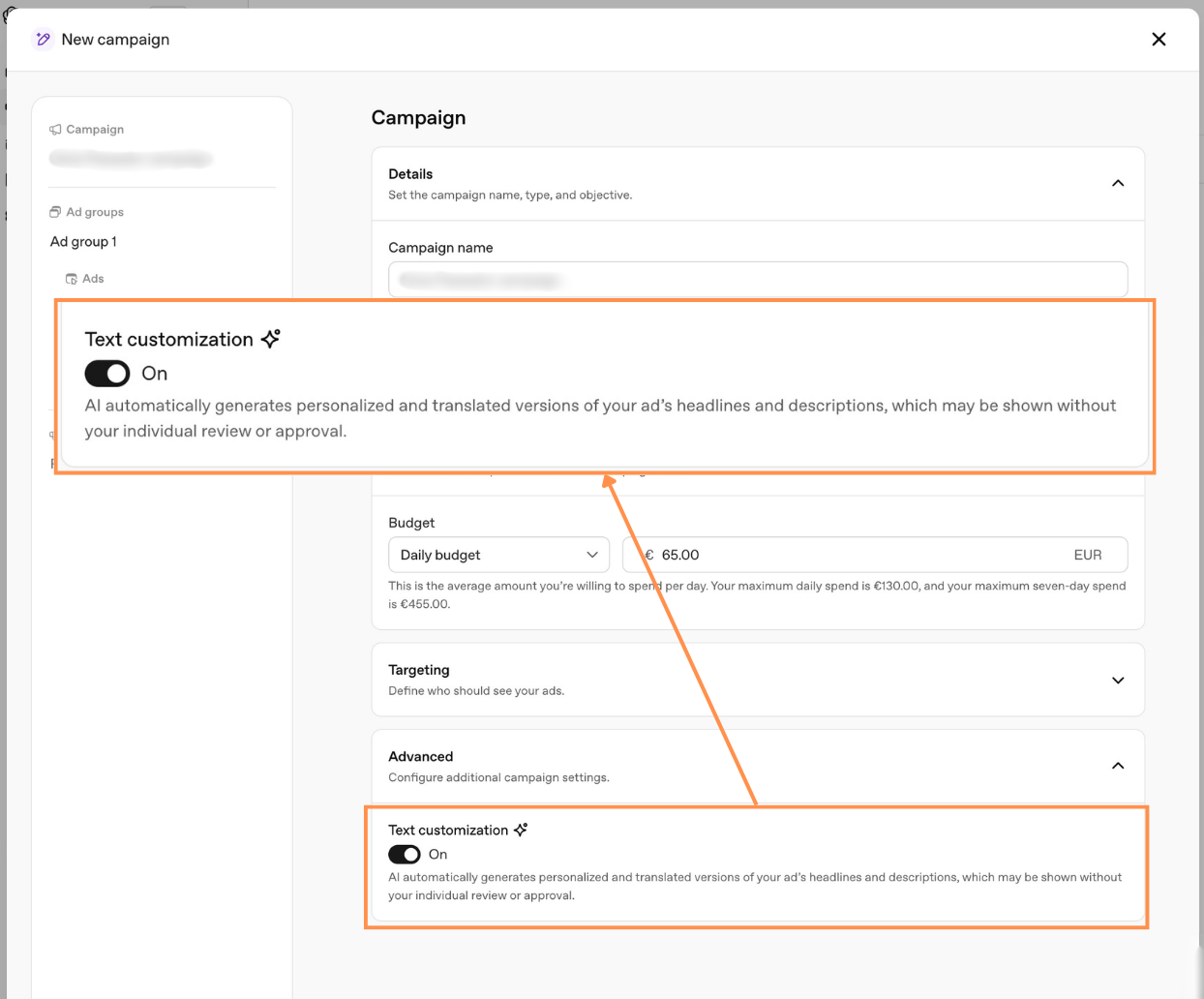
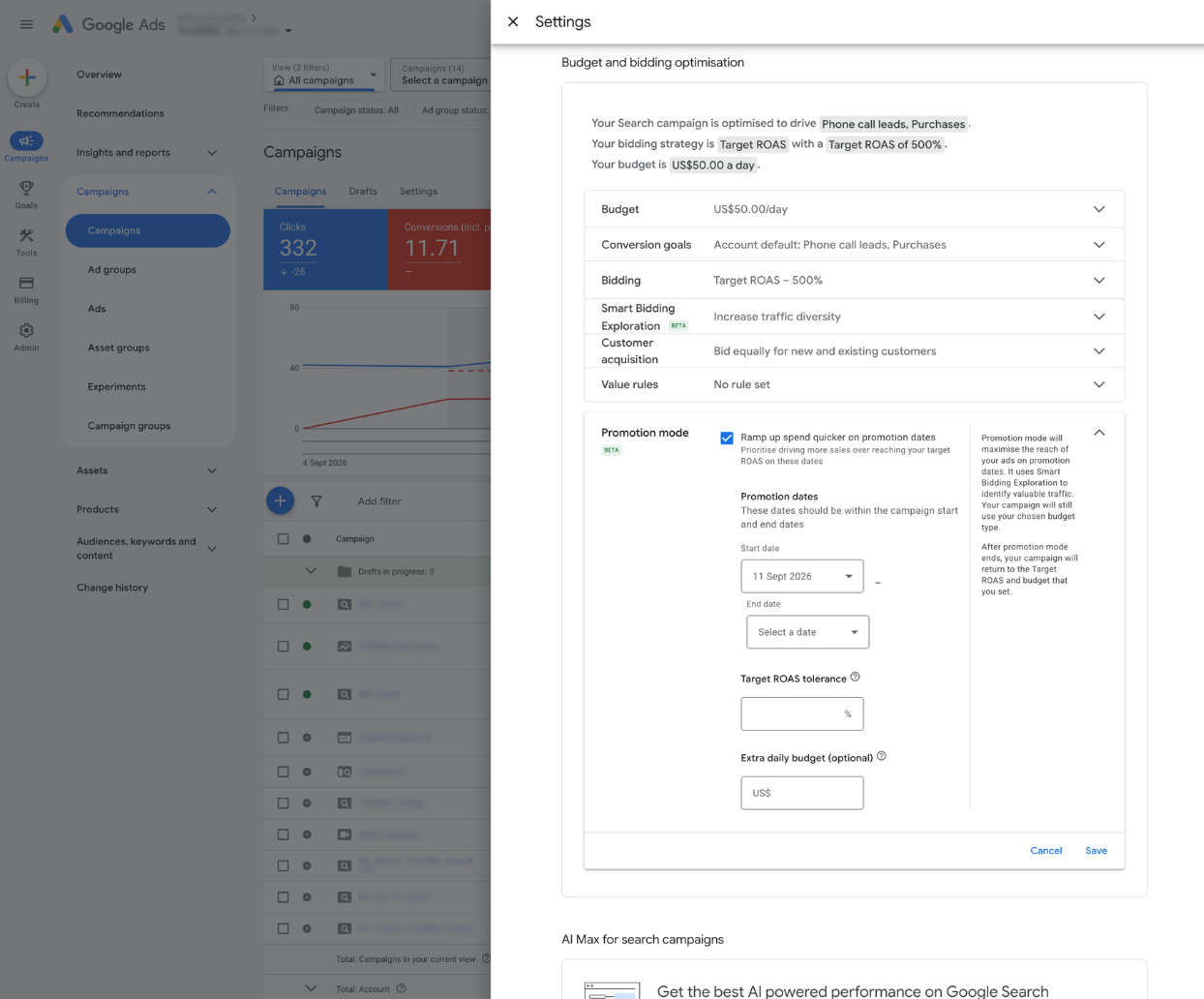
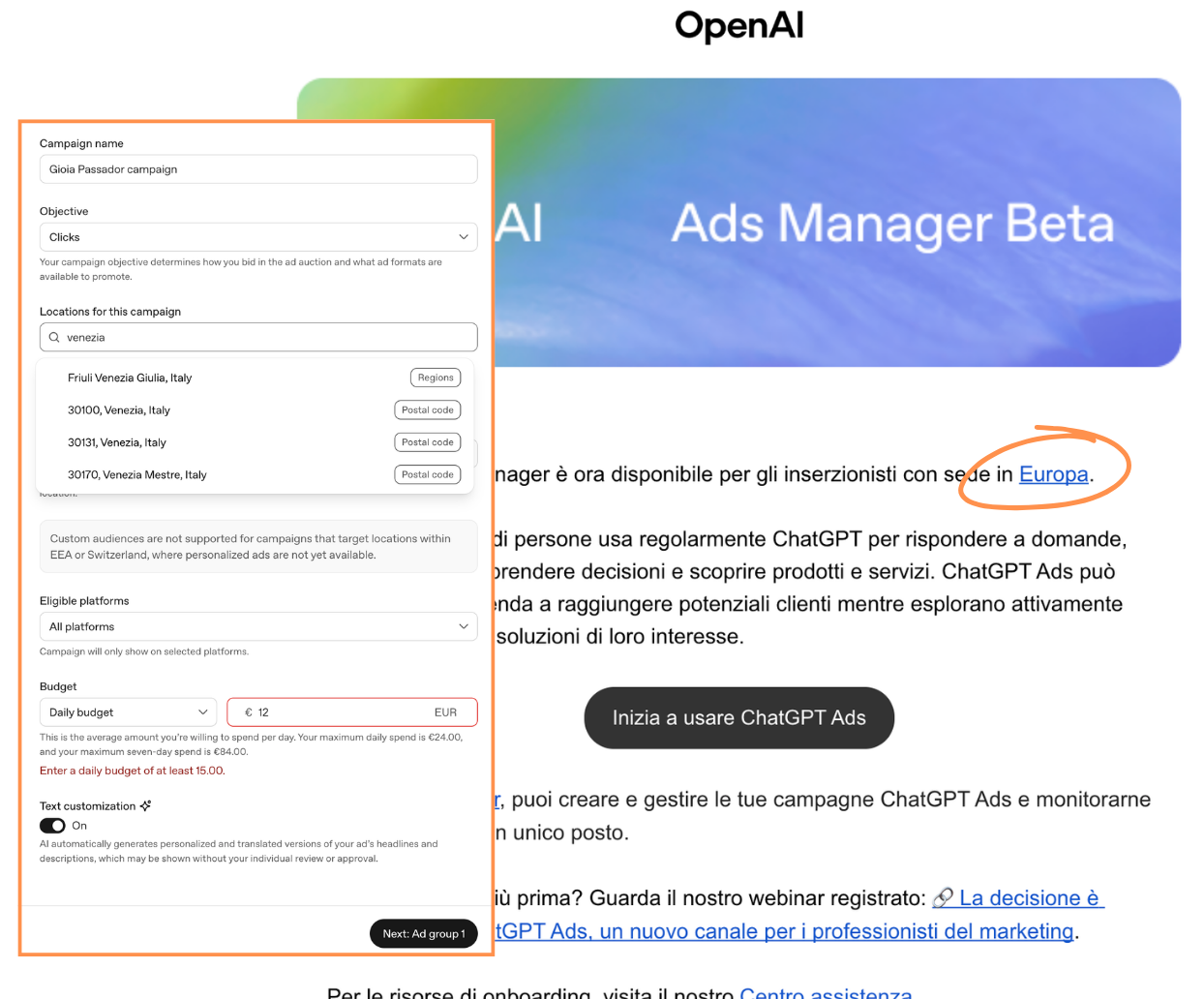
A new setting labelled "Text Customization" is reportedly appearing in the ChatGPT Ads campaign-creation flow, near the bottom of the setup process. In the accounts where it has been seen, the option appears to be enabled by default.
The potential significance is clear: the interface descriptions suggest that ChatGPT could generate variations of advertiser-provided headlines and descriptions, including personalized and translated text. That would move the platform beyond a strictly fixed-copy ad model and closer to the automation advertisers already know from Google Ads.
However, the details matter more than the label.
At the time of writing, public official documentation does not clearly establish the precise scope of this feature, its market availability, its eligibility requirements, or the full advertiser-control model. That means screenshots and account-level observations should not be treated as proof of a universally released product capability.
What appears to be happening
Based on the interface language reported by advertisers, Text Customization may allow ad copy to be adapted into variants without the advertiser manually approving each individual version before it is eligible to serve.
That does not necessarily mean the platform can write anything it wants. It may be working from submitted assets, campaign-level instructions, targeting signals, or a limited set of approved text. But those boundaries are exactly what advertisers need clarified.
Three questions are especially important:
- Can advertisers review every generated headline and description?
- Can they prohibit certain claims, terms, tones, or product references?
- Is there an audit trail showing which copy variant was served, to whom, and in which language?
Without clear answers, “customization” can mean very different things operationally.
Why Google Ads practitioners should pay attention
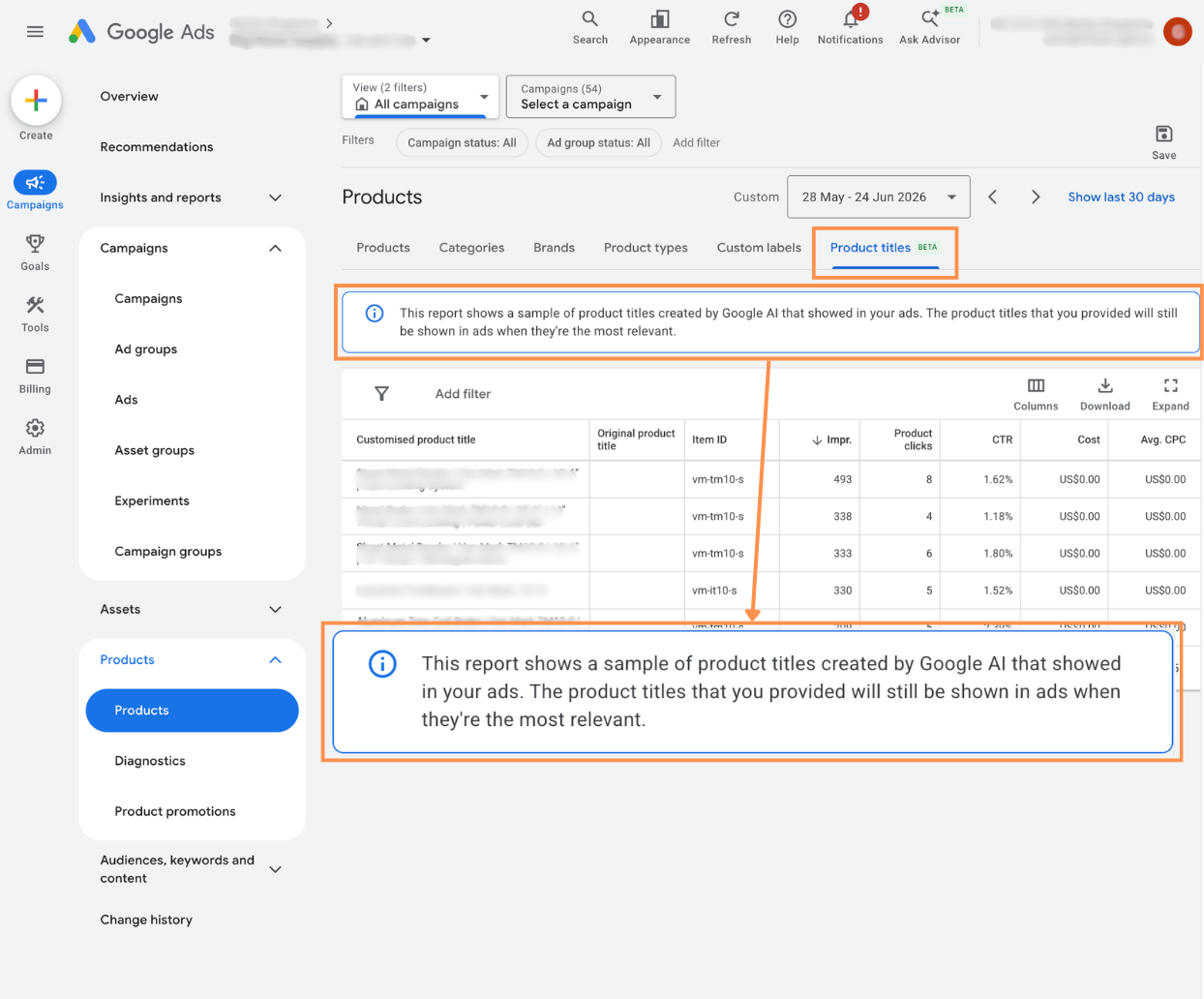
Google Ads advertisers are already familiar with machine-assisted creative delivery. Responsive Search Ads combine supplied headlines and descriptions into different combinations, while Performance Max and other AI-driven campaign formats introduce additional levels of automation.
But there is an important distinction: Google’s established ad products have their own documented asset workflows, reporting structures, policy systems, and advertiser controls. A similarly named ChatGPT Ads feature should not automatically be assumed to operate in the same way.
For a PPC team, the real issue is not whether AI can produce a more relevant variation. It often can. The issue is whether the advertiser can govern the message with sufficient precision.
In a conventional search campaign, a brand may deliberately separate copy by product, location, audience, legal qualifier, or funnel stage. “Free consultation” may be acceptable for one service but prohibited for another. A translated phrase may be linguistically correct yet make a prohibited comparative claim, omit a required disclaimer, or create a different legal meaning in the target market.
That risk becomes more material when generated text is personalized or localized dynamically.
Translation is valuable, but localization is not neutral
Translation could be one of the most useful applications of Text Customization. International advertisers often face a genuine operational challenge: producing relevant ads across languages without slowing campaigns down.
Yet automated translation is not simply a production shortcut. It is a messaging decision.
A phrase that is compliant in US English may be misleading, overly absolute, culturally inappropriate, or legally incomplete in another language. This is particularly relevant in financial services, healthcare, legal services, employment, alcohol, gambling, supplements, and other regulated or sensitive verticals.
Even tightly managed consumer brands should be cautious. Brand voice is rarely just a matter of vocabulary. It includes product naming conventions, approved claims, capitalization, promotional rules, and market-specific positioning. An AI-generated alternative can be on-brand in spirit while still falling outside approved copy rules.
The governance question is bigger than copy generation
The most relevant issue is not whether ChatGPT Ads can generate variants. That is increasingly standard platform behavior. The decisive question is whether advertisers receive meaningful governance before and after ads serve.
For regulated advertisers, useful controls would include the ability to restrict sensitive language, lock mandatory disclaimers, exclude classes of claims, review generated variants, and understand the data or context used for personalization. Reporting also matters: if a variation affects conversion quality, complaint rates, policy outcomes, or brand-safety performance, the advertiser needs a way to identify it.
The reported default-enabled status is therefore notable. Default settings can be easy to overlook during campaign setup, especially when teams are focused on budget, audience, measurement, and creative launch deadlines. Any automated text feature deserves an explicit review rather than passive acceptance.
An early signal, not yet a complete product story
Text Customization could eventually make ChatGPT Ads more adaptable for large-scale campaigns and multilingual advertising. It could also reduce the gap between static advertiser copy and the conversational, context-aware environment where the ads appear.
For now, the public picture appears incomplete. Advertisers should distinguish carefully between what the interface seems to indicate, what the platform officially documents, and what remains unknown about review, exclusions, translation quality, personalization inputs, and reporting.
That uncertainty is not a reason to reject automation. It is a reason to evaluate it with the same discipline applied to every other AI-driven advertising control.

As a Google Ads expert, I bring proven expertise in optimizing advertising campaigns to maximize ROI.
I specialize in sharing advanced strategies and targeted tips to refine Google Ads campaign management.
Committed to staying ahead of the latest trends and algorithms, I ensure that my clients receive cutting-edge solutions.
My passion for digital marketing and my ability to interpret data for strategic insights enable me to offer high-level consulting that aims to exceed expectations.
Google Partner Agency
We're a certified Google Partner Agency, which means we don’t guess — we optimize withGoogle’s full toolkit and insider support.
Your campaigns get pro-level execution, backed by real expertise (not theory).
4.9 out of 5 from 670+ reviews on Fiverr.
That’s not luck, that’s performance.
Highly recommend Matteo to set up your server side tracking. He has a deep understanding of e-commerce tracking and will go above and beyond to make sure everything is set up correctly and working 100%. If you are scaling your store this set up is non-negotiable in my opinion and there isn't many people who have this much knowledge or put the effort in to get it right. Thanks again!
avorodesign.com
I can only recommend Matteo! He was very patient, professional and very knowledgeable about GA4, Consent Mode v2, and GDPR compliance. Communication was clear, and the setup was done professionally and efficiently. Highly recommend him for anyone needing reliable tracking implementation.

www.natureiki.life
Matteo shines in the realm of online professionals. His work is not only deep in data but also complemented by his proactive communication and cooperation, setting a new standard for freelancers. If you want someone who truly exceeds expectations, look no further. Highly recommended!

www.omanbeverlysmyth.com
Exceptional Service Beyond Expectations - Outstanding Service Impeccable depth, flawless delivery, and exceptional language fluency—this service exceeded all expectations. Highly recommended. Matteo truly ROCKS!!!
ium-paris.com
Top-notch, always highly value working with Matteo. An absolute Google Ads Genius. This is approximately the 8th time I have hired him and he's helped us get 6-7 ROAS. We are excited in continuing to improve our lead flow. Hire this guy if you need Google Ads help. Thanks Matteo!

www.dleeventgroup.com
I finally found the guy who can setup server side tracking and all the ecosystem properly. I definitely recommend Matteo. He is very responsive, kind and wants to dig into things. He configured GA4, Meta, Google Ads, Outbrain and google consent v2 with Cookiebot. Thanks Matteo.

inomega.fr
MB Adv delivered exceptional work with outstanding professionalism and lots of patience, taking time to see effects of changes made and not just do the work and submit it. The proactive communication and video summaries of the work completed made working with Matteo a pleasure, as he consistently went above and beyond. Highly recommended for web analytics projects! We are already working on another project.

www.withnellsensors.co.uk
Working with Matteo on my Google Ads was a game-changer. He's not just a strategist, he's a true partner. He understood my goals and tailored a campaign that perfectly reached my target audience. I'm grateful for his expertise and dedication.

dccargo.com
Click-driven mind
with plastic-brick obsession.
We build Google Ads campaigns with the same mindset we use to build tiny brick worlds: strategy, patience, and zero tolerance for wasted pieces.
Data is our blueprint. Growth is the only acceptable outcome.