Google Ads adds audience reporting and exclusions to Performance Max
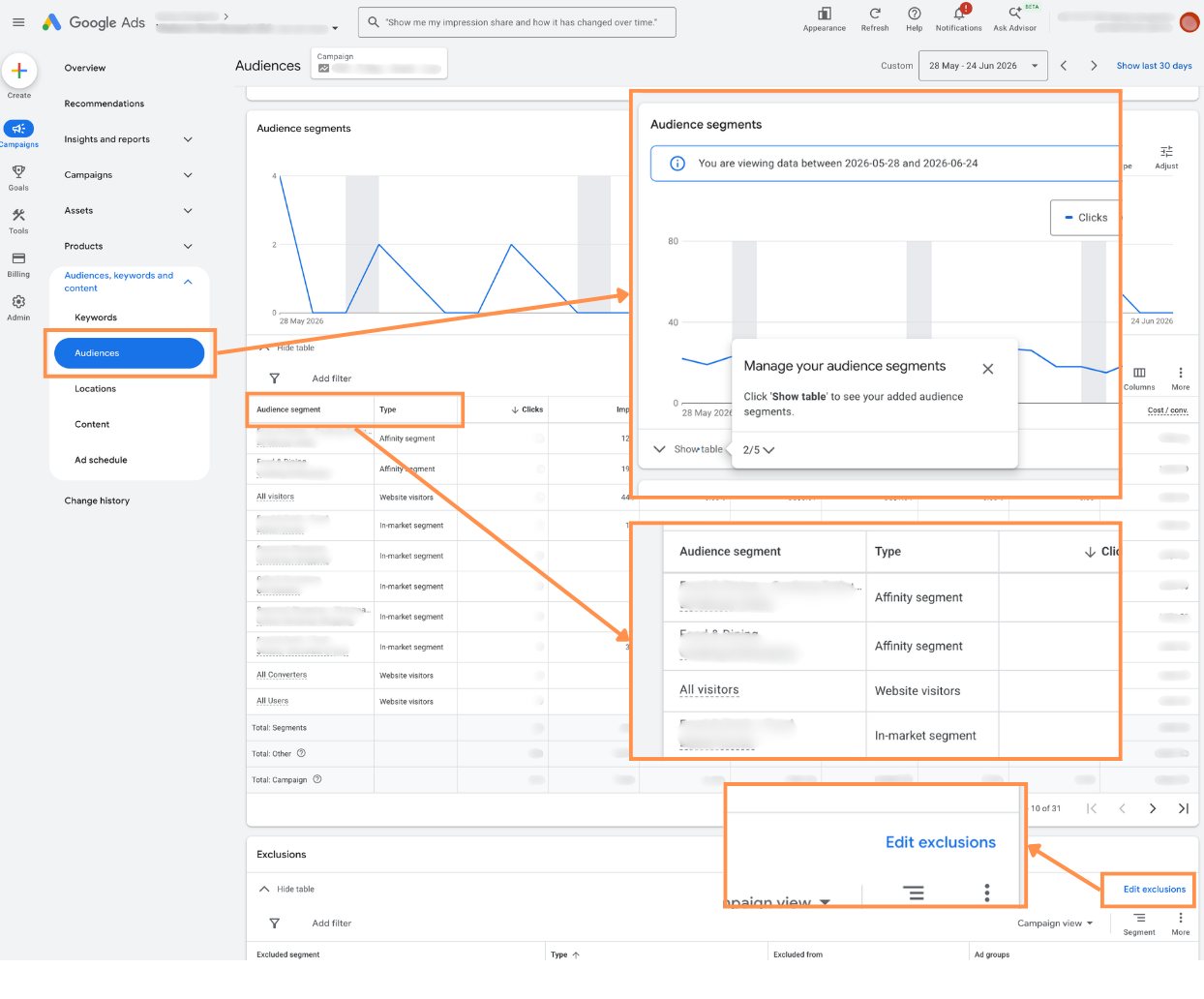
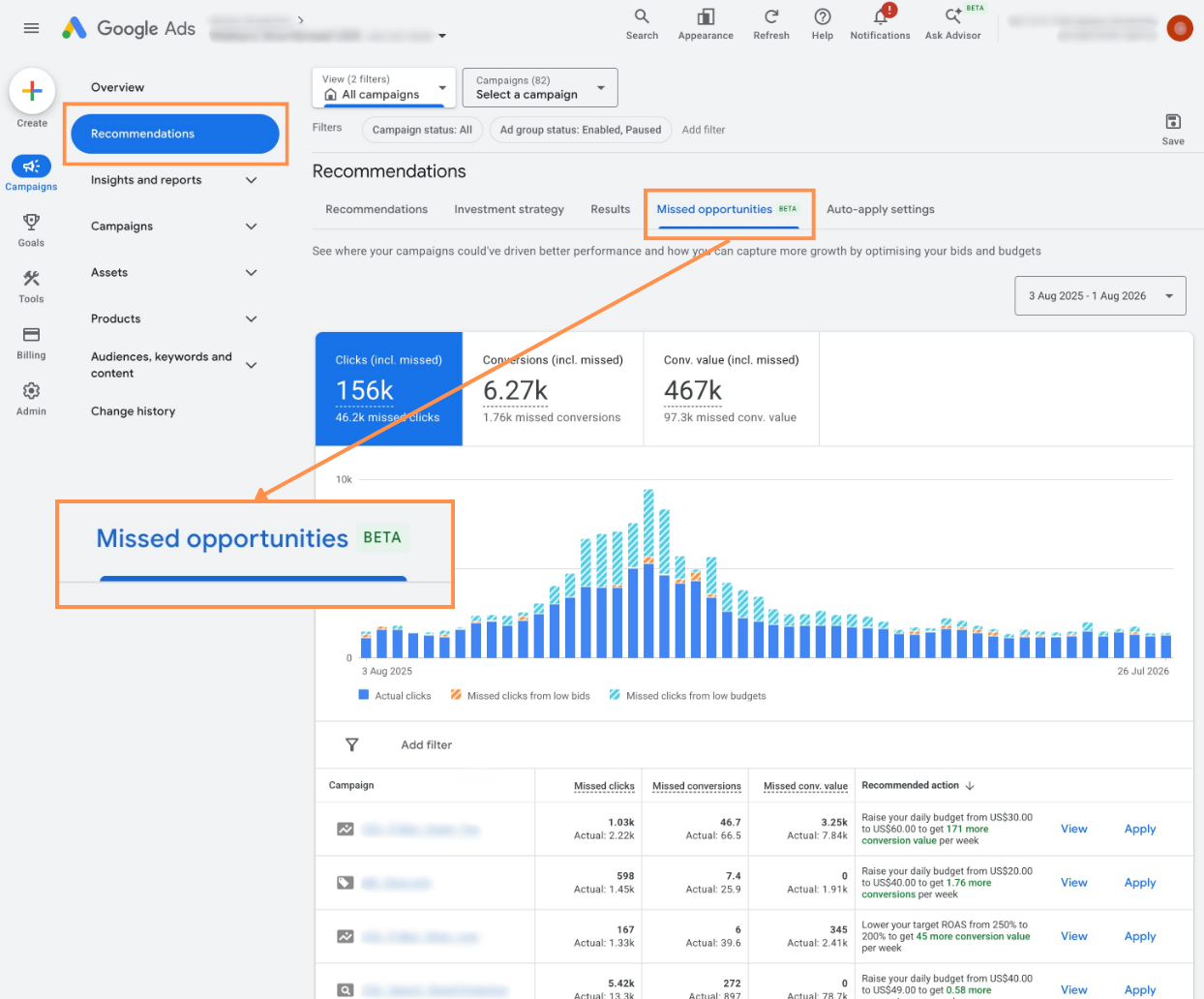
Google Ads is adding more audience-level data to Performance Max, giving advertisers a clearer view of who their campaigns are reaching and where spend is being distributed.
The update brings campaign metrics into the Audience section, alongside audience performance reporting, demographic breakdowns by age and gender, and a more visible place to review and manage audience exclusions. For Performance Max advertisers, this is a meaningful improvement: not because it turns PMax into a fully controllable campaign type, but because it adds useful context to a part of the platform that has historically operated with limited visibility.
Performance Max has always been designed to optimise across Google’s inventory using automation. That model can be effective, especially when conversion tracking, creative assets and product data are strong. The trade-off has been reporting depth. Advertisers could provide audience signals, but understanding which audiences were actually driving delivery—and whether those audiences aligned with commercial priorities—was often difficult.
The expanded audience reporting starts to address that gap.
More context behind Performance Max delivery
Advertisers can now review audience segments reached by a PMax campaign with associated campaign metrics. This makes it easier to see whether delivery is concentrated around first-party data, in-market audiences, affinity audiences or broader Google-defined groups.
That distinction matters. A campaign that converts heavily through customer lists, remarketing pools or high-intent in-market segments may require a different interpretation from one that relies primarily on broad demographic or affinity-based reach. Neither outcome is automatically good or bad; the useful question is whether the audience mix supports the campaign’s objective and the quality of the conversions being generated.
For example, a lead generation campaign may show efficient cost-per-conversion results among broad audiences, but the downstream quality of those leads may be weaker than leads generated through first-party or high-intent audience groups. Conversely, a retail advertiser looking to acquire new customers may welcome broad delivery if it produces profitable incremental sales rather than simply re-engaging existing buyers.
Audience reporting does not answer every attribution or incrementality question. It does, however, give marketers a stronger starting point for asking better ones.
Demographics add another layer of diagnosis
Age and gender data is also becoming more accessible within the Performance Max Audience section. Demographic reporting should be interpreted carefully, particularly because Google may model certain data and because “Unknown” can represent a substantial portion of delivery. Still, the information can help identify patterns that deserve attention.
If a campaign’s budget is disproportionately allocated to an age range that does not match the advertiser’s core customer profile, that is worth investigating. It may reflect a genuine opportunity, a creative-message mismatch, a tracking issue, or an optimisation pattern driven by cheap but lower-value conversions.
The same applies to gender data. The purpose is not to impose assumptions on campaign performance, but to compare platform delivery with actual business outcomes. CRM data, new-versus-returning customer performance, qualified lead rates and revenue margins remain essential for deciding whether an observed audience pattern is commercially valuable.
Audience exclusions become more operationally relevant
The dedicated area for reviewing and managing audience exclusions is an equally important part of the update. Exclusions have long been one of the few direct ways to shape who should not receive ads, particularly where audience overlap, brand suitability or customer lifecycle logic is involved.
More transparent reporting can make exclusions more informed. If an audience group consistently receives spend without producing valuable outcomes, advertisers have a clearer reason to investigate whether exclusion is appropriate. That does not mean every underperforming segment should be removed immediately. Performance Max relies on broad reach and automated learning, and aggressive restrictions can reduce scale or disrupt acquisition.
The better use case is governance: spotting delivery patterns that conflict with strategy. Existing customers may need different treatment from prospecting audiences. Low-quality lead cohorts may need to be isolated. Certain affinity or demographic patterns may reveal that creative assets are attracting the wrong type of attention. Reporting makes these discussions more evidence-based.
Greater transparency, not full control
This update should be seen as an evolution in Performance Max reporting rather than a fundamental change to how PMax is managed. Google is providing more visibility into audience distribution, but advertisers still do not have the granular audience targeting controls associated with some other campaign types.
That limitation remains central. Audience signals are not strict targeting constraints, and audience-level reporting should not be mistaken for a complete explanation of algorithmic decision-making. Performance Max performance is influenced by conversion goals, bidding strategy, asset quality, feed health, landing pages, search demand, competitive conditions and the accuracy of measurement.
Yet greater audience transparency is valuable precisely because PMax is so automated. The more automation controls campaign delivery, the more important it becomes to understand the patterns emerging from that delivery.
For PPC teams, the practical value lies in combining this new audience data with first-party business metrics. Spend distribution, conversion volume and platform CPA are useful indicators, but they become far more meaningful when compared with lead quality, customer value, repeat purchase behaviour and profitability.
Performance Max is still not a fully transparent campaign environment. But audience reporting gives advertisers a more credible way to assess where automation is finding demand—and whether that demand is the kind the business actually wants.

As a Google Ads expert, I bring proven expertise in optimizing advertising campaigns to maximize ROI.
I specialize in sharing advanced strategies and targeted tips to refine Google Ads campaign management.
Committed to staying ahead of the latest trends and algorithms, I ensure that my clients receive cutting-edge solutions.
My passion for digital marketing and my ability to interpret data for strategic insights enable me to offer high-level consulting that aims to exceed expectations.
Google Partner Agency
We're a certified Google Partner Agency, which means we don’t guess — we optimize withGoogle’s full toolkit and insider support.
Your campaigns get pro-level execution, backed by real expertise (not theory).

4.9 out of 5 from 670+ reviews on Fiverr.
That’s not luck, that’s performance.
Highly recommend Matteo to set up your server side tracking. He has a deep understanding of e-commerce tracking and will go above and beyond to make sure everything is set up correctly and working 100%. If you are scaling your store this set up is non-negotiable in my opinion and there isn't many people who have this much knowledge or put the effort in to get it right. Thanks again!

avorodesign.com
I can only recommend Matteo! He was very patient, professional and very knowledgeable about GA4, Consent Mode v2, and GDPR compliance. Communication was clear, and the setup was done professionally and efficiently. Highly recommend him for anyone needing reliable tracking implementation.

www.natureiki.life
Matteo shines in the realm of online professionals. His work is not only deep in data but also complemented by his proactive communication and cooperation, setting a new standard for freelancers. If you want someone who truly exceeds expectations, look no further. Highly recommended!

www.omanbeverlysmyth.com
Exceptional Service Beyond Expectations - Outstanding Service Impeccable depth, flawless delivery, and exceptional language fluency—this service exceeded all expectations. Highly recommended. Matteo truly ROCKS!!!

ium-paris.com
Top-notch, always highly value working with Matteo. An absolute Google Ads Genius. This is approximately the 8th time I have hired him and he's helped us get 6-7 ROAS. We are excited in continuing to improve our lead flow. Hire this guy if you need Google Ads help. Thanks Matteo!

www.dleeventgroup.com
I finally found the guy who can setup server side tracking and all the ecosystem properly. I definitely recommend Matteo. He is very responsive, kind and wants to dig into things. He configured GA4, Meta, Google Ads, Outbrain and google consent v2 with Cookiebot. Thanks Matteo.

inomega.fr
MB Adv delivered exceptional work with outstanding professionalism and lots of patience, taking time to see effects of changes made and not just do the work and submit it. The proactive communication and video summaries of the work completed made working with Matteo a pleasure, as he consistently went above and beyond. Highly recommended for web analytics projects! We are already working on another project.

www.withnellsensors.co.uk
Working with Matteo on my Google Ads was a game-changer. He's not just a strategist, he's a true partner. He understood my goals and tailored a campaign that perfectly reached my target audience. I'm grateful for his expertise and dedication.

dccargo.com
Click-driven mind
with plastic-brick obsession.
We build Google Ads campaigns with the same mindset we use to build tiny brick worlds: strategy, patience, and zero tolerance for wasted pieces.
Data is our blueprint. Growth is the only acceptable outcome.