GBP Content Guidelines & Suspensions Guide (2026)

GBP Content Guidelines 2026
Free — until one rule breaks it
A Google Business Profile costs $0, but a keyword-stuffed name or an ineligible address can trigger a suspension. A soft suspension leaves the profile visible but unverified; a hard suspension removes the listing and every review with it.
2024 Google Maps enforcement: 70M listing edits blocked · 12M fake profiles removed · 900K+ accounts restricted · 240M+ policy-violating reviews removed
Google Business Profile Content Guidelines: What the Rules Actually Require
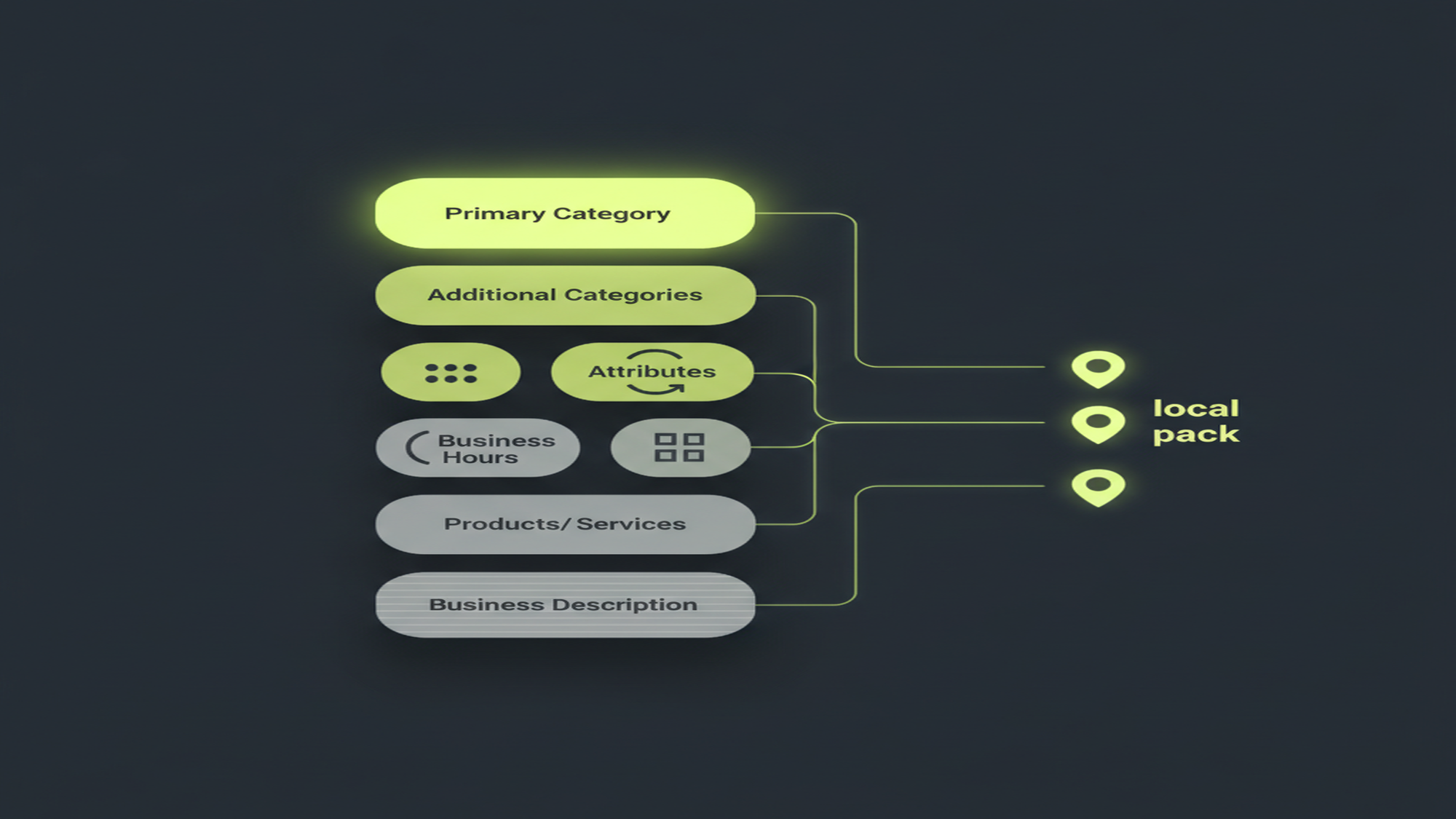
A Google Business Profile (GBP) is the free listing that puts a local business on Google Search, Maps, and the local pack. The rebrand from Google My Business (GMB) landed in November 2021, and the standalone app is gone, but the content guidelines that govern every profile are the same policies that decide whether a listing stays live. The guidelines break into three filters: the business-name rule, the address-eligibility rule, and the prohibited-versus-restricted content rules. Break one and Google suspends or disables the profile. The local pack — the three-listing map block at the top of a local search — is where these profiles compete for the phone call, and a listing that breaks a guideline can vanish from it overnight, taking its leads with it.
This is the highest-anxiety cluster in local search. The head term "google business profile suspended" is the query an owner types the moment the phone stops ringing, and it carries near-zero keyword difficulty because so few pages answer it correctly. Google's "Guidelines for representing your business" is the primary source for the name, address, and content rules; this pillar decodes them, then walks the suspension causes, the soft-versus-hard distinction, the reinstatement flow, and the 2024–2026 privacy changes that keep confusing owners. New to the platform? Start with what a Google Business Profile is, then return here for the rules.
| Guideline filter | Core rule | Where the detail lives |
|---|---|---|
| Business name | The name must be your real-world business name only — no location or service keywords, taglines, phone numbers, URLs, store codes, hours, or all-caps | Business-name policy section below (Table 2) |
| Address eligibility | Storefronts need permanent fixed signage plus staffing during stated hours; a service-area business gets one profile and must hide its address | Address-eligibility section below (Table 3) |
| Prohibited vs restricted content | Low-quality or gibberish content is banned outright; regulated verticals operate but can't feature CTAs or offers subject to local regulation | Prohibited-and-restricted section below (Table 4) |
Source: Google Business Profile Help, "Guidelines for representing your business"; _shared-verified-facts.md §12. The name, address, and content rules are the three filters every profile passes through. Not mbadv client data.
MB Adv Agency audits the underlying profile before any paid campaign goes live, because a listing that can't survive Google's guidelines is a listing that will eventually vanish and take its leads with it. For the verification methods and the address-accuracy fix flow, see how to create a Google Business Profile.
The Business-Name Rule: Why Keyword-Stuffing Is the #1 Self-Inflicted Suspension
The single most common way a local business suspends itself is the one thing every "growth hack" post tells it to do: stuff keywords into the business name. A plumber names the profile "Joe's Plumbing — Austin Emergency Drain Repair 24/7" because a listicle promised a ranking boost. Google's name-accuracy rule is unambiguous: the name must reflect the real-world business name only.
Adding a location keyword, a service descriptor, a tagline, a phone number, a URL, a store code, hours, or all-caps text is prohibited, and it is one of the most common reasons profiles get suspended. Any short-term ranking bump from a stuffed name is temporary; the downside is total, because a hard suspension removes the listing and every review with it. Keywords belong in the category, services, and description fields — never the name.
| Element in the name | Allowed? | Rule |
|---|---|---|
| Your real-world business name (as on signage, as customers know it) | Yes | The name must represent the actual business as it operates in the real world |
| Location / city keyword (e.g. "…Austin") | No | A location keyword that isn't part of the real name is a top suspension cause |
| Service / product descriptor (e.g. "…Emergency Drain Repair") | No | Service keywords are for the category and services fields, not the name |
| Marketing tagline or slogan | No | Taglines are promotional content and prohibited in the name |
| Phone number or URL | No | The phone and website have their own contact fields |
| Store code, hours, or all-caps text | No | Store codes and hours have dedicated fields; all-caps is prohibited unless the real brand is genuinely styled that way |
| Trademark symbol or legal suffix (LLC, Inc.) | Only if part of the real name | Include a symbol or suffix only when it is how the business is publicly known |
The name is the #1 self-inflicted suspension trigger. Source: Google, business-name guidelines; _shared-verified-facts.md §12. Not mbadv client data.
Most name and address violations are set — and best fixed — at creation. For the verification methods and how to correct incorrect business info, see how to create a Google Business Profile. For the category and description side, see optimizing business categories for better visibility.
Address Eligibility: Storefront vs Service-Area Business (SAB) vs Ineligible
After the name, the second filter is where you operate from. A storefront and a mobile service business follow different address rules, and getting them wrong is a top suspension cause. The rule is about a real, verifiable presence: Google wants to confirm a customer could actually find you where you claim to be.
A storefront shows its address and needs permanent fixed signage plus staffing during its stated hours. A service-area business (SAB) — a plumber, a locksmith, a mobile mechanic — gets exactly one profile, sets a service area, and hides the street address. A hybrid that both serves customers at a location and travels to them shows the address and sets a service area. A PO box, a virtual office, a coworking desk, or a mailbox-store address is ineligible as a business location.
| Business type | Show the address? | Requirement | Common failure that triggers suspension |
|---|---|---|---|
| Storefront / brick-and-mortar | Yes | Permanent fixed signage plus staffing during stated hours | An unstaffed premises during posted hours |
| Service-area business (SAB) | No — hide it | One profile; set a service area; no walk-in address shown | A mobile business showing a home or unstaffed address publicly |
| Hybrid | Yes, plus a service area | Show the storefront address and set the areas you travel to | Treating it as two profiles instead of one hybrid listing |
| Ineligible address | Not permitted | PO box, virtual office, coworking, or mailbox-store address | Listing any of these as a business location at all |
Source: Google, address representation guidelines; _shared-verified-facts.md §12 (address eligibility; SAB single-profile and hide-address rule). High-abuse service verticals such as locksmith and plumbing businesses face the tightest scrutiny here. Not mbadv client data.
Prohibited vs Restricted Content on a Google Business Profile
Restricted is not the same as prohibited, and the businesses most likely to trip the line are the ones that don't realize they operate in a regulated vertical. Low-quality, gibberish, or spammy content is prohibited outright — it is not allowed anywhere on the profile. A separate set of restricted verticals is allowed to exist on GBP but can't feature calls-to-action or offers subject to local regulation.
Alcohol, gambling, tobacco and vaping, firearms and weapons, pharmaceuticals and regulated drugs, adult content, financial services, and health or medical devices are all restricted: the business operates a profile, but the regulated CTA or offer comes off. A separate cluster of high-abuse verticals — locksmiths, garage-door services, and rehab or addiction treatment — is not restricted content per se, but draws stricter verification because it has historically attracted lead-generation fraud. A compliant profile in a restricted vertical is a content problem (strip the regulated CTA); a suspension in a high-abuse vertical is usually a legitimacy problem (prove the physical, staffed, real-world presence).
| Category | Status | What that means for the profile |
|---|---|---|
| Low-quality / gibberish / spammy content | Prohibited outright | Not allowed anywhere on the profile; removal and/or suspension |
| Alcohol, gambling, tobacco and vaping | Restricted | Allowed as a business, but CTAs and offers subject to local regulation can't be featured |
| Firearms and weapons | Restricted | Regulated; restricted CTAs and offers per local law |
| Pharmaceuticals and regulated drugs | Restricted | Regulated; restricted CTAs and offers per local law |
| Adult content | Restricted | Restricted; explicit content is prohibited |
| Financial services | Restricted | Regulated offers and CTAs restricted per local law |
| Health and medical devices | Restricted | Regulated; restricted CTAs and offers |
| High-abuse verticals (locksmith, garage-door, rehab) | Allowed — tighter scrutiny | Not restricted content per se, but subject to stricter verification and enforcement |
Restricted ≠ prohibited. Source: Google guidelines, content policy, content-policy detail; _shared-verified-facts.md §12 (restricted verticals; high-abuse verticals). Not mbadv client data.
Review gating and incentivized reviews fall under the same content-policy umbrella. For the review rules and how to earn reviews the compliant way, see the importance of customer reviews for local SEO.
Why Google Business Profiles Get Suspended: The Top Causes
Search demand for this pillar is dominated by recovery intent, not prevention. The two suspension queries — "google business profile suspended" and "google business profile suspension" — together outweigh the guidelines query, which confirms the highest-intent reader is an owner whose profile was just suspended. The chart below shows US monthly search volume from Ahrefs; the table decodes what actually causes a suspension.
Google suspends or disables Business Profiles that break its guidelines. There is no published, ranked frequency list — Google does not release suspension-cause percentages, so ignore any "80% of suspensions are X" content-mill figure. What follows is an unranked map of the documented causes, led by the most common ones MB Adv Agency's team sees on the profiles it audits.
| Cause | What it looks like | How to avoid it |
|---|---|---|
| Misrepresentation | A false address, a fake real-world presence, or otherwise misleading Google to gain improper benefit | List only a real, staffed location you actually operate from; never invent or borrow an address |
| Keyword-stuffed business name | Location or service keywords, taglines, phone numbers, or URLs added to the name | Use the real-world name only (see the business-name policy above) |
| Ineligible address | PO box, virtual office, coworking space, or an unstaffed premises during stated hours | Use a location with permanent fixed signage staffed during your posted hours; SABs hide the address |
| SAB that fails to hide its address | A mobile or service-area business showing a home or unstaffed address publicly | Set a service area and hide the street address; keep one SAB profile only |
| Duplicate listings | More than one profile for the same business or location | Merge or remove duplicates; never create a backup profile during a suspension |
| Suspended owner / manager account | A suspended Google account cascades to the profiles it manages | Keep the managing account in good standing; audit who has access |
| Too many rapid edits | A burst of changes to name, address, or primary category (an anti-hijacking trigger) | Space edits out after verifying; avoid clustered NAP changes |
| High-abuse verticals | Locksmiths, garage-door services, and rehab treatment face tighter scrutiny | Expect stricter verification; keep documentation of a legitimate, staffed presence ready |
These are qualitative top causes, not a ranked percentage list — Google publishes no suspension-cause frequencies. Source: Google guidelines, suspend/disable guidelines; Sterling Sky practitioner analysis; _shared-verified-facts.md §12. Not mbadv client data.
Duplicate listings are both a suspension cause and a multi-location pitfall. For merging duplicates and running bulk management cleanly, see how to manage multiple locations in GBP.
Soft vs Hard Suspension: "Suspended" Does Not Always Mean "Gone"
Confusing a soft suspension with a hard one leads owners to panic-file duplicate appeals that make things worse. Per Sterling Sky's current framing, a soft suspension puts a "suspended" label in Business Profile Manager, but the profile stays visible on Search and Maps — it simply becomes unverified, so the public sees "Claim this business." Reviews still show and rankings are usually unaffected. You have lost management and verification, not visibility.
A hard suspension is the catastrophic one: the listing and all its reviews are removed from Search and Maps entirely, and leads stop. Once reinstated, rankings return to their pre-suspension levels within a few days. Diagnosing which one you have is the first step, because they have different fixes: a soft suspension is usually a re-verification or lighter appeal, while a hard suspension is a full policy remediation. MB Adv Agency tells the local businesses it works with the difference before they touch anything, because the worst move — creating a second profile or firing off duplicate appeals while one is pending — is exactly what a panicked owner does when they assume "suspended" means "deleted."
| Dimension | Soft suspension | Hard suspension |
|---|---|---|
| Visible on Search & Maps? | Yes — visible but shows "Claim this business" (unverified) | No — the listing is removed entirely |
| Reviews | Still show | Removed with the listing |
| Rankings | Usually unaffected | Gone while removed; return to pre-suspension levels within a few days of reinstatement |
| What you lost | Management and verification — not visibility | Visibility and leads (the catastrophic one) |
| Where you see it | A "suspended" label in Business Profile Manager while the public listing stays live | The public listing disappears from Search and Maps |
| Typical fix | Re-verify or appeal — often a lighter remediation | Full policy remediation plus an appeal with evidence |
The distinction most guides miss: "suspended" is not synonymous with "removed" — only a hard suspension removes the listing and its reviews. Source: Sterling Sky (current soft-vs-hard framing); _shared-verified-facts.md §12. Not mbadv client data.

The Scale a Non-Compliant Profile Is Enforced Against
Compliance is not abstract. Google enforces its Maps and Business Profile policies at industrial scale, and the 2024 numbers make "why the rules matter" concrete. The chart below shows the profile, listing, and account actions Google reported for 2024, expressed in millions so the bars share one axis.
In 2024 Google blocked 70 million listing edits, removed 12 million fake Business Profiles, and restricted more than 900,000 accounts. A keyword-stuffed name or an ineligible address is not a low-odds gamble against a passive system; it is a bet against automated enforcement running at this volume. The listing edits blocked are the ones the anti-hijacking system rejects — which is why a burst of rapid changes to name, address, or category is itself a suspension trigger. The fake-profile removals are why a real, staffed, verifiable presence matters more than any ranking trick.
| Enforcement action (2024) | Volume | In millions |
|---|---|---|
| Listing edits blocked | 70,000,000 | 70 |
| Fake Business Profiles removed | 12,000,000 | 12 |
| Accounts restricted | 900,000+ | 0.9 |
Review removals (240M+) are charted separately in the next section so the 12M and 0.9M bars stay readable on this axis. Source: Google's 2024 Maps spam / community-guidelines report, via Search Engine Roundtable; _shared-verified-facts.md §7. Google-published enforcement counts, not estimates. Not mbadv client data.

Reinstatement and Appeals: The Steps and the Accepted Evidence
The reinstatement flow has one detail almost nobody prepares for: a 60-minute evidence window that opens the moment you start the appeal. The current path is the Business Profile appeals tool — you sign in, select the profile, review the specific policy Google cited, and submit an appeal, optionally attaching evidence. That policy-citation plus linked-evidence workflow rolled out in February 2024.
The trap: once the evidence form opens, you have a Google-confirmed 60-minute window to upload your documents. Owners who start the appeal before gathering and correctly naming their files run out of clock. MB Adv Agency's approach is to fix every cited violation first, assemble the evidence before opening the form, and only then start the appeal. One more discipline point the thin pages get wrong: the widely-repeated "~5 business days" decision SLA is a third-party estimate, not a number Google publishes — plan for "days, not a guaranteed date." Accepted evidence is documentary and specific: a business registration, a professional license, a tax certificate, or a utility bill, each with the business name and address matching the profile exactly. A file whose name or address is off by a suite number is a file that wastes the window.
| Step | What to do | Detail / evidence / caveat |
|---|---|---|
| 1. Read the cited policy | Sign in, select the profile, and review the specific policy Google says you violated | The appeals tool cites the policy (workflow rolled out Feb 2024); diagnose soft vs hard first |
| 2. Fix ALL violations first | Correct the name, address, category, or content before you appeal | Appealing before fixing is the most common wasted attempt |
| 3. Gather evidence before you start | Assemble and correctly name your documents in advance | Accepted: business registration, professional license, tax certificate, utility bills — name and address must match the profile exactly |
| 4. Open the appeals tool | Submit the appeal for the selected profile and attach evidence | 60-minute evidence window once the form opens (Google-confirmed) — that is why you gather documents first |
| 5. Submit and wait | Wait for the email decision | The widely-quoted "~5 business days" is a third-party estimate, not a Google SLA — plan for "days, not a guaranteed date" |
| 6. Don't duplicate | Wait for the decision | Do not create a second profile or file duplicate appeals while one is pending — both slow reinstatement |
The 60-minute window is the detail owners miss: gather and name your evidence before opening the form. Source: Google, Business Profile appeals tool, suspend/disable guidance; _shared-verified-facts.md §12. Not mbadv client data.

Content-Policy Enforcement Is Rising Every Year
The backdrop for the whole pillar is a trend line pointing up. Review enforcement is a separate action class from profile suspensions, but it is the clearest public signal of how aggressively Google acts on policy violations — and it is climbing. The chart below tracks policy-violating reviews blocked or removed across 2023 and 2024.
Google blocked or removed about 170 million policy-violating reviews in 2023 and more than 240 million in 2024 — an increase of about 40% year over year. A keyword-stuffed name or an ineligible address is therefore a rising liability, not a static one. The separate, unverified third-party "292 million reviews removed in 2025" figure is deliberately not used here, because Google has not published it. For the review policies themselves, see the importance of customer reviews for local SEO. The practical takeaway for any owner reading this pillar: the enforcement systems that catch a keyword-stuffed name or a fake review are getting more capable each year, so the margin for treating the guidelines as optional keeps shrinking. Compliance is cheaper than recovery, and it gets cheaper still the earlier it is built in.
Source: Google's 2024 Maps spam / community-guidelines report, via Search Engine Roundtable; _shared-verified-facts.md §7. Google-published counts. Not mbadv client data.
How to Appeal a Google Business Profile Suspension, Step by Step
The reinstatement table above is the reference; this is the ordered process that mirrors the HowTo structure Google's appeals tool expects. Follow it in order — the sequence is what keeps a soft suspension from becoming a bigger problem.
- Sign in and read the cited policy. Open the Business Profile appeals tool, select the profile, and read the specific policy Google says you violated.
- Diagnose soft vs hard. Check whether the public listing is still visible but unverified (soft) or removed from Search and Maps entirely (hard) — they have different fixes.
- Fix every cited violation first. Correct the name, address, category, or content before you appeal; appealing before fixing is the most common wasted attempt.
- Gather and name your evidence in advance. Business registration, professional license, tax certificate, or utility bill — the name and address must match the profile exactly.
- Open the appeals tool, submit, and upload within the 60-minute window. Once the evidence form opens you have a Google-confirmed 60 minutes to attach your documents.
- Submit and wait for the email decision. Plan for "days" — the "~5 business days" figure is a third-party estimate, not a Google SLA.
- Do not duplicate. Never create a second profile or file duplicate appeals while one is pending; both slow reinstatement down.
A suspended profile is a lead emergency, and it is the segment most likely to become an inquiry. The paid campaigns MB Adv Agency manages — Google Ads and Local Services Ads — are exactly what keeps the phone ringing while an organic profile is being reinstated. Talk to our team about carrying the load until your listing is back.
The Regulatory Stake on Top of Google's Own Policies
Google's content policy is not the only rule that governs a profile. The regulatory stake sitting on top of it — the strongest "why comply" close for any local business — is the US FTC's final rule on fake and suppressed reviews. It reframes review policy from "Google takes it down" to "a US federal rule with real financial teeth."
The FTC's "Rule on the Use of Consumer Reviews and Testimonials" was announced on August 14, 2024 and took effect around October 21, 2024. It bans fake reviews and review suppression or gating, and it carries a civil penalty ceiling of about $51,744 per violation. That is a single regulatory-reference value — a legal ceiling, not a Google fee and not a per-account fine. The parallel UK CMA and DMCCA fake-review prohibitions came into force in 2025 but carry no single comparable per-violation dollar figure, so only the FTC number anchors this section. The chart shows that ceiling. Review gating — asking only happy customers for a review, or routing unhappy ones to a private form — and paying for or fabricating reviews are the two behaviors the rule targets, and they are the same behaviors Google's own content policy already prohibits. A local business that keeps its reviews honest satisfies both the platform rule and the federal one at once.
Source: US FTC final rule, via Greenberg Traurig analysis and the FTC announcement; _shared-verified-facts.md §7. A regulatory reference only — not a Google or GBP figure, and not mbadv client data.

A Suspended Profile Is a Lead Emergency
Keep the phone ringing while your free GBP presence is reinstated
MB Adv Agency runs the Google Ads and Local Services Ads side that complements your organic listing. When a hard suspension takes a profile offline, a well-run paid campaign is the fastest way to keep leads coming.
Talk to our team →The 2024–2026 Privacy and Feature Changes (and the Correction Most Coverage Gets Wrong)
The most-cited "privacy" change to GBP was not about privacy at all, and getting that wrong is a citation-losing mistake. When Google removed chat and call history on July 31, 2024, most coverage framed it as a privacy move. Google's stated reason was low usage — not privacy. Past records were exportable via Google Takeout until August 30, 2024. Attributing the removal to privacy is a factual error.
The genuinely regulation-driven change is a different one: the EU Digital Markets Act, in effect March 6, 2024, stops Google self-preferencing Maps in EU search results. That is why EU users now see a "Places sites" section of third-party directories that can appear above the local pack, reviews pulled from multiple third-party directories, and a service-linking choice under DMA Article 5(2). Those changes are EU-only, and the layouts keep changing. Separating "removed for low usage" from "changed by EU regulation" is the whole job of this section.
| Date | What changed | The correct framing |
|---|---|---|
| Feb 2024 | Business Profile appeals tool | Current policy-citation plus linked-evidence reinstatement workflow rolled out |
| Mar 6, 2024 | EU Digital Markets Act in effect | Places sites section, third-party-directory reviews, and a service-linking choice — EU-only |
| Mar–Jun 2024 | business.site websites turned off | Google-built Business Profile websites retired; redirect ended June 10, 2024 |
| Jul 31, 2024 | Chat and call history removed | Stated reason: low usage, NOT privacy; Takeout export was available until Aug 30, 2024 |
| Nov 3, 2025 | Q&A API discontinued | Q&A being retired in favor of AI "Ask Maps" |
Source: Google, chat and call history removal; Google Blog, EU DMA update; layout changes tracked at Near Media; _shared-verified-facts.md §1, §8, §12. Not mbadv client data.
The Preventive Checklist: Stay Compliant Before Anything Breaks
The cheapest suspension is the one that never happens. The owners MB Adv Agency works with are the ones who never wanted to find out what a suspension feels like, and a clean profile is the free foundation the paid side sits on top of. The checklist below folds the whole pillar into the moves that keep a listing live.
- Name: use the real-world business name only — no city, service, tagline, phone, URL, store code, hours, or all-caps.
- Address: a storefront shows a staffed, signed location; a service-area business hides its address and keeps one profile; no PO box, virtual office, or coworking address.
- Content: strip any regulated CTA or offer in a restricted vertical; never post low-quality or gibberish content.
- Edits: space out changes to name, address, and category after verifying — a burst of edits is an anti-hijacking trigger.
- Duplicates: merge or remove duplicate listings, and never create a backup profile during a suspension.
- Reviews: do not gate or incentivize reviews — both violate Google policy and the US FTC rule.
- Evidence: keep business registration, a license, a tax certificate, and a utility bill ready, with the name and address matching the profile exactly.
A compliant Business Profile is the free layer; paid search is what you layer on top. For how campaign management complements your organic local presence, see our PPC services and PPC campaign management. For the free-versus-paid picture, see how much a Google Business Profile costs and GBP vs Google Ads.
Google Business Profile Guidelines & Suspensions FAQ
What are the most common reasons a Google Business Profile gets suspended?
The top causes are misrepresentation (a false address or fake real-world presence), keyword-stuffing the business name, an ineligible address (PO box, virtual office, coworking, or an unstaffed premises), a service-area business that fails to hide its address, duplicate listings, a suspended owner or manager account cascading down, too many rapid edits to name, address, or category, and operating in a high-abuse vertical such as locksmith, garage-door, or rehab that draws tighter scrutiny. Google does not publish suspension-cause percentages.
What's the difference between a soft and a hard Google Business Profile suspension?
A soft suspension leaves the profile visible on Search and Maps but unverified, so the public sees "Claim this business"; reviews still show and rankings are usually unaffected — you have lost management, not visibility. A hard suspension removes the listing and all its reviews entirely; once reinstated, rankings return to pre-suspension levels within a few days.
How do I reinstate a suspended Google Business Profile?
Read the policy the Business Profile appeals tool cites, fix every violation first, and gather your evidence (business registration, license, tax certificate, utility bill — name and address matching the profile). Then open the appeals tool and upload the evidence within the 60-minute window once the form opens. Submit and wait for the email decision. Do not create a duplicate profile or file duplicate appeals while one is pending.
How long does a Google Business Profile reinstatement take?
Google does not publish a decision SLA. The widely-quoted "~5 business days" is a third-party estimate, not a Google figure — plan for "days, not a guaranteed date," and prioritize a complete, correct fix over resubmitting quickly.
Can I put my city or services in my Google Business Profile name?
No. The name must be your real-world business name only — no location keywords, service descriptors, taglines, phone numbers, URLs, store codes, hours, or all-caps unless they are genuinely part of the name. Keyword-stuffing the name is one of the most common suspension causes.
Why did Google Business Profile chat and messaging disappear?
Google removed chat and call history on July 31, 2024, and its stated reason was low usage — not privacy. Past records were exportable via Google Takeout until August 30, 2024. The genuinely regulation-driven changes are the EU Digital Markets Act updates (Places sites, third-party reviews, service-linking choice), which are EU-only.
What content is prohibited versus restricted on a Google Business Profile?
Low-quality or gibberish content is prohibited outright. Restricted verticals — alcohol, gambling, tobacco or vaping, firearms, pharmaceuticals, adult content, financial services, and health or medical devices — can operate a profile but can't feature CTAs or offers subject to local regulation.
Building on a Clean Profile
A compliant GBP is the free foundation — the ads are what scale it
Once your profile is clean and live, paid search is how you turn local visibility into a steady stream of leads. Our team runs the campaigns that complement your organic presence.
All PPC services →PPC campaign managementMethodology & Sources
Every rule, date, and figure in this pillar traces to Google's official guidelines for representing your business, the suspend-or-disable documentation, the Business Profile appeals tool documentation, the chat and call history removal notice, Sterling Sky's current soft-versus-hard framing, or the shared verified-facts baseline (§7 review enforcement scale, §8 chat and Q&A retirement, §12 suspensions, policies, and privacy).
Enforcement counts — 70M listing edits, 12M fake profiles, 900K+ accounts, and the 170M-to-240M+ review growth — are Google-published figures from its 2024 Maps spam and community-guidelines report, surfaced via Search Engine Roundtable. The $51,744 figure is the US FTC per-violation civil-penalty ceiling under its 2024 fake-reviews rule, a regulatory reference and not a Google fee. Search-demand numbers are directional Ahrefs estimates.
No suspension-cause percentages are stated or charted, because Google publishes none; the suspension-causes table is an unranked qualitative list. MB Adv Agency has no GBP or local-SEO service page and no GBP client dataset, so every point of view here stays qualitative — the agency runs the paid Google Ads and Local Services Ads that complement a free profile, and never invents a client benchmark. WordStream and LocaliQ are not cited, because they have zero GBP coverage and a Business Profile is free.
The GBP (Google Business Profile) content guidelines serve as a crucial framework for businesses seeking to establish and maintain an online presence. Adhering to these guidelines not only ensures compliance but also helps businesses optimize their visibility on Google. In this article, we'll explore the significance of these guidelines, examine prohibited practices, and provide practical tips for compliance.
Overview of GBP Content Guidelines
Google Business Profile allows businesses to present themselves to potential customers through a detailed profile, which includes essential information like hours of operation, contact details, and customer reviews. However, to maintain quality and integrity, Google has set forth specific content guidelines that all businesses must adhere to.

These guidelines cover a wide range of topics including the type of content that is acceptable, ways to interact with customers, and how to engage with reviews. Businesses must be cautious not to violate these guidelines to avoid penalties, which could range from reduced visibility in search results to a complete removal from Google My Business listings. This is particularly crucial as many consumers rely on Google searches to find local services and products, making compliance not just a matter of policy but a strategic necessity for business success.
Key components of the GBP Content Guidelines
The GBP content guidelines include several key components, which can be summarized as follows:
- Accurate and truthful information about the business.
- Respect for customer privacy and data security.
- Refraining from posting misleading or inflammatory content.
- Engaging in fair business practices.
Understanding these components is essential for creating a trustworthy and authentic online business profile. Each element plays a vital role in how customers perceive the business and contributes to the overall online reputation. For instance, providing accurate business information not only helps in building trust with potential customers but also improves the likelihood of being featured prominently in local search results. Furthermore, respecting customer privacy is increasingly important in a digital age where consumers are more aware of data security issues. Businesses that prioritize customer data protection can foster loyalty and encourage repeat business.
Moreover, engaging with customer reviews—both positive and negative—can significantly impact a business's reputation. Responding to reviews in a professional and courteous manner demonstrates that the business values customer feedback and is committed to improving its services. This interaction not only enhances customer satisfaction but also signals to potential customers that the business is active and engaged in its community. By adhering to these guidelines, businesses can create a robust online presence that not only attracts new customers but also retains existing ones through positive engagement and trust-building practices.
Importance of content compliance
Compliance with GBP content guidelines is not just about avoiding penalties; it serves as a foundational element for building customer trust and loyalty. When businesses adhere to these guidelines, they signal to customers that they are reliable, ethical, and serious about their service quality. This trust is crucial in a digital landscape where consumers are often overwhelmed with choices and can easily turn to competitors if they perceive a lack of professionalism or transparency.
Additionally, adhering to content guidelines enhances user experience. Customers appreciate clear, accurate, and relevant information when searching for services and products. By complying, businesses not only protect their standing with Google but also foster a positive relationship with their audience. This relationship can lead to repeat business, as satisfied customers are more likely to return and recommend the services to others, creating a cycle of trust and loyalty that benefits the brand in the long run.
Enhancing credibility and visibility
Compliance leads to enhanced credibility and improved visibility on online platforms. Businesses that follow the guidelines are more likely to rank higher in local search results. This positioning leads to increased website traffic and, ultimately, higher conversion rates. Furthermore, a higher ranking can also attract organic backlinks from other reputable sites, further solidifying the business's authority in its industry.
Moreover, a well-structured, compliant profile incurs positive customer interaction, encouraging reviews and boosting engagement. With more positive user-generated content, a business can establish a robust online presence that stands out from competitors. Engaging with customers through timely responses to reviews and inquiries not only shows that the business values feedback but also enhances its reputation as a customer-centric organization. This dynamic interaction can create a community around the brand, where customers feel connected and invested, further amplifying the business's reach and influence in the market.
Examples of prohibited practices
To better understand the importance of compliance, it's crucial to look at what constitutes prohibited practices in the context of GBP content guidelines. Engaging in any of these practices can significantly harm a business’s online reputation. The digital landscape is increasingly competitive, and maintaining a trustworthy presence is essential for attracting and retaining customers.
- Misrepresentation: Providing false information regarding business hours, location, or services can lead to customer frustration and potential loss of credibility. This not only affects customer satisfaction but can also result in negative reviews that linger online, further damaging the business's reputation.
- Incentivized reviews: Offering discounts, rewards, or any kind of inducement for positive reviews not only violates guidelines but can also lead to a lack of trust from customers. Authenticity is key in today’s market; consumers are increasingly savvy and can often spot insincerity, which may deter them from engaging with your business.
- Inappropriate content: Posting offensive, violent, or defamatory content can result in immediate removal from Google platforms. Such actions not only reflect poorly on the business but can also lead to legal repercussions, further complicating the situation.
- Keyword stuffing: Overusing keywords or phrases in a way that's not natural to the content can trigger penalties from Google. This practice can diminish the quality of the content, making it less engaging for users, and ultimately harming the site's SEO performance.
Being aware of these prohibited practices is essential for maintaining compliance. Not only do businesses risk penalties, but they also jeopardize the trust they have built with their customers. A single misstep can lead to a cascade of negative outcomes, including loss of revenue and a tarnished brand image.
Consequences of violations
The repercussions of violating GBP content guidelines can be far-reaching. In extreme cases, businesses can be banned from Google Business Profile entirely. Even lesser violations may lead to significant drops in visibility and customer trust. The digital marketplace thrives on reputation, and a tarnished image can take years to rebuild.
Another consequence may include the alteration or removal of content that Google finds inappropriate. This can create confusion among potential customers who rely on accurate information to make decisions. In this digital age, where reputation can make or break a business, staying on the right side of these guidelines is paramount. Moreover, the loss of content can disrupt ongoing marketing campaigns and lead to wasted resources, as businesses may need to invest additional time and money to rectify the situation and restore their online presence. Understanding these dynamics is vital for any business aiming to thrive in a competitive environment.
Tips for adhering to guidelines
To ensure compliance with GBP content guidelines, businesses can follow a series of practical tips that promote best practices. Implementing these recommendations can safeguard a business’s online profile and foster positive customer relationships.

- Regularly audit your profile: Periodically review and update the business information listed in your GBP to ensure accuracy. This includes checking your business hours, contact information, and service offerings, as inaccuracies can lead to customer frustration and lost opportunities.
- Engage authentically with reviews: Respond to both positive and negative reviews professionally and courteously, focusing on a constructive dialogue. Acknowledging customer feedback not only shows that you value their opinions but also enhances your business's credibility.
- Educate your staff: Make sure all team members understand the importance of compliance and recognize prohibited practices. Regular workshops can be beneficial, ensuring that everyone is on the same page and aware of the latest guidelines.
- Stay updated: GBP content guidelines may change, so regularly check for updates and training resources provided by Google. Subscribing to newsletters or following relevant forums can keep you informed about any shifts in policy.
Following these tips can help businesses foster a trustworthy online environment. Additionally, taking a proactive approach to compliance can lead to enhanced customer satisfaction and loyalty. A well-maintained online presence not only attracts new customers but also retains existing ones, as they are more likely to return to a business that demonstrates reliability and professionalism.
Building a culture of compliance
Creating a culture of compliance within an organization is essential for reinforcing the importance of adhering to GBP content guidelines. This can begin with regular training sessions and including compliance as part of the strategic goals of the company. By integrating compliance into the daily operations and decision-making processes, businesses can ensure that it becomes a natural part of their organizational ethos.
Encouraging team members to report any discrepancies they observe in the business profile fosters accountability and rapid response to potential violations. Implementing a reward system for employees who actively contribute to maintaining compliance can further motivate staff to engage with these practices. Ultimately, an organization that prioritizes compliance not only benefits from a reputable online presence but also positions itself as a leader in its industry. This commitment to ethical practices can resonate with consumers, who increasingly prefer to support businesses that demonstrate integrity and transparency in their operations.
Furthermore, establishing clear channels for communication regarding compliance issues can empower employees to voice concerns without fear of repercussions. Regularly scheduled meetings to discuss compliance and share updates can also reinforce its importance, ensuring that it remains a priority across all levels of the organization. By cultivating an environment where compliance is valued and practiced, businesses can enhance their overall operational effectiveness and build a strong foundation for future growth.

As a Google Ads expert, I bring proven expertise in optimizing advertising campaigns to maximize ROI.
I specialize in sharing advanced strategies and targeted tips to refine Google Ads campaign management.
Committed to staying ahead of the latest trends and algorithms, I ensure that my clients receive cutting-edge solutions.
My passion for digital marketing and my ability to interpret data for strategic insights enable me to offer high-level consulting that aims to exceed expectations.
Google Partner Agency
We're a certified Google Partner Agency, which means we don’t guess — we optimize withGoogle’s full toolkit and insider support.
Your campaigns get pro-level execution, backed by real expertise (not theory).

4.9 out of 5 from 670+ reviews on Fiverr.
That’s not luck, that’s performance.
Highly recommend Matteo to set up your server side tracking. He has a deep understanding of e-commerce tracking and will go above and beyond to make sure everything is set up correctly and working 100%. If you are scaling your store this set up is non-negotiable in my opinion and there isn't many people who have this much knowledge or put the effort in to get it right. Thanks again!
avorodesign.com
I can only recommend Matteo! He was very patient, professional and very knowledgeable about GA4, Consent Mode v2, and GDPR compliance. Communication was clear, and the setup was done professionally and efficiently. Highly recommend him for anyone needing reliable tracking implementation.
www.natureiki.life
Matteo shines in the realm of online professionals. His work is not only deep in data but also complemented by his proactive communication and cooperation, setting a new standard for freelancers. If you want someone who truly exceeds expectations, look no further. Highly recommended!

www.omanbeverlysmyth.com
Exceptional Service Beyond Expectations - Outstanding Service Impeccable depth, flawless delivery, and exceptional language fluency—this service exceeded all expectations. Highly recommended. Matteo truly ROCKS!!!

ium-paris.com
Top-notch, always highly value working with Matteo. An absolute Google Ads Genius. This is approximately the 8th time I have hired him and he's helped us get 6-7 ROAS. We are excited in continuing to improve our lead flow. Hire this guy if you need Google Ads help. Thanks Matteo!

www.dleeventgroup.com
I finally found the guy who can setup server side tracking and all the ecosystem properly. I definitely recommend Matteo. He is very responsive, kind and wants to dig into things. He configured GA4, Meta, Google Ads, Outbrain and google consent v2 with Cookiebot. Thanks Matteo.

inomega.fr
MB Adv delivered exceptional work with outstanding professionalism and lots of patience, taking time to see effects of changes made and not just do the work and submit it. The proactive communication and video summaries of the work completed made working with Matteo a pleasure, as he consistently went above and beyond. Highly recommended for web analytics projects! We are already working on another project.

www.withnellsensors.co.uk
Working with Matteo on my Google Ads was a game-changer. He's not just a strategist, he's a true partner. He understood my goals and tailored a campaign that perfectly reached my target audience. I'm grateful for his expertise and dedication.
dccargo.com
Click-driven mind
with plastic-brick obsession.
We build Google Ads campaigns with the same mindset we use to build tiny brick worlds: strategy, patience, and zero tolerance for wasted pieces.
Data is our blueprint. Growth is the only acceptable outcome.