YouTube Ads Optimization & AI: 2026 Playbook

YouTube Ads 2026 — Optimization & AI
+200%
Connected-TV ad conversions, year over year — the surface where YouTube optimization is heading
CTV ad conversions +200%+ YoY (YouTube Brandcast 2026) · YouTube #1 on US TV screens, 13.4% of total US TV viewing (Nielsen “The Gauge,” April 2026) · Demand Gen + product feeds: +33% conversions at similar CPA (Google) · FY2025 YouTube ad revenue ≈ $40.37B (Alphabet)
Diagnosing an Underperforming YouTube Campaign: Walk the Funnel Top-Down
Low performance on YouTube is a funnel-stage problem, and the fastest fix is to walk the funnel from the top and stop at the first broken stage. Is the campaign even serving? If it is, are impressions thin? If impressions are healthy, is the view rate weak — are people skipping at five seconds? Is engagement and CTR low? Are clicks converting? And only at the bottom: is the CPA or ROAS acceptable? Each stage has a different cause and a different fix, and the most common YouTube mistake is re-shooting a video for a campaign whose real problem was a bid below the auction floor.
The diagnostic table below is ordered top-down so a reader stops at the first broken stage rather than jumping to “make a better video.” The YouTube-specific twist is the view-rate stage: the skip-after-five-seconds mechanic is unique to skippable in-stream, and a low view rate there is a creative-and-relevance problem, not a budget one. The diagnostic starts from the metrics, so see YouTube ads metrics and measurement for view rate, CTR, engaged-view versus view-through conversions, and why impression share is not even a native YouTube metric before you change a bid.
| Funnel stage / symptom | Most likely cause | Fix |
|---|---|---|
| Not serving / no impressions | Ad still under review, bid below the auction floor, audience built too narrow, or budget/schedule mis-set | Confirm approval status (most reviews clear in about one business day); raise the bid toward the suggested range; widen the audience or let optimized targeting expand it; check the daily/total budget and start date |
| Low view rate (skippable in-stream — people skip at 5s) | Weak first 5 seconds (no hook / brand too late), wrong audience match, or wrong format/length for the placement | Rebuild the open against ABCD (front-load brand and hook, design for sound-off/mobile); tighten the creative-to-audience match; test a shorter cut or a surface-suited format (Shorts 9:16, bumper ≤6s). This is not a budget fix. |
| View rate OK, low engagement / CTR | Weak CTA or next step: no clear call-to-action or end screen, mismatched in-feed thumbnail/headline, or creative that does not ask for the click | Add an explicit CTA and end screen; test the in-feed thumbnail and headline; give one clear “Direction” (ABCD); test additional creative variations, including Demand Gen AI asset variations |
| High CPV / CPM | Bid target too low to clear the auction, targeting too narrow or competitive, surface mix skewed to expensive inventory (CTV CPM > in-stream > Shorts) | Right-size the Target CPV / Target CPM; broaden or refine targeting; rebalance the surface mix; lift creative quality, because a higher view rate lowers effective CPV. See the cost pillar for YouTube-specific ranges |
| Clicks but no conversions | Tracking or downstream break: missing or broken Google tag, no enhanced conversions, engaged-view conversions not set, or a slow/mismatched landing page | Verify the Google tag, enhanced conversions, and engaged-view/view-through setup; audit the landing page (speed, mobile, message match); confirm the conversion action and that the objective routes to Demand Gen |
| Conversions exist but CPA/ROAS is poor | Over-broad or over-narrow targeting starving the AI, wrong bid strategy, low-margin product mix, or learning not yet settled | Move to Smart Bidding (Target CPA / Target ROAS); add a Merchant Center product feed for value-based bidding; add placement/keyword exclusions; let the model learn before judging |
| Performance swings / “lost” conversions | Attribution or window effects (DDA versus last-click; view-through about one day, engaged-view windows) or recent edits resetting learning | Check the attribution model and conversion windows before assuming a campaign problem; stop editing mid-learning; change one variable at a time |
Sources: Google, “About cost-per-view (CPV) bidding” (the 30-second billable in-stream view); Google, “The ABCD framework for effective video”; Google, “About optimized targeting”. Funnel ordering and the “stop at the first broken stage” heuristic are a practitioner mental model, not a Google-published ranking. No figures here are mbadv client data.
This pillar has two halves: the hands-on diagnostic above and Google's automation roadmap, the AI steadily absorbing those same tasks. When the funnel breaks at the view-rate stage it is a creative problem, so see creating effective YouTube video ads for the first-five-seconds hook before you touch a bid.
The View-Rate Stage: The Hook Owns the First Five Seconds
View rate is views divided by impressions, and a low view rate on skippable in-stream means one thing: people are skipping at five seconds. The first five seconds are not earning the watch, or the audience does not match the message — a creative-and-targeting problem, not a spend problem. Raising the budget on a weak hook simply buys more impressions for the same skip rate, and you do not even pay for the skips, because the billable view is reached at 30 seconds, full completion, or an interaction, never at 10 seconds (Google, CPV bidding). A weak open still tanks the view rate and starves Smart Bidding of signal.
The fix is Google's own ABCD creative framework — Attention, Branding, Connection, Direction — built on more than 17,000 campaigns measured with Ipsos, Nielsen, and Kantar (Google, ABCD framework). MB Adv Agency has found that on YouTube a low view rate is rarely solved by raising the budget; it is solved by rebuilding the first five seconds and matching the creative to the audience.
| ABCD element | What it means | How it lifts view rate / engagement |
|---|---|---|
| A — Attention | Hook the viewer in the first 5 seconds, before the skip button is offered | Stops the skip at second 5 — the single biggest lever on view rate for skippable in-stream |
| B — Branding | Show the brand early and persistently, not only at the end card | Captures brand impact even from viewers who skip; raises ad recall on bumper and non-skippable |
| C — Connection | Build one clear emotional or rational reason the viewer should care | Holds the watch past 5 seconds and lifts the engaged-view rate that Smart Bidding learns from |
| D — Direction | Give one unambiguous next step (a CTA, an end screen, an in-feed headline) | Converts a held view into a click — the lever for the engagement/CTR stage, not the view-rate stage |
Source: Google, “The ABCD framework for effective video” (canonical noun form: Attention, Branding, Connection, Direction). The mapping of each element to a funnel stage is editorial guidance, not a Google-published lift table; Google publishes no specific percentage lift for ABCD compliance.
One drift trap to clear: the 30-second billable view is not the 10-second threshold — 10 seconds is the in-feed/Shorts view mark and the engaged-view-conversion threshold, not the in-stream billing point. For who to put in front of the creative, see YouTube ads targeting.
What Advertisers Search When a Campaign Stalls
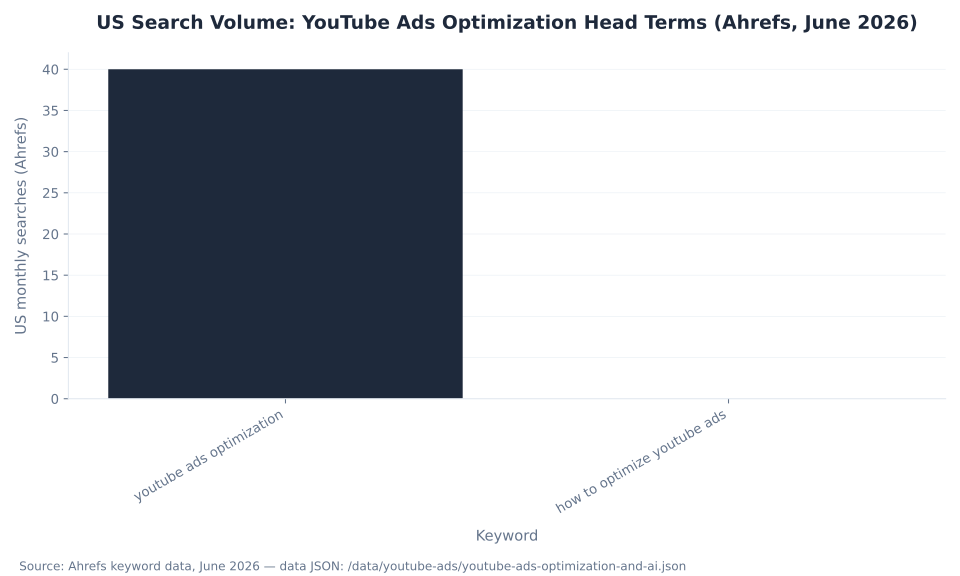
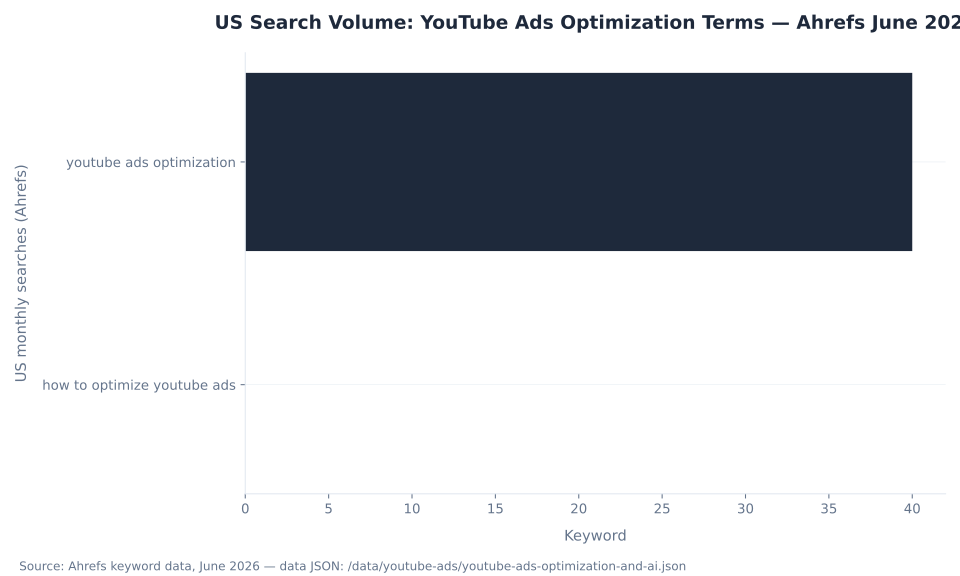
Exact-match demand for the optimization head terms is thin: “youtube ads optimization” registers 40 US monthly searches and “how to optimize youtube ads” sits below the Ahrefs threshold (Ahrefs, June 2026). The real opportunity is the broader troubleshooting intent the absorbed pages targeted — “youtube ads low view rate,” “low engagement,” “ai in youtube advertising,” “future of youtube advertising” — each individually thin but collectively material as perennial mid-campaign-crisis queries. The cluster head term “youtube ads” carries about 19,000 US monthly searches.
| Keyword | US Monthly Vol. | Global Vol. | CPC (USD) | Intent / note |
|---|---|---|---|---|
| youtube ads optimization | 40 | 40 | — | Head term; established-advertiser optimization intent |
| how to optimize youtube ads | 0 (sub-threshold) | 0 | $2.00 | Below Ahrefs minimum (~10/mo), not literally zero; the $2.00 CPC signals commercial intent |
| youtube ads (cluster head term) | 19,000 | — | — | Orientation traffic; the optimization sub-terms are the narrow tail of this |
| 4 absorbed zombie URLs (combined) | — | — | — | 0 clicks / 5 impressions across 90 days (GSC) — a fresh consolidating pillar is the correct play |
Source: Ahrefs keyword data, June 2026 (US, 12-month average); GSC figures: Google Search Console project 8261895 (mbadv.agency /youtube-ads/ prefix), 90-day window March 31 – June 29, 2026. Volume 0 indicates sub-threshold, not literal zero. Not mbadv advertising data.
This is a diagnostic, depth-first asset that earns authority from advertisers mid-campaign-crisis, not search volume at scale. The four absorbed pages were zero-click zombies; consolidating their combined intent into one funnel-ordered playbook is the strategy.
US Search Volume: YouTube Ads Optimization Head Terms (Ahrefs, June 2026)
When Engagement Is Flat and Clicks Do Not Convert
If the view rate is healthy but engagement and CTR stay weak, the break is the call-to-action and the next step: no clear CTA, a weak end screen, or a mismatched in-feed thumbnail and headline. The fix is the “Direction” element of ABCD — one clear ask, an end screen, and creative that invites the click. If clicks come but conversions do not, the break is almost always downstream. A broken Google tag, missing enhanced conversions, or a slow, message-mismatched landing page produces clicks that never register as conversions — and a Smart Bidding model pointed at a thin or broken signal optimizes confidently toward the wrong thing.
Conversion tracking is the most load-bearing setup on the account, because it is the signal every Google AI lever runs on. The checklist below is the measurement-readiness audit to run before concluding a campaign is “broken.” For the deeper treatment see YouTube ads metrics and measurement; for the implementation, server-side tracking keeps the signal clean.
| Element | What it is | What to confirm |
|---|---|---|
| Google tag | The conversion-tracking tag (the renamed “global site tag,” gtag.js); set up direct, via Tag Manager, or by GA4 import | It fires on every conversion page; the conversion action is set to the right category and count |
| Enhanced conversions | Hashed first-party data (email, name, address, phone) that recovers conversions lost to cookie gaps | Enabled for web and/or leads; the SHA-256 hashing is firing (Google, enhanced conversions) |
| Engaged-view conversions (EVC) | A conversion after an engaged view (watched ≥10s, or the whole ad if shorter) with no click | EVC is enabled so view-led conversions are credited (Google, engaged-view conversions) |
| View-through conversions (VTC) | An impression seen, no click, convert within the view-through window (default about one day) | Reported separately from click and engaged-view conversions; not double-counted (Google, view-through conversions) |
| Attribution model | How credit is assigned across touchpoints; only Data-Driven Attribution and Last-Click remain | DDA is the default and rules-based models (first-click/linear/time-decay/position-based) are gone (Google, attribution) |
| Consent Mode v2 | EEA/UK consent signals (ad_user_data, ad_personalization) that feed AI conversion modeling | Signals pass so modeled conversions are recovered when users decline cookies (Google, Consent Mode v2) |
Sources: Google Ads Help — enhanced conversions (answer/9888656), engaged-view and view-through conversions (answer/10048752, 7320922), attribution and DDA (answer/6259715), Consent Mode v2 (answer/13695607). Setup specifics shift in the Google Ads UI; confirm each item in the live account.
The engaged-view threshold is 10 seconds; the skippable in-stream billable view is 30 seconds (Google, video views). Once the tracking is verified clean, a clicks-without-conversions symptom points at the landing page — speed, mobile experience, and message match.
Google’s AI Levers for YouTube: What the AI Automates, and What You Still Own
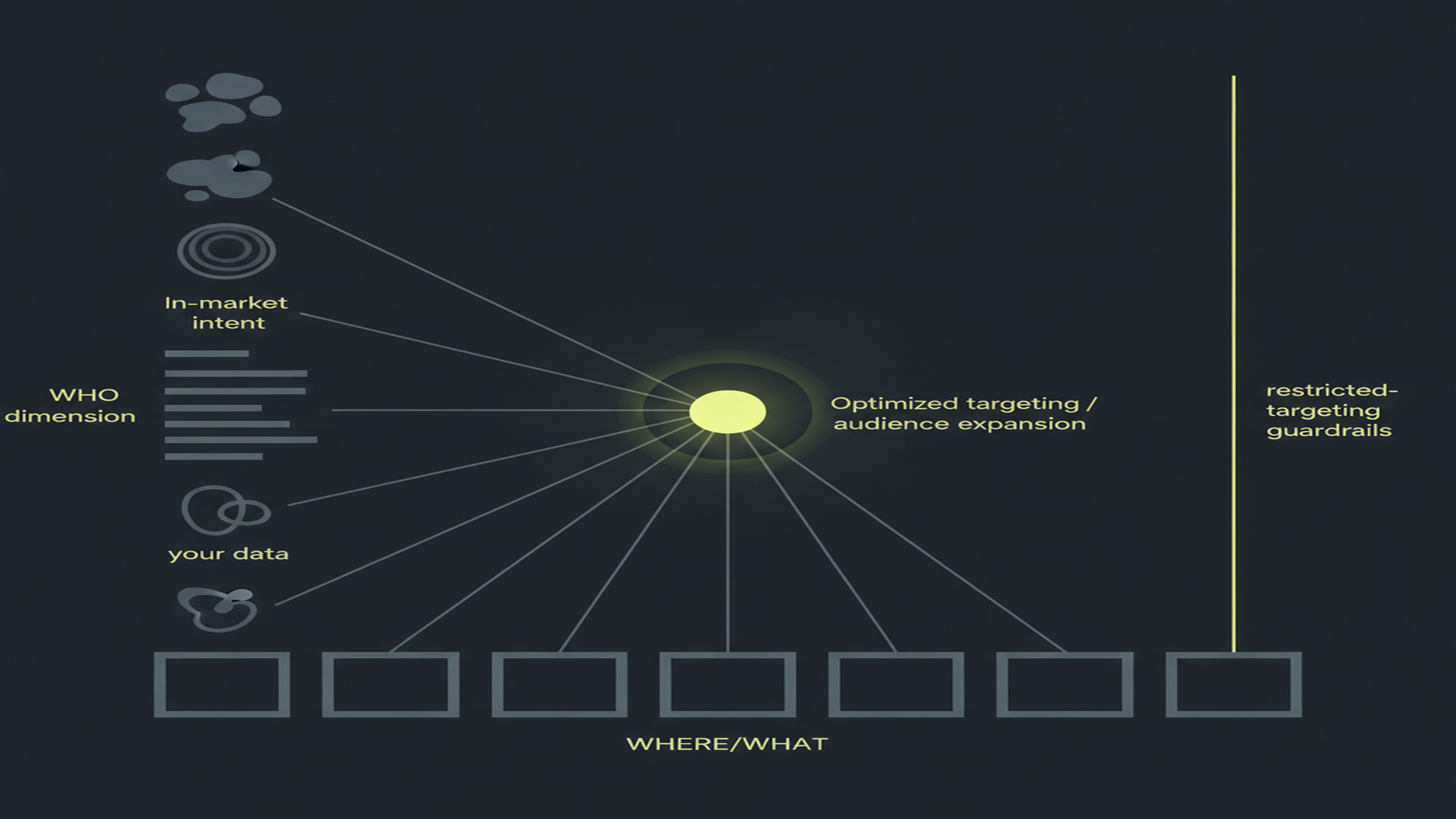
Google's AI has crossed from “smart bidding” into “the AI runs the campaign,” and the honest question is what to hand over and what to keep. The stack is a suite, not a button: Smart Bidding sets per-auction bids; optimized targeting looks beyond your selected segments for likely converters and is on by default for action campaigns (Google, optimized targeting); Demand Gen automates the format-and-placement mix; and AI creative assets and product feeds layer on top.
This is the misconception that wastes the most money: “turn on Smart Bidding and Demand Gen and you are done.” False — Google's AI automates execution, not strategy. Every lever depends on inputs you own: the conversion goal and its CPA/ROAS target, the offer and creative concept, the brand-safety guardrails, and, most load-bearing, the conversion-tracking setup that feeds the AI the signal it optimizes on. Point Smart Bidding at a broken conversion tag and it optimizes confidently toward the wrong thing. MB Adv Agency frames the AI half as “hand the machine the mechanical work; keep ownership of goals, creative, and measurement.”
| Lever | What the AI automates | What you still own / watch-out |
|---|---|---|
| Smart Bidding (Target CPA / Target ROAS / Maximize conversions / value) | Sets per-auction bids in real time to hit a CPA or ROAS target using live conversion signals | Needs accurate conversion tracking and volume to learn. From June 2026 Google renames “Maximize conversions with a Target CPA” to Target CPA and the value pair to Target ROAS; an August 17, 2026 budget change can cause temporary fluctuations |
| Optimized targeting (default-on, action campaigns) | Looks beyond your selected segments for users likely to convert, using real-time conversion data; your seed is a hint | On by default for Demand Gen / Video action / Display; feed it a good seed and clean conversions; it can broaden spend — watch CPA and do not over-narrow |
| Audience expansion (reach / views) | A reach slider finds more people similar to your segment to grow reach and views while holding CPM/CPV | A reach and awareness lever, not a conversion lever. This is the modern replacement for the removed “similar audiences,” alongside optimized targeting |
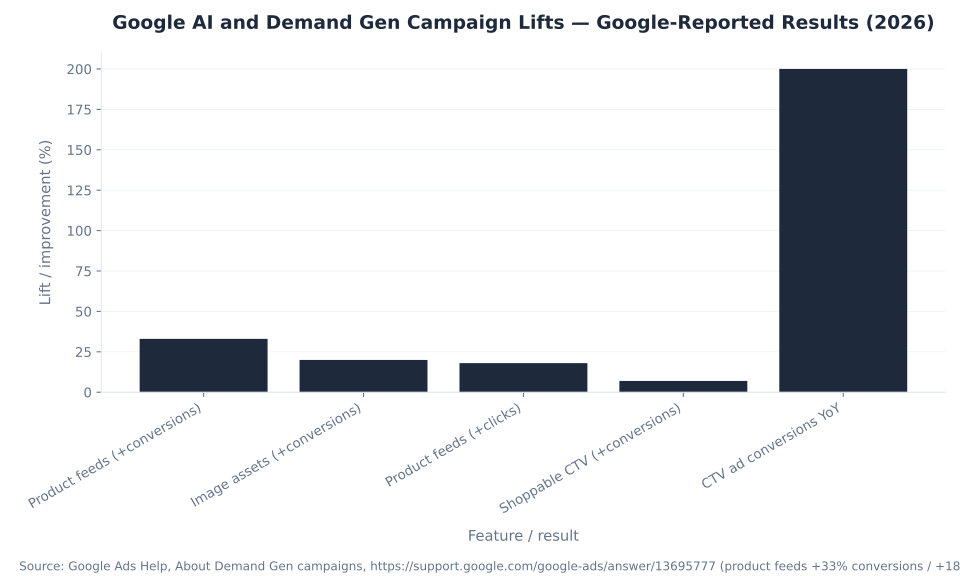
| Demand Gen (the conversion-video product) | Automates the format and placement mix across YouTube (in-stream / in-feed / Shorts / Home / Watch Next), Discover, Gmail, Maps, and GDN | Replaced Video Action Campaigns (VAC retired) — the only conversion-video type now. Google: adding image assets to a video-only Demand Gen campaign drives +20% conversions at the same CPA. You still own the offer and creative |
| Demand Gen + product feeds (shoppable) | Links a Merchant Center feed so live shoppable tiles (price, availability) render across YouTube/Shorts/Discover/Gmail/GDN | Needs a healthy Merchant Center feed. Google: product feeds in Demand Gen drive on average +33% conversions at similar CPA and +18% clicks |
| Performance Max (cross-channel) | Allocates budget across Search, Shopping, YouTube, Display, Discover, Gmail, and Maps — YouTube is one inventory surface inside | Less placement control than native Demand Gen / Video. Use channel-level reporting (since April 30, 2025) plus campaign-level negative keywords and placement exclusions to keep it accountable |
| AI-generated creative assets (Demand Gen) | Generates and animates image assets, builds creative variations, and enhances video assets (January 2026 “Demand Gen Drop”) | The AI drafts the assets; you approve brand-safe. Confirm exact asset-generation availability in the live account, because Google ships and renames these features continuously |
| Shoppable Connected TV (Jan 2026 Demand Gen Drop) | Lets viewers browse and buy while watching YouTube on the TV screen (“Buy with Google Pay” on TV) | The newest surface — verify eligibility. Google: Demand Gen including TV screens drives about +7% conversions at the same ROI |
| AI conversion modeling (Consent Mode v2 + DDA) | Models conversions lost to consent declines and cross-device; Data-Driven Attribution is the default, AI-assigned credit | Requires Consent Mode v2 signals and first-party data (enhanced conversions). Only DDA + Last-Click remain — the rules-based models were removed |
Sources: Google Ads Help — About Demand Gen campaigns (+20% conversions with image assets, +33% / +18% with product feeds), Smart Bidding and bid-strategy renames, optimized targeting, Performance Max, attribution and DDA; YouTube Brandcast 2026 / Google “Demand Gen Drop” January 2026 (shoppable CTV, about +7% conversions at the same ROI; AI creative assets). All lift figures are Google-reported — attributed to Google, never presented as mbadv data. VAC is retired; Demand Gen is the conversion-video product.
Google AI and Demand Gen Campaign Lifts — Google-Reported Results (2026)
For a structured read on which Google AI tools to hand the wheel, a Google Ads PPC audit checks the full funnel from serving down to bid strategy. The AI levers live inside specific campaign types — see YouTube ads campaign types and objectives.
Smart Bidding: Letting Google Set the Per-Auction Bid
Smart Bidding sets a bid for every auction in real time, using live conversion signals to hit a target you set — the highest-leverage AI lever for a conversion campaign, and the one most dependent on clean inputs. A strategy needs conversion volume and accurate tracking to stabilize; on a thin or broken signal it never settles. From June 2026, Google renames “Maximize conversions with a Target CPA” to Target CPA and the value pair to Target ROAS (Google, bid-strategy updates). An August 17, 2026 budget-handling change can cause temporary fluctuations after the rename.
The conversion strategies are Target CPA (conversions at a cost target) and Target ROAS (value at a return target), each renamed from its “Maximize… with a target” predecessor in June 2026; Maximize conversions and Maximize conversion value are the volume-first starting points before a target is set (Google, Smart Bidding). For non-conversion goals, Target CPV prices Video views (it replaced Maximum CPV for new campaigns from April 2025) and Target CPM prices reach and awareness, while Maximize clicks / Target CPC is the Demand Gen traffic goal.
The practical sequence is to start broad while the model gathers data, then tighten to a target once conversions flow. Most “my CPV is climbing” problems trace back to bidding, format mix, and competition — see how much YouTube ads cost for the CPV, CPM, and CPC ranges. Smart Bidding does not remove the need to set the right CPA or ROAS ceiling; that judgment stays yours.
Optimized Targeting, and Why Over-Narrow Targeting Backfires
The third costly misconception is “the tighter I target, the better my campaign performs.” On Google's AI stack, that is usually backwards. Smart Bidding and optimized targeting need conversion volume and breadth of signal — optimized targeting is on by default for action campaigns precisely because it looks beyond your selected segments for likely converters (Google, optimized targeting). Slicing the audience into tiny segments, stacking exclusions, or starving the campaign of conversions deprives the model of the data it runs on, so it never stabilizes.
Two related drift traps sit next to this one. “Similar audiences” were removed in August 2023 — the modern equivalents are optimized targeting for action goals and audience expansion for reach. And the vocabulary changed: custom segments (custom affinity and custom intent were merged, never separate types), your data segments (not “remarketing lists”), and a distinct, current Demand Gen Lookalike segments feature that is not the deprecated similar audiences.
Feed the AI a strong first-party seed and a clean, high-volume conversion stream, then let optimized targeting widen the net. Refine on spend with no return, not on a single bad placement. On Google's AI stack, “more granular control” is usually how an account accidentally guarantees underperformance. For the full audience framework, see YouTube ads targeting.
The same discipline works for considered, lead-generation purchases. MB Adv Agency helps lead-gen advertisers as a B2B PPC agency, where the temptation to over-segment a small audience is strongest and most damaging — the move most accounts need is to stop over-narrowing and let the conversion signal lead.
Demand Gen: The Conversion-Video Product That Replaced Video Action Campaigns
If your conversion-optimization mental model is “Video Action Campaigns,” it is stale. VAC is retired. Google removed new VAC creation in 2025 and completed auto-upgrades to Demand Gen by April 2026; VAC now survives only as historical reporting rows (Google, VAC upgrade to Demand Gen). Optimizing for conversions in 2026 means Demand Gen plus Smart Bidding plus clean conversion tracking — the Google tag, enhanced conversions, and engaged-view conversions.
Demand Gen earns its place with measurable, Google-reported lifts — figures that belong to Google, never an agency. Image assets, a Merchant Center product feed, and extension to the TV screen each add an increment of conversions (Google, About Demand Gen campaigns). For DTC and retail brands, the feed is where Demand Gen turns into a shoppable engine — Google Shopping feed management and our ecommerce PPC team handle that end to end.
| Lever added to Demand Gen | Google-reported lift | Baseline / note |
|---|---|---|
| Image assets (added to a video-only campaign) | +20% conversions at the same CPA | vs video-only Demand Gen (Google) |
| Product feeds (Merchant Center) | +33% conversions at similar CPA | vs video-only Demand Gen (Google) |
| Product feeds (Merchant Center) | +18% more clicks | Same source and comparison; a separate metric for the same feature (Google) |
| Shoppable Connected TV (incl. TV screens) | about +7% conversions at the same ROI | January 2026 Demand Gen Drop (Google) |
Sources: Google Ads Help, “About Demand Gen campaigns” (image assets +20%; product feeds +33% / +18%); Google blog, “Demand Gen Drop,” January 2026 (shoppable CTV about +7%). All figures are Google-reported from controlled tests or internal data — attributed to Google, never presented as mbadv client data; re-confirm at publish as features mature.
The discipline most Demand Gen accounts need is to stop over-narrowing: Smart Bidding and optimized targeting need conversion volume and breadth of signal. MB Adv Agency has found that for SaaS and fashion advertisers alike, a strong seed plus a healthy conversion stream outperforms a hand-built, over-segmented audience. The VAC sunset is covered in YouTube ads campaign types and objectives.
The Role of AI in YouTube Advertising: It Automates Execution, Not Strategy
The clean-eyed way to read Google's AI is as a division of labor. Hand the AI the mechanical, high-volume work it does tirelessly — per-auction bidding, audience expansion, asset variation, first-draft creative. Keep ownership of strategy and guardrails: the offer, the conversion goal and its CPA/ROAS ceiling, the brand-safe creative judgment, and the conversion-tracking setup that feeds the AI. Automation removes the busywork; it does not remove the need for someone who knows what “good” means for this business and keeps the signal clean.
Read it task by task. Smart Bidding runs the per-auction bidding; you own the CPA/ROAS ceiling and the clean tracking that make the target meaningful. Optimized targeting and audience expansion widen reach beyond the seed; you own the first-party seed, the exclusions, and the discipline not to over-narrow. Demand Gen allocates the format and placement mix; you own the offer and the objective it serves. AI tools draft creative variations; you approve every brand-safe asset that ships. And Performance Max moves budget across channels, YouTube included — channel-level reporting, negative keywords, and placement exclusions keep it accountable (Google, Performance Max).
Measurement is the load-bearing row. Point Smart Bidding at a broken or thin conversion tag and it optimizes confidently toward the wrong thing — the AI is only as good as the signal it learns from. Server-side tracking and a GA4 audit harden the conversion data (Consent Mode v2 and DDA, Google, attribution) the model runs on.
Connected TV Is the Growth Engine
Connected TV is where the growth and the future are, and it changes what “optimization” means. YouTube is the most-watched streaming platform on US TV screens — 13.4% of total US TV viewing (Nielsen “The Gauge,” April 2026), number one every month for about three years. CTV is YouTube's fastest-growing surface: CTV ad conversions grew more than 200% year over year (Brandcast 2026), and more than 150 million Americans watch YouTube on CTV every month (Google, 2025). The TV screen is no longer a brand-only awareness surface.
| Metric | Figure | Source |
|---|---|---|
| Share of total US TV viewing | 13.4% — #1 streaming platform on US TV | Nielsen “The Gauge,” April 2026 |
| Time as #1 on US TV screens | about 3 years (every month) | Neal Mohan, 2026 annual letter, blog.youtube |
| YouTube watched on TV screens | over 1 billion hours per day | Neal Mohan, 2025 annual letter, blog.youtube |
| CTV ad conversions growth | +200% year over year (Q1 2025→Q1 2026) | YouTube Brandcast 2026 |
| Americans watching on CTV monthly | 150 million+ | Google, 2025 |
| US adult reach, all devices | 244 million+ adults 18+ (~91% of US adults) | YouTube / Brandcast 2026, reported mid-2026 |
| FY2025 YouTube ad revenue | about $40.37 billion (ads only) | Alphabet via Tubefilter, Feb 5, 2026 |
Sources: Nielsen, “The Gauge” (13.4% of total US TV, April 2026); YouTube / Neal Mohan annual letters and Brandcast 2026; Alphabet investor relations. Figures are attributed to their named primary sources, never presented as mbadv data. The 13.4% “Gauge” figure is platform share of total US TV, distinct from the company-level “Media Distributor Gauge.”
For high-consideration categories such as automotive, the lean-back living-room impression is a different asset from a mobile skippable view. The grounded shift is that CTV is becoming a performance surface you optimize, not just a reach buy — which leads to the shoppable formats that make it measurable.
The 2026 Future of YouTube Advertising, Grounded in Announced Products
The honest version of “the future of YouTube advertising” ties every claim to a named, announced 2025-2026 product or a named primary source — no speculative invented features. The grounded direction: more execution handed to Google AI, more AI-generated creative, and shoppable, measurable TV. The table below maps each trend to what is happening and its status.
| Trend | What is happening (2026, attributed) | Status / what it means |
|---|---|---|
| Connected TV is the growth engine | YouTube is #1 streaming on US TV — 13.4% of total US TV viewing (Nielsen, April 2026); CTV ad conversions +200% YoY (Brandcast 2026); 150M+ Americans watch on CTV monthly (Google, 2025) | Live; YouTube’s fastest-growing surface. The TV screen is now a performance surface, not just a reach buy |
| Shoppable CTV | Browse and buy while watching on the TV screen; “Buy with Google Pay” on TV; Demand Gen including TV screens drives about +7% conversions at the same ROI (Google) | Rolling out via the January 2026 “Demand Gen Drop” — verify eligibility at publish |
| AI-generated creative | AI generates and animates image assets, builds creative variations, and enhances video in Demand Gen; ABCD remains the creative-effectiveness standard | Live and expanding (Demand Gen Drop) — you still own brand-safe approval |
| AI runs more of execution | Smart Bidding, optimized targeting, and Demand Gen automation absorb more manual work; Display campaigns fold into Demand Gen/GDN from June 2026 | Ongoing; bid strategies rename to “Target CPA” / “Target ROAS” (June 2026). Hand over execution, keep strategy, creative, and measurement |
| Measurement modernizes | DDA is the default; enhanced conversions and Consent Mode v2 modeling carry measurement; third-party-cookie deprecation was reversed (April 22, 2025) and Privacy Sandbox wound down | Current. The durable stack is first-party data plus Consent Mode modeling plus signed-in/cross-device, not Sandbox APIs |
| AI-assisted / “agentic” tooling | Google’s stated direction is AI increasingly building and optimizing campaigns (Demand Gen automation, AI creative, Smart Bidding) | A direction, not a single shipped named product. Tie any specific named agentic feature to a Google source before asserting it |
Sources: Nielsen, “The Gauge”; YouTube Brandcast 2026 and Neal Mohan 2026 annual letter; Google blog, “Demand Gen Drop,” January 2026; Google Ads Help — Demand Gen / Display fold-in (answer/13695777), attribution and DDA (answer/6259715), Consent Mode v2 (answer/13695607), the ABCD framework (answer/14783551). This is the fastest-aging content in the pillar; every product name, status, and figure is re-confirmed at publish, and “future” claims stay tied to announced 2025-2026 products.
The strategic read: lean into CTV and shoppable formats as they mature, keep measurement modern (DDA, enhanced conversions, Consent Mode v2 modeling), and treat any “agentic AI campaign manager” claim as verify-before-you-believe until it ships under a named Google product.
US Search Volume: YouTube Ads Optimization Terms — Ahrefs June 2026
Diagnose Before You Spend
Most underperforming YouTube campaigns are diagnosable in an hour
Our team runs a Google Ads PPC audit that walks the full funnel — serving, view rate, engagement, conversion tracking, and bid strategy — and shows you which Google AI levers are worth handing the wheel.
Google Ads PPC audit →Shoppable CTV and AI Creative: Inside the January 2026 Demand Gen Drop
The January 2026 “Demand Gen Drop” is where the CTV growth story turns into a performance lever. With shoppable Connected TV, viewers browse and buy while watching YouTube on the TV screen (“Buy with Google Pay” on TV), and Google reports that Demand Gen including TV screens drives about +7% conversions at the same ROI (Google, Demand Gen Drop). The same drop expanded AI-generated creative assets: the system generates and animates image assets, builds variations, and enhances video, while brand-safe approval stays with the advertiser.
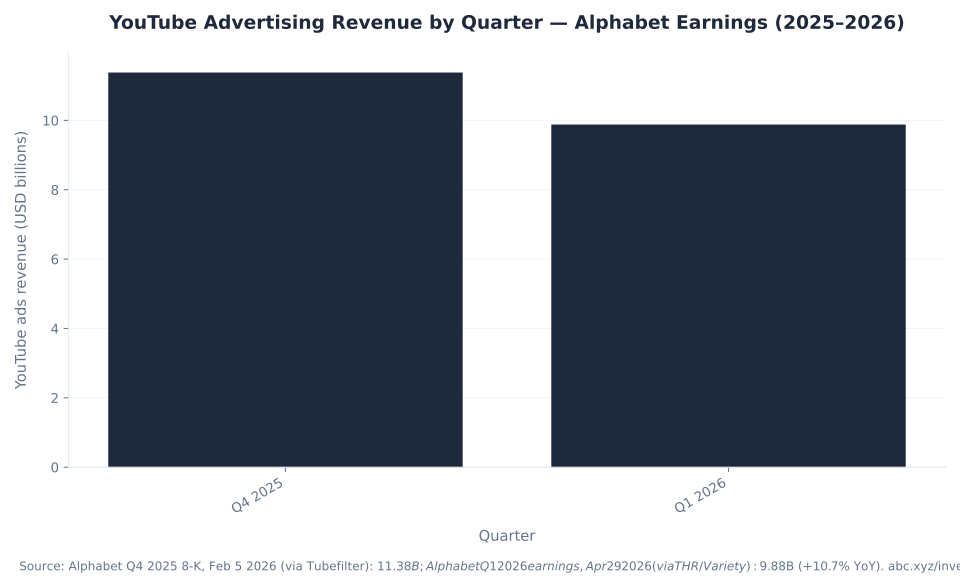
The revenue trajectory frames the investment. FY2025 YouTube ad revenue was about $40.37 billion — ads only, not the often-misquoted $60 billion figure, which adds roughly $19-20 billion of YouTube Premium subscription revenue. Quarterly, YouTube ads were $11.38 billion in Q4 2025 and $9.88 billion in Q1 2026, up 10.7% year over year (Alphabet earnings). Q4 is seasonally the strongest quarter, so the Q1 figure is lower in absolute terms while still growing year over year.
YouTube Advertising Revenue by Quarter — Alphabet Earnings (2025–2026)
For DTC and retail brands building for Shorts, skippable in-stream, and Demand Gen with product feeds — beauty, professional services, and product-led categories alike — shoppable CTV and AI-assisted creative compress the distance between an impression and a purchase. The discipline does not change: the AI drafts and the AI bids, but the offer, the brand-safe judgment, and the clean conversion signal stay with the operator.
The YouTube Optimization Playbook: A Weekly Discipline
Optimization is a weekly discipline, and the sequence below mirrors the diagnostic in Table 1. Run it top-down and stop at the first broken stage rather than reaching for the budget slider. The steps stay tool-agnostic enough to survive Google Ads UI changes.
- Confirm the campaign is actually serving. Check that the ad is approved (most reviews clear in about one business day), the bid clears the auction, and the budget and schedule are set. Thin or flat delivery is usually a serving problem, not a creative one.
- Check the view rate. If people skip at five seconds, rebuild the first five seconds against ABCD and tighten the audience match — do not raise the budget. A low view rate is a creative-and-targeting problem. See creating effective YouTube video ads.
- Check engagement and CTR. Add a clear CTA and end screen, test the in-feed thumbnail and headline, and give one unambiguous “Direction.” Test additional creative variations, including Demand Gen AI asset variations.
- Check CPV and CPM. Right-size the Target CPV or Target CPM, rebalance the surface mix (CTV is the most expensive, Shorts the cheapest per impression), and lift creative quality — a higher view rate lowers effective CPV.
- Check clicks against conversions. Verify the Google tag, enhanced conversions, and engaged-view setup, then audit the landing page for speed, mobile experience, and message match. A model pointed at a broken tag optimizes toward the wrong thing. See YouTube ads metrics and measurement.
- Check CPA and ROAS. Move to Smart Bidding (Target CPA / Target ROAS), add a Merchant Center product feed for value-based bidding, add placement and keyword exclusions, and let the model learn before judging it.
- Before concluding it is “broken,” check attribution and windows. Confirm the attribution model (DDA versus last-click) and the conversion windows, stop editing mid-learning, and change one variable at a time.
MB Adv Agency has found that the most productive first question on a stalled campaign is not “what is wrong with the creative?” but “which funnel stage broke first?” If your view rate cratered, your CPV is climbing, or you want a clear view of which Google AI tools to hand the wheel, get in touch for a YouTube and Google Ads audit.
YouTube Ads Optimization & AI FAQ
Ongoing YouTube Optimization
Optimization is a weekly discipline, not a one-time fix
Once the diagnosis is done, our team runs PPC campaign management across creative testing, Smart Bidding, optimized targeting, and Demand Gen — so the Google AI levers are handed the right work and the strategy stays yours.
PPC campaign management →Get in touchMethodology
This pillar consolidates four absorbed YouTube Ads glossary pages (addressing-low-engagement, resolving-low-video-view-rates, the-role-of-ai, and predictions-for-the-future-of-youtube-advertising). The funnel diagnostic, the Google AI levers, the bid strategies, and the measurement checklist are sourced from Google's support documentation, verified June 29, 2026: About Demand Gen campaigns, the VAC upgrade to Demand Gen, optimized targeting, and the ABCD framework. The 2026 reach, CTV, and revenue figures are attributed to named primaries: Nielsen “The Gauge,” YouTube Brandcast 2026, Neal Mohan's annual letters, and Alphabet earnings. All Demand Gen and CTV lift figures are Google-reported and attributed to Google, never presented as mbadv client data; mbadv holds no YouTube-specific client benchmark dataset, so the agency point of view stays qualitative. Search-volume data is from Ahrefs, June 2026; GSC data is from a 90-day window, March 31 to June 29, 2026. Reviewed by MB Adv Agency, June 2026.

As a Google Ads expert, I bring proven expertise in optimizing advertising campaigns to maximize ROI.
I specialize in sharing advanced strategies and targeted tips to refine Google Ads campaign management.
Committed to staying ahead of the latest trends and algorithms, I ensure that my clients receive cutting-edge solutions.
My passion for digital marketing and my ability to interpret data for strategic insights enable me to offer high-level consulting that aims to exceed expectations.
Google Partner Agency
We're a certified Google Partner Agency, which means we don’t guess — we optimize withGoogle’s full toolkit and insider support.
Your campaigns get pro-level execution, backed by real expertise (not theory).

4.9 out of 5 from 670+ reviews on Fiverr.
That’s not luck, that’s performance.
Highly recommend Matteo to set up your server side tracking. He has a deep understanding of e-commerce tracking and will go above and beyond to make sure everything is set up correctly and working 100%. If you are scaling your store this set up is non-negotiable in my opinion and there isn't many people who have this much knowledge or put the effort in to get it right. Thanks again!

avorodesign.com
I can only recommend Matteo! He was very patient, professional and very knowledgeable about GA4, Consent Mode v2, and GDPR compliance. Communication was clear, and the setup was done professionally and efficiently. Highly recommend him for anyone needing reliable tracking implementation.

www.natureiki.life
Matteo shines in the realm of online professionals. His work is not only deep in data but also complemented by his proactive communication and cooperation, setting a new standard for freelancers. If you want someone who truly exceeds expectations, look no further. Highly recommended!

www.omanbeverlysmyth.com
Exceptional Service Beyond Expectations - Outstanding Service Impeccable depth, flawless delivery, and exceptional language fluency—this service exceeded all expectations. Highly recommended. Matteo truly ROCKS!!!

ium-paris.com
Top-notch, always highly value working with Matteo. An absolute Google Ads Genius. This is approximately the 8th time I have hired him and he's helped us get 6-7 ROAS. We are excited in continuing to improve our lead flow. Hire this guy if you need Google Ads help. Thanks Matteo!

www.dleeventgroup.com
I finally found the guy who can setup server side tracking and all the ecosystem properly. I definitely recommend Matteo. He is very responsive, kind and wants to dig into things. He configured GA4, Meta, Google Ads, Outbrain and google consent v2 with Cookiebot. Thanks Matteo.

inomega.fr
MB Adv delivered exceptional work with outstanding professionalism and lots of patience, taking time to see effects of changes made and not just do the work and submit it. The proactive communication and video summaries of the work completed made working with Matteo a pleasure, as he consistently went above and beyond. Highly recommended for web analytics projects! We are already working on another project.

www.withnellsensors.co.uk
Working with Matteo on my Google Ads was a game-changer. He's not just a strategist, he's a true partner. He understood my goals and tailored a campaign that perfectly reached my target audience. I'm grateful for his expertise and dedication.

dccargo.com
Click-driven mind
with plastic-brick obsession.
We build Google Ads campaigns with the same mindset we use to build tiny brick worlds: strategy, patience, and zero tolerance for wasted pieces.
Data is our blueprint. Growth is the only acceptable outcome.