YouTube Ad Formats 2026: Complete Lineup & Specs

YouTube Ads 2026 — Platform Scale
#1
Most-watched streaming platform on US TV screens
13.4% of total US TV viewing — Nielsen “The Gauge,” April 2026 · 2.53B global ad reach (DataReportal, Jan 2025) · 200B+ Shorts daily views (Neal Mohan, Jan 2026) · CTV ad conversions +200%+ YoY (Brandcast 2026)
YouTube Ad Formats in 2026: The Complete Lineup
YouTube offers nine ad formats in 2026: skippable in-stream, non-skippable in-stream (up to 15 seconds standard, plus a separate 30-second connected-TV tier), bumper (≤6 seconds), in-feed video ads, Shorts ads, outstream, Masthead, and YouTube Select / Select CTV. Each serves a distinct placement, billing model, and campaign objective. Four legacy terms still circulate in briefs and old guides — TrueView in-stream, TrueView Discovery, overlay ads, sponsored cards — but none of them name a live 2026 format.
The table below maps every current format to its specs, billing model, and self-serve vs. reserved status. The non-skippable in-stream section and bumper section carry the cluster’s two most-searched terms; the Masthead entry is reserved and managed only — it is not available through self-serve campaign creation. For campaign-type routing (which format runs inside Video reach, Video views, or Demand Gen), see the YouTube campaign types and objectives pillar and Table 3 below.
| Format | Length | How billed | Self-serve / reserved | Placement |
|---|---|---|---|---|
| Skippable in-stream | No hard max (rec. <3 min); skip after 5s | CPV (30s / full / interact) or Target CPM | Self-serve | YouTube watch pages, all devices |
| Non-skippable in-stream (standard) | Up to 15s (16–20s in some markets) | Target CPM | Self-serve (Video reach) + reservation | YouTube watch pages, all devices |
| 30s non-skippable (CTV tier) | Up to 30s (16–30s; horizontal assets only) | Target CPM | Self-serve (reach) + reservation | Primarily TV screens / CTV |
| Bumper | ≤6 seconds (non-skippable) | Target CPM | Self-serve | YouTube watch pages, all devices |
| In-feed video ads | Host video any length | Per click or 10s autoplay view | Self-serve | YouTube search, watch-next, home / subs feed |
| Shorts ads | Vertical 9:16; swipe to skip | CPV / Target CPM / per-action | Self-serve (Demand Gen, Video) | Shorts feed (mobile / desktop / tablet / CTV) |
| Outstream | Varies | Viewable CPM (charged at 2s in-view) | Self-serve | Off YouTube — Google video partners, mobile only |
| Masthead | Varies (autoplay) | CPM (reservation / PG); CPH; legacy CPD | Reserved / managed only | YouTube Home feed, all devices |
| YouTube Select / Select CTV | Varies | CPM / reservation | Reserved / managed only | Premium YouTube + CTV / live sports / Originals |
Sources: Google, “About video ad formats”; Google, “Non-skippable in-stream ads”. Overlay ads (ended Apr 6, 2023) and sponsored cards (retired) are not listed — discontinued. Video Action Campaigns (VAC) retired Apr 2026 — the conversion video product is now Demand Gen.
The self-serve set — skippable in-stream, non-skippable (both tiers), bumper, in-feed video, Shorts, and outstream — runs through Google Ads campaign creation. The reserved set — Masthead and YouTube Select / Select CTV — requires a Google sales rep or YouTube Programmatic Guaranteed relationship. For a full introduction to how YouTube advertising works, see what YouTube ads are before diving into the format detail below.
TrueView Is Retired: The YouTube Format Rename Chain
"TrueView" no longer names any YouTube ad format. "TrueView in-stream" was renamed skippable in-stream ads; "TrueView Discovery" became in-feed video ads (via "Video discovery ads," November 2021). The only surviving TrueView term is the “TrueView views” metric — a relabel of the old “Views” column (October 2025; the counting method did not change). Similarly, overlay ads ended April 6, 2023 and sponsored cards are retired — neither is a live 2026 format.
| Legacy term (in old guides) | Current 2026 name | What changed |
|---|---|---|
| TrueView in-stream | Skippable in-stream ads | Renamed; “Views” metric relabeled “TrueView views” (Oct 2025, counting unchanged) |
| TrueView Discovery ads | In-feed video ads | TrueView Discovery → “Video discovery ads” → “in-feed video ads” (Nov 17, 2021) |
| TrueView for action | Demand Gen | → Video Action Campaigns → Demand Gen; VAC retired (final auto-upgrades Apr 2026) |
| Overlay ads | Discontinued | Semi-transparent desktop banners ended April 6, 2023 |
| Sponsored cards | Discontinued | Retired — not a live format |
| “Non-skippable up to 60 seconds” | Up to 15s (16–20s some markets) + a 30s CTV tier | Never 60s on the auction; the “60s” figure conflates reservation / DV360 reach buys |
Sources: Google, “About video ad formats”; Google, “Non-skippable in-stream ads”; Google, “About the Video Action Campaign upgrade to Demand Gen”.
MB Adv Agency has found that the live-vs-dead boundary is where most campaign briefs go wrong on YouTube. Overlay ads, sponsored cards, and TrueView format names appear in briefs regularly despite being years out of date. Getting the vocabulary right is not pedantry — a brief that asks for a “TrueView Discovery” placement or “overlay ad” is asking for formats that no longer exist, which stalls the setup conversation before creative is even discussed.
The Demand Gen rename chain deserves a separate note. TrueView for action became Video Action Campaigns (VAC), and VAC was then fully retired: new VAC creation was removed around April 2025, existing campaigns were auto-upgraded to Demand Gen from July 2025 through April 2026. As of mid-2026, Demand Gen is the only self-serve, conversion-focused video product on YouTube. The campaign types and objectives pillar — see YouTube campaign types and objectives — covers the VAC sunset and the full Demand Gen format set in detail.
Format Search Demand: What Advertisers Are Actually Researching
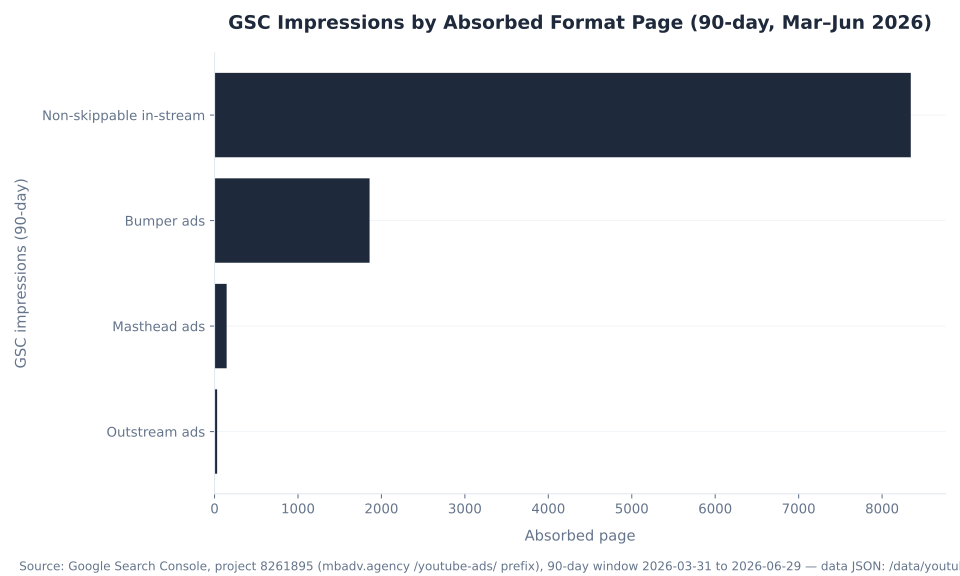
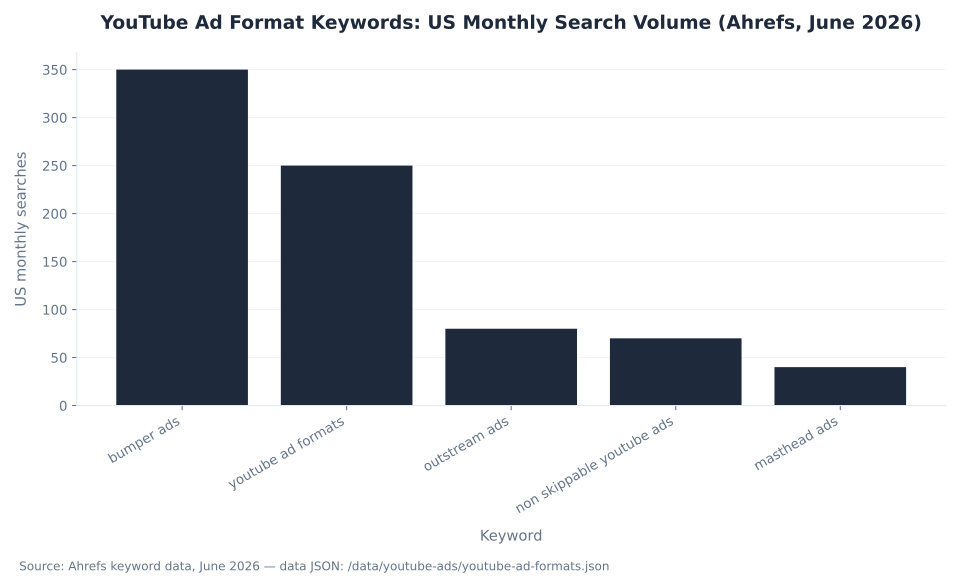
"Bumper ads" leads cluster search demand at 350 US monthly searches (Ahrefs, June 2026, KD 1) — outranking the head term "youtube ad formats" (250/mo) by 40%. The most valuable keyword in traffic terms is "non skippable youtube ads" (70/mo, KD 0, Ahrefs position 4) — the absorbed zombie page for that term generated 8,344 GSC impressions over 90 days (March–June 2026, 186 keywords, position 9.74). That single page accounts for more than 80% of the entire cluster’s GSC footprint.
| Keyword | US Monthly Vol. | Global Vol. | KD | CPC (USD) | Notes |
|---|---|---|---|---|---|
| bumper ads | 350 | 3,200 | 1 | $9.00 | Highest-volume cluster term; near-zero difficulty |
| youtube ad formats | 250 | 1,600 | 16 | $0.80 | Pillar head term; orientation intent |
| outstream ads | 80 | 250 | 4 | $7.00 | High CPC relative to volume — commercial intent |
| non skippable youtube ads ★ | 70 | 300 | 0 | $3.00 | ★ Top asset: Ahrefs pos 4, 8,344 GSC impr, $28.92/mo value |
| masthead ads | 40 | 350 | 7 | $2.00 | More global than US vol. — international brand-awareness planners |
| skippable ads | 40 | 150 | 10 | — | Format-disambiguation intent |
| in-feed video ads | 30 | 150 | 0 | — | Rename-correction intent (formerly TrueView Discovery) |
Source: Ahrefs keyword data, June 2026. US monthly volume (12-month avg). GSC figures: Google Search Console, project 8261895 (mbadv.agency /youtube-ads/ prefix), 90-day window Mar 31–Jun 29, 2026.
The "masthead ads" keyword has higher global volume (350) than US volume (40), reflecting the term’s use by brand planners in international markets. "Outstream ads" carries a $7.00 CPC despite only 80 US monthly searches — the commercial value per visitor is high for that term, because searchers are typically media planners confirming format eligibility, not students. The two TrueView zombie pages (trueview in-stream, trueview discovery) registered zero GSC impressions over 90 days — the renamed terms have fully eroded their search footprint.
Skippable In-Stream Ads
Skippable in-stream ads are pre-roll, mid-roll, or post-roll video ads that play before or during YouTube videos. The viewer sees a 5-second forced view, then a Skip button appears. This is the format formerly called "TrueView in-stream" — the name changed; the mechanic did not. Billing is per CPV (cost per view): a view counts when the viewer watches 30 seconds, completes the ad (if shorter than 30 seconds), or interacts (clicks a CTA or companion banner).
There is no hard length maximum, but Google recommends keeping skippable in-stream ads under 3 minutes for awareness campaigns. For direct-response work inside Demand Gen, shorter creative (15–30 seconds) with a strong hook in the first 5 seconds performs better because the skip button appears the moment the viewer is given the choice. The ABCD creative framework — Attention, Branding, Connection, Direction — covered in detail in creating effective YouTube video ads, applies directly here.
| Spec | Value |
|---|---|
| Minimum length | No minimum |
| Recommended max | <3 minutes |
| Skip delay | 5 seconds |
| Billable view (CPV) | 30 seconds watched, full ad viewed, or interaction (click) |
| Billing options | CPV (Target CPV) — replaced Maximum CPV Apr 2025; or Target CPM; or tCPA (Demand Gen) |
| Placement | YouTube watch pages (pre / mid / post-roll), all devices |
| Campaign types | Video reach (Efficient reach), Video views, Demand Gen |
| Self-serve / reserved | Self-serve |
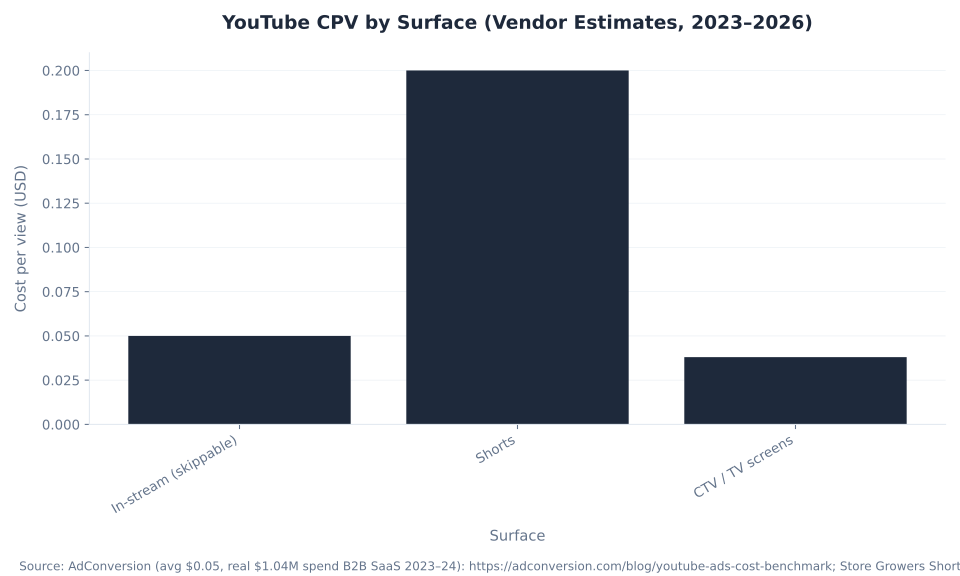
| Rep. CPV range | $0.01–$0.19 (avg $0.05 — AdConversion, $1.04M spend, B2B SaaS, 2023–24); $0.024 (DigitalApplied Q1 2026 composite) |
Sources: Google, “About video ad formats”; Google, “About cost-per-view bidding”; AdConversion, YouTube ads cost benchmark (B2B SaaS, 2023–24). CPV figures are vendor estimates — not official Google rate cards.
A critical distinction for billing: the CPV billable view for skippable in-stream is 30 seconds (or completion of the ad, or an interaction). The 10-second threshold applies to in-feed video ad views and to engaged-view conversions (EVCs) — not to in-stream billing. Conflating the two is common and leads to CPV projections that do not match what Google Ads actually charges. For PPC campaign management teams running Video views campaigns, note that Target CPV (tCPV) replaced Maximum CPV for new campaign creation from April 2025 — existing Maximum CPV campaigns continue to serve.
Non-Skippable In-Stream Ads
Non-skippable in-stream ads are forced-view video ads that play before or during a YouTube video with no skip option. The standard tier runs up to 15 seconds (16–20 seconds in some markets across all devices). A separate 30-second non-skippable CTV tier runs primarily on connected TV / TV screens (assets must be horizontal). Both are billed on Target CPM — there is no per-view billing for this format. Non-skippable ads are not up to 60 seconds — that figure conflates reservation / DV360 reach buys.
The non-skippable in-stream format is part of a three-tier family, all Target CPM, all forced-view:
| Tier | Length | Primary placement | Asset requirement | Campaign types |
|---|---|---|---|---|
| Bumper | ≤6 seconds | YouTube watch pages, all devices | No aspect-ratio restriction | Video reach (Efficient reach, Non-skippable reach) |
| Standard non-skippable | 7–15s (16–20s in some markets) | YouTube watch pages, all devices | No aspect-ratio restriction | Video reach (Non-skippable reach), reservation |
| 30-second CTV tier | 16–30 seconds | Primarily TV screens / connected TV | Horizontal (landscape) only | Video reach, reservation / Select CTV |
Source: Google, “Non-skippable in-stream ads”. All three tiers are Target CPM — no per-view billing. The 30-second CTV tier requires a horizontal (landscape) asset; vertical or square assets are not eligible.
Non-skippable in-stream ads are not up to 60 seconds. The standard auction tier is up to 15 seconds (16–20 seconds in some markets); the CTV tier is a separate 30-second format for TV screens. The “60-second” figure confuses reservation/DV360 reach buys with the self-serve auction format. Source: Google, “Non-skippable in-stream ads”.
Non-skippable in-stream ads access two self-serve routes. In Video reach campaigns, the Non-skippable reach subtype serves bumper + standard 15-second non-skippable in a forced-view mix — Google’s system allocates between the two to meet the Target CPM. In the Efficient reach subtype, the system mixes bumper + skippable + in-feed + Shorts for the broadest possible reach at the lowest CPM. Reservation buys (via a Google rep or YouTube Programmatic Guaranteed) give explicit placement control and are how the 30-second CTV tier is most often purchased at scale.
The 30-second non-skippable CTV tier is the format that matters most for brands running connected-TV reach campaigns. YouTube is the most-watched streaming platform on US TV screens — 13.4% of total US TV viewing (Nielsen “The Gauge,” April 2026) — and over 1 billion hours of YouTube are watched on TV screens every day (Neal Mohan, YouTube CEO, 2025 annual letter). A forced-view 30-second ad on a TV screen in the living room is a fundamentally different impression from a mobile skippable ad. Asset requirement: horizontal (landscape) only — vertical or square assets do not qualify for this tier.
For advertisers researching non-skippable format cost: all non-skippable tiers are billed on Target CPM. There is no CPV billing for this format — the viewer cannot skip, so there is no "view or skip" event to price. CTV CPM runs highest across surfaces at about $16.20 (DigitalApplied, Q1 2026 composite). The full cost treatment, including how Target CPM bidding works and how to set a budget for reach campaigns, is in how much do YouTube ads cost.
Bumper Ads: 6-Second Non-Skippable
Bumper ads are ≤6-second, non-skippable video ads billed on Target CPM. They are the shortest tier of the non-skippable in-stream family — not a separate format type. Bumpers run on YouTube watch pages across all devices and serve inside Video reach campaigns (both Efficient reach and Non-skippable reach subtypes). The brevity is the point: six seconds is long enough to deliver a single message and short enough that the viewer cannot mentally "fast-forward" past the forced view.
Bumper ads are the format of choice when the goal is pure, affordable reach. Because they are billed on Target CPM (not CPV), they deliver impressions at a predictable average cost regardless of whether the viewer pays attention. Their most common use cases: brand reinforcement following a longer skippable in-stream campaign (the "bumper extension" strategy), flight-period awareness for product launches, and frequency capping across a large audience. The six-second creative constraint is real: the ad must land the brand message with no room for a slow build.
"Bumper ads" is the cluster’s highest-volume search term at 350 US monthly searches (Ahrefs, June 2026, KD 1). The $9.00 CPC on that keyword indicates that advertisers researching bumper ads are high-intent buyers, not casual browsers. For brands in visually-driven categories — fashion, beauty, food and beverage — a 6-second bumper paired with a 15-second or 30-second hero spot is a common awareness architecture: the longer format tells the story; the bumper reinforces the brand across subsequent sessions.
Bumper ads are billed on Target CPM — not CPV. Because the ad is forced-view and ≤6 seconds, Google does not define a "view" event for billing purposes. Every impression is charged at the target CPM rate. This is the same billing model as all other non-skippable tiers (standard 15s and 30s CTV).
Creative requirement: bumpers need to be produced specifically at 6 seconds or shorter — a 15-second ad trimmed to 6 seconds almost never works as a standalone. The creative brief for a bumper is different: one visual, one message, one brand signal. Google’s ABCD framework applies (Attention, Branding, Connection, Direction), but in a bumper the "Connection" and "Direction" elements are compressed or implied, not explicitly built. The craft of writing and producing bumper creative is in creating effective YouTube video ads.
YouTube CPV by Surface (Vendor Estimates, 2023–2026)
In-Feed Video Ads (Formerly TrueView Discovery)
In-feed video ads appear as a thumbnail image and text in YouTube search results, the watch-next feed, and the mobile home / subscriptions feed. A click on the thumbnail opens the video on the YouTube watch page — the ad does not interrupt a video in progress. Billing is per click or per 10-second autoplay view (whichever comes first). This is the format formerly called "TrueView Discovery" (and then "Video discovery ads") — the current name has been "in-feed video ads" since November 17, 2021.
In-feed video ads reach the viewer at the moment of active search or content discovery — not as an interruption. The three placements are distinct:
- YouTube search results — appears at the top of search results for a relevant query; the strongest alignment between keyword intent and format, comparable to a paid search ad for video content.
- Watch-next feed — appears alongside or below the video currently playing; reaches viewers who are actively engaged with related content.
- Mobile home / subscriptions feed — appears at the top of the YouTube app home tab; the highest-visibility placement in the feed but with broader (less query-specific) audience intent.
The host video (the video behind the thumbnail) can be any length — there is no maximum. In-feed video ads are a self-serve format available inside Video reach campaigns (Efficient reach mix), Video views campaigns, and Demand Gen. Because engagement is opt-in (the viewer chooses to click), in-feed video ads tend to attract higher-intent viewers than skippable in-stream — at the cost of lower impression volume for the same budget. For DTC brands in categories where product discovery matters — beauty and fashion — in-feed video in YouTube search results is the closest analog to Google Shopping for video content.
One billing note: the 10-second autoplay view threshold for in-feed billing is separate from the 30-second CPV billable view for skippable in-stream. The 10-second threshold also applies to engaged-view conversions (EVCs) — a conversion that occurs after an engaged view (watched ≥10 seconds) without a click. EVCs are reported in Video, Demand Gen, and Performance Max.
YouTube CPM by Format / Surface (Vendor Estimates, Q1 2026)
![YouTube CPM by Format / Surface (Vendor Estimates, Q1 2026). Source: DigitalApplied, YouTube ad cost benchmarks, Q1 2026 composite [verify URL at publish]; AdConversion avg $9 (real $1.04M spend B2B SaaS 2023–24): https://adconversion.com/b](https://cdn.prod.website-files.com/67ffd41bfafe1ddcc5ffc492/6a42b8b2cda4c27f0fed3a31_6a42b8ae9a132d8f7b425246_youtube-ads-youtube-ad-formats-2d438645-secondary.svg)
YouTube Shorts Ads
YouTube Shorts ads are vertical 9:16 video ads that appear in the Shorts feed. Viewers swipe up to skip. Shorts reaches a massive inventory: YouTube Shorts hit 200 billion daily views (Neal Mohan, Cannes Lions, June 2025, reconfirmed January 2026) — up from 70 billion in March 2024, with part of the increase reflecting a view-counting methodology change on March 31, 2025 (a view now counts on start or replay, with no minimum watch time). Shorts ads serve across mobile, desktop, tablet, and CTV.
Shorts ads are available inside Demand Gen and Video campaigns. Demand Gen can target the Shorts feed specifically; as of March 2025, a Shorts-only channel-control beta allows advertisers to select Shorts as an exclusive placement within a Demand Gen campaign. Billing options are CPV, Target CPM, or per-action (inside Demand Gen with conversion bidding). CPM for Shorts is the lowest of any YouTube surface at $4.85 (DigitalApplied, Q1 2026 composite) — but CPV is higher than in-stream at $0.10–$0.30 (Store Growers, citing Strike Social) because the swipe-to-skip mechanic means only genuinely engaged viewers do not skip immediately.
Creative for Shorts is vertical-native. A horizontal ad reformatted to 9:16 with black bars does not perform at the same level as a natively vertical, mobile-first creative. The first two seconds matter more on Shorts than on any other YouTube surface — swipe friction is zero and users are conditioned to scroll continuously. For DTC and ecommerce brands in visually product-led categories — beauty products, fashion, food and beverage — Shorts is the primary mobile-first, short-form video surface in the YouTube ecosystem. For ecommerce advertisers running Demand Gen with product feeds, Shorts is one of the key surfaces where product tiles surface alongside the video ad.
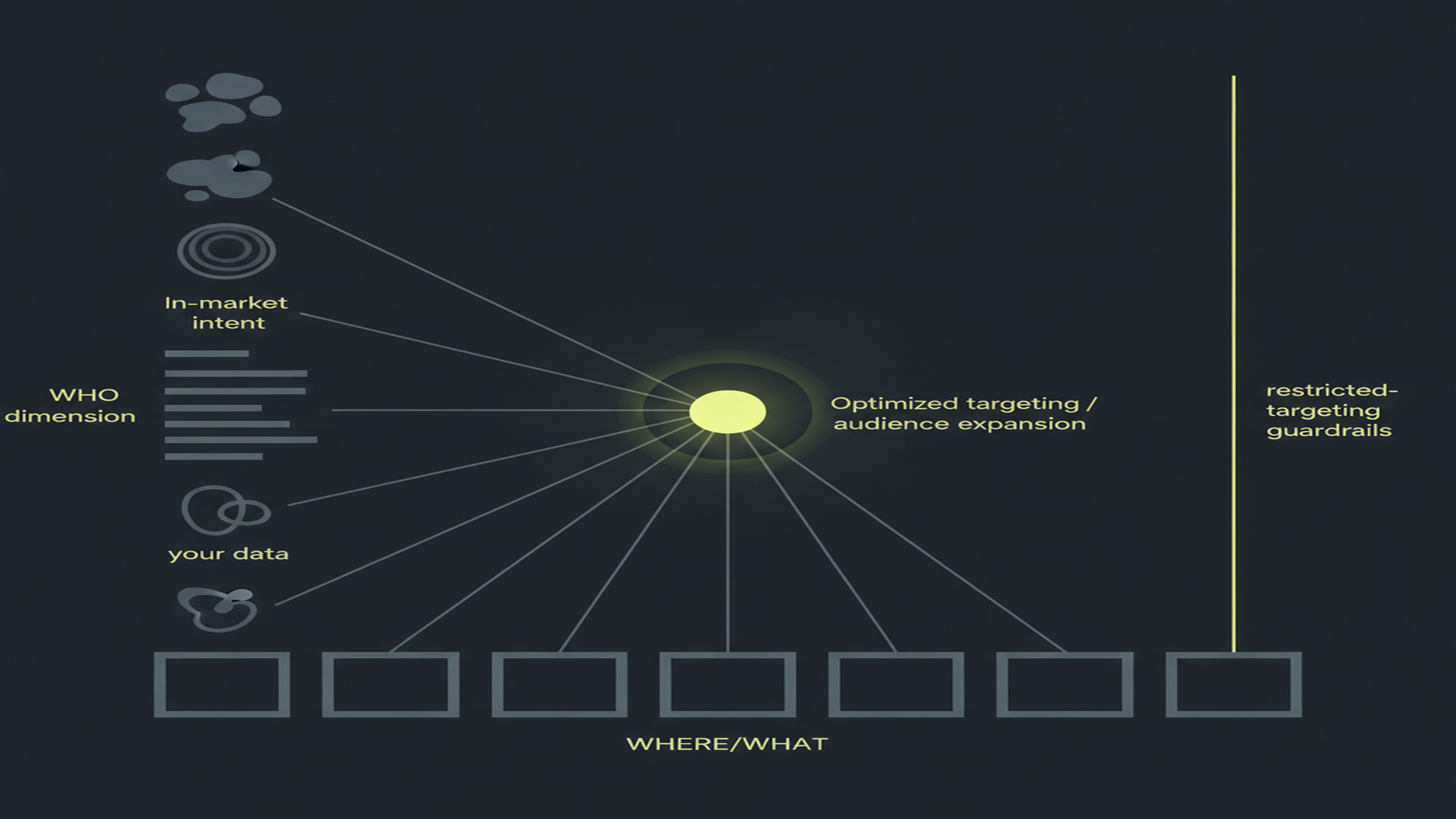
Targeting on Shorts follows the same audience-segment framework as the rest of YouTube — your data segments (formerly "remarketing"), custom segments (formerly "custom affinity + custom intent," now unified), in-market, affinity, and demographic layers. Similar audiences were removed from all campaigns in August 2023 — the replacement for reach-extension on Shorts is audience expansion (within Video reach campaigns) or optimized targeting (within Demand Gen). For the full targeting breakdown, see YouTube ads targeting.
GSC Impressions by Absorbed Format Page (90-day, Mar–Jun 2026)
Outstream Ads: Mobile-Only and Off YouTube
Outstream ads are mobile-only video ads that serve off YouTube, on Google Video Partners (GVP) — third-party apps and websites in Google’s network. They do not appear on YouTube watch pages or in the YouTube app. Billing is viewable CPM: the ad is charged once it has been in view for at least 2 continuous seconds and at least 50% of the ad is on screen. Outstream is a mobile-only format — it does not run on desktop.
The outstream format starts muted and auto-plays when in view; the viewer can tap to unmute. It is the reach-extension format for advertisers who want to extend a YouTube video campaign into mobile app and mobile web inventory beyond YouTube itself — the same video asset that runs on YouTube can serve as an outstream ad with no additional creative. No reliable named-vendor vCPM figure for outstream (off-YouTube, Google video partners) has been published as of June 2026 — the rate is inventory-dependent and rep-quoted at scale.
Outstream ads do not run on YouTube. They serve on Google video partner (GVP) apps and sites — off-YouTube mobile inventory. A campaign with outstream enabled is extending reach onto third-party mobile inventory, not onto the YouTube watch experience. Source: Google, “About video ad formats.”
Discontinued formats: Overlay ads and sponsored cards
Two formats that appear in older YouTube advertising guides are no longer live:
- Overlay ads — semi-transparent banner ads at the bottom of YouTube desktop watch pages. Ended April 6, 2023. Do not list as a live format.
- Sponsored cards — small info cards that appeared during video playback, showing related products or content. Retired. Do not list as a live format.
Both formats are still referenced in older guides and some third-party "types of YouTube ads" lists. A 2026 YouTube campaign brief that includes overlay ads or sponsored cards is citing a dead unit. MB Adv Agency has found that the live-vs-dead format boundary is the most consistent source of brief errors on YouTube — particularly for teams that last planned a YouTube campaign in 2022 or earlier, when both formats were still active.
Masthead and YouTube Select: Reserved Placements
The Masthead is a reserved, managed placement — it is not available through self-serve Google Ads campaign creation. It runs as an auto-play, sound-off video (with sound-on option) at the top of the YouTube Home feed on desktop, mobile, and TV screens. Billing is CPM (via Google Ads Reservation or YouTube Programmatic Guaranteed), CPH (cost-per-hour, 100% share-of-voice, rep-only, added 2025), or legacy CPD (cost-per-day, rep-only). All three options require a Google sales rep or managed relationship.
The Masthead is the largest-scale, highest-visibility placement YouTube offers: it occupies the entire top of the Home feed and is the first thing every YouTube user sees on their homepage. It is the launch-day format for major product reveals, tent-pole events, and brand campaigns that require maximum reach in a single day or hour. Cost is rep-quoted; the indicative CPD range that circulates in the industry ($300k–$400k/day in the US) is ballpark only and highly variable — the actual price is negotiated per booking.
The Masthead is reserved / managed only. There is no self-serve UI path to purchase a Masthead. Campaigns trying to target the YouTube homepage takeover through Google Ads campaign creation will not find a Masthead option — contact a Google rep or work through a YouTube Programmatic Guaranteed relationship. Not sure whether a Masthead, 30-second CTV non-skip, or YouTube Select fits your launch? Get in touch and our team will map the format to the goal.
YouTube Select and YouTube Select CTV
YouTube Select is a curated lineup of the top-performing YouTube channels and content, available through reservation for premium brand-safe adjacency. YouTube Select CTV specifically curates connected-TV inventory: top creator channels watched on TV screens, live sports (NFL Sunday Ticket, NBA League Pass, college sports), and YouTube Originals. Both are reserved/managed — not self-serve.
YouTube is the most-watched streaming platform on US TV screens at 13.4% of total US TV viewing (Nielsen “The Gauge,” April 2026, #1 every month for about three years). Over 1 billion hours of YouTube are watched on TV screens every day (Neal Mohan, YouTube CEO, 2025 annual letter), and CTV ad conversions grew 200%+ year-over-year (Brandcast 2026). For brands in automotive, entertainment, and premium consumer categories, YouTube Select CTV is the premium-TV-equivalent buy inside the YouTube ecosystem. See automotive PPC for how format selection maps to full-funnel video strategy in high-consideration categories.
For a full-funnel YouTube campaign: self-serve formats (skippable in-stream, non-skippable, bumper, in-feed, Shorts) handle the auction-bought, performance and reach layers; Masthead and YouTube Select handle the premium, reservation layer. The two layers are not mutually exclusive — major brands run both simultaneously, with the Masthead driving peak reach on launch day and self-serve formats sustaining awareness and conversions throughout the campaign flight.
Which Campaign Type Serves Each YouTube Ad Format
YouTube ad formats are not chosen in isolation — each format is selected inside a campaign type, which is chosen based on the campaign objective. The practical question is: "which campaign type gives me access to the format I want?" The table below maps formats to the three self-serve video campaign types and the reserved/managed route. Video Action Campaigns (VAC) are retired and do not appear — the conversion video product is now Demand Gen.
| Format | Video reach | Video views | Demand Gen | Reserved / managed |
|---|---|---|---|---|
| Skippable in-stream | Yes (Efficient reach) | Yes | Yes | — |
| Non-skippable (15s) | Yes (Non-skippable reach) | — | — | Yes (reservation) |
| Bumper (≤6s) | Yes (Efficient + Non-skip reach) | — | — | — |
| In-feed video | Yes (Efficient mix) | Yes | Yes | — |
| Shorts (9:16) | Yes (Efficient mix) | Yes | Yes | — |
| 30s non-skip CTV | Yes (reach) | — | — | Yes (reservation / Select CTV) |
| Outstream | Yes (awareness, on GVP) | — | — | — |
| Masthead | — | — | — | Yes (reservation / PG, via a rep) |
| YouTube Select / CTV | Yes (premium reach) | — | — | Yes (reservation) |
Sources: Google, “Video reach campaigns”; Google, “About Demand Gen campaigns”; Google, “About the Video Action Campaign upgrade to Demand Gen”. This is editorial guidance grounded in Google’s campaign-type documentation — not a Google-published format matrix. Confirm format eligibility in the live Google Ads UI for a given account. VAC retired — do not add a “Drive conversions” video subtype; Sales/Leads objectives route to Demand Gen.
The format-to-objective mapping can be summarized as three lanes: reach (bumper + non-skippable + skippable + in-feed + Shorts inside Video reach, billed Target CPM); views / consideration (skippable in-stream + in-feed + Shorts inside Video views, billed Target CPV); conversions (skippable in-stream + in-feed + Shorts inside Demand Gen, billed tCPA / tROAS / Maximize conversions). For a deep dive on campaign types, objectives, and the VAC sunset, see YouTube campaign types and objectives.
YouTube Ad Format Keywords: US Monthly Search Volume (Ahrefs, June 2026)
YouTube Ads Management
Running format-matched video campaigns end to end
YouTube ads are bought and managed inside Google Ads. Our team builds format-matched campaigns — from bumper reach to Demand Gen conversion — and handles creative specs, bidding, and measurement setup.
PPC campaign management →YouTube Ad Format Costs: CPV and CPM by Surface
YouTube ad costs vary by format, surface, vertical, targeting breadth, and creative quality. Skippable in-stream CPV averages $0.05 (AdConversion, real $1.04M spend dataset, B2B SaaS, 2023–24) with a range of $0.01–$0.19. CTV commands the highest CPM at $16.20 (DigitalApplied, Q1 2026 composite), while Shorts runs the lowest at $4.85 CPM (DigitalApplied, Q1 2026). All figures are third-party vendor estimates — not official Google rate cards.
| Format / surface | Primary billing | CPV (YouTube-specific) | CPM (YouTube-specific) |
|---|---|---|---|
| Skippable in-stream | CPV (30s / full / interact) | ~$0.01–$0.19 (avg $0.05 — AdConversion); $0.024 composite (DigitalApplied Q1 2026) | $11.42 (DigitalApplied Q1 2026); avg $9 (AdConversion $1.04M dataset) |
| Non-skippable & bumper | Target CPM (no per-view billing) | — (CPM-billed) | ~$5–$12 band (in-stream CPM range; no separate non-skip vendor table) |
| Shorts | CPV / Target CPM / per-action | ~$0.10–$0.30 (Store Growers, citing Strike Social) | $4.85 (DigitalApplied Q1 2026 — lowest CPM surface) |
| CTV / TV screens | Target CPM (reach) | ~$0.038 composite (DigitalApplied Q1 2026) | $16.20 (DigitalApplied Q1 2026 — highest CPM surface) |
| YouTube all-surface avg | Mixed | — | $9 avg (AdConversion, B2B SaaS, $1.04M, 2023–24); $5–$10 range (Store Growers / Strike Social 2024–25) |
| In-feed video | Per click or 10s autoplay view | In the in-stream CPV band; no clean in-feed-specific vendor figure | — |
| Masthead | CPM (reservation / PG); CPH; legacy CPD | — (reserved) | Rep-quoted. Indicative CPD ~$300k–$400k/day (US, ballpark only) |
Sources (YouTube-specific only): AdConversion, “YouTube ads cost benchmark” (real $1.04M spend dataset, B2B SaaS, 2023–24: CPV avg $0.05, CPM avg $9); Store Growers, “YouTube ads benchmarks” (in-stream CPV ~$0.05, Shorts $0.10–$0.30, CPM $5–$10, citing Strike Social); DigitalApplied, “YouTube ad cost benchmarks,” Q1 2026 composite [verify URL at publish] (CPV $0.024; in-stream CPM $11.42; Shorts CPM $4.85; CTV CPM $16.20). Do not cite WordStream / LocaliQ for YouTube — their 2025 Google Ads Benchmarks covers paid Search only ($5.26 avg CPC is generic Search, no YouTube figures).
The CTV CPM premium ($16.20 vs $9 all-surface avg) reflects that connected TV inventory is forced-view, full-screen, in a premium lean-back environment — the highest-quality ad exposure YouTube sells. Shorts CPM at $4.85 is the lowest because inventory is high and the swipe-to-skip mechanic makes the surface less like TV and more like a feed. For the full cost treatment — bidding mechanics, daily vs campaign budgets, CPA and ROAS for Demand Gen, and how to set a starting budget — see how much do YouTube ads cost. MB Adv Agency has found that clients running CTV reach campaigns consistently achieve full-screen, forced-view household reach at CPMs that compare favorably to traditional TV buys, with the added advantage of Google’s audience targeting and attribution infrastructure.
How to Choose the Right YouTube Ad Format
The right YouTube ad format follows from the campaign objective — not from the video asset on hand. Starting from "we have a 30-second hero video, so let’s run skippable in-stream" produces a format choice that works by coincidence, not by design. The sequence that produces better outcomes: objective first, campaign type second, format third, creative last.
- Start from the campaign objective. Awareness / reach, consideration / views, or conversions — the objective determines which campaign types are available, which in turn determine which formats are accessible. A conversion objective routes to Demand Gen; an awareness objective routes to Video reach; a views objective routes to Video views.
- Pick the campaign type that serves the objective. Video reach campaigns (Efficient reach, Non-skippable reach, Target frequency); Video views campaigns (Target CPV, multi-format); Demand Gen (skippable in-stream, in-feed, Home feed, Watch Next, Shorts across YouTube + Discover + Gmail). See YouTube campaign types and objectives and Table 6 above.
- Choose the format within that campaign type. For cheap guaranteed reach: bumper (≤6s) or non-skippable (15s) inside Non-skippable reach. For views and consideration: skippable in-stream + in-feed + Shorts inside Video views. For conversions: Demand Gen with the creative mix Google’s system optimizes.
- If the goal is big-screen reach or a launch takeover, ask a Google rep. The 30-second non-skippable CTV tier, YouTube Select CTV, and Masthead are reserved/managed — they are not available through self-serve campaign creation. Contact a Google rep or a YouTube Programmatic Guaranteed relationship. Not sure which reserved format fits? Get in touch.
- Match the creative spec to the format. 9:16 vertical for Shorts (never reformat a horizontal ad with black bars). Horizontal (landscape) only for the 30-second CTV tier. No length restriction for skippable in-stream, but the skip button appears at 5 seconds — the opening must hook before then. ≤6 seconds for bumper. Up to 15 seconds (16–20s in some markets) for standard non-skippable.
- Build creative to the ABCD framework. Attention (hook in the first 5 seconds), Branding (brand present early), Connection (emotional or rational relevance), Direction (clear CTA). Google’s ABCD guidance is built on 17,000+ campaigns with Ipsos/Nielsen/Kantar. Creative execution specifics are in creating effective YouTube video ads.
- Confirm billing matches the goal. CPV (Target CPV) for views campaigns — the billable in-stream view is 30 seconds or completion or interaction. Target CPM for reach campaigns (non-skippable, bumper, and skippable inside Efficient reach). Viewable CPM for outstream (charged at 2 seconds in-view). tCPA / Maximize conversions / tROAS for Demand Gen. See Table 7 above and how much do YouTube ads cost.
MB Adv Agency has found that the most productive first question when briefing a new YouTube campaign is not "what video do you have?" but "what does the campaign need to do?" The format follows from the objective. Running a 30-second hero video as skippable in-stream because that’s the asset available is not wrong — but it means the creative was produced for an unknown objective and the format was selected by default rather than design. Starting from the objective, especially for brands in SaaS or professional services with complex consideration cycles, often reveals that a Demand Gen campaign with a mix of in-stream, in-feed, and Shorts is a better fit than a single format inside a Video views campaign.
YouTube Ad Formats FAQ
DTC & Ecommerce YouTube Ads
Format-matched Shorts, in-stream, and Demand Gen for product brands
For DTC and retail brands building creative for Shorts, skippable in-stream, and Demand Gen with product feeds, our ecommerce PPC team handles format selection, creative specs, and feed management end to end.
Ecommerce PPC management →Get in touchMethodology
This pillar consolidates six absorbed YouTube Ads glossary pages (what-are-trueview-in-stream-ads, what-are-trueview-discovery-ads, what-are-non-skippable-in-stream-ads, what-are-bumper-ads, what-are-masthead-ads, what-are-outstream-ads). Format lineup, tier lengths, billing models, and self-serve/reserved status are sourced from Google, “About video ad formats” and Google, “Non-skippable in-stream ads”, verified June 29, 2026. Cost benchmarks are third-party vendor estimates: AdConversion (real $1.04M YouTube spend, B2B SaaS, 2023–24); Store Growers (citing Strike Social 2024–25); DigitalApplied Q1 2026 composite (URL to verify at publish). Search volume data: Ahrefs, June 2026. GSC data: Google Search Console, 90-day window March 31–June 29, 2026. Reviewed by MB Adv Agency, June 2026.

As a Google Ads expert, I bring proven expertise in optimizing advertising campaigns to maximize ROI.
I specialize in sharing advanced strategies and targeted tips to refine Google Ads campaign management.
Committed to staying ahead of the latest trends and algorithms, I ensure that my clients receive cutting-edge solutions.
My passion for digital marketing and my ability to interpret data for strategic insights enable me to offer high-level consulting that aims to exceed expectations.
Google Partner Agency
We're a certified Google Partner Agency, which means we don’t guess — we optimize withGoogle’s full toolkit and insider support.
Your campaigns get pro-level execution, backed by real expertise (not theory).

4.9 out of 5 from 670+ reviews on Fiverr.
That’s not luck, that’s performance.
Highly recommend Matteo to set up your server side tracking. He has a deep understanding of e-commerce tracking and will go above and beyond to make sure everything is set up correctly and working 100%. If you are scaling your store this set up is non-negotiable in my opinion and there isn't many people who have this much knowledge or put the effort in to get it right. Thanks again!
avorodesign.com
I can only recommend Matteo! He was very patient, professional and very knowledgeable about GA4, Consent Mode v2, and GDPR compliance. Communication was clear, and the setup was done professionally and efficiently. Highly recommend him for anyone needing reliable tracking implementation.

www.natureiki.life
Matteo shines in the realm of online professionals. His work is not only deep in data but also complemented by his proactive communication and cooperation, setting a new standard for freelancers. If you want someone who truly exceeds expectations, look no further. Highly recommended!

www.omanbeverlysmyth.com
Exceptional Service Beyond Expectations - Outstanding Service Impeccable depth, flawless delivery, and exceptional language fluency—this service exceeded all expectations. Highly recommended. Matteo truly ROCKS!!!

ium-paris.com
Top-notch, always highly value working with Matteo. An absolute Google Ads Genius. This is approximately the 8th time I have hired him and he's helped us get 6-7 ROAS. We are excited in continuing to improve our lead flow. Hire this guy if you need Google Ads help. Thanks Matteo!

www.dleeventgroup.com
I finally found the guy who can setup server side tracking and all the ecosystem properly. I definitely recommend Matteo. He is very responsive, kind and wants to dig into things. He configured GA4, Meta, Google Ads, Outbrain and google consent v2 with Cookiebot. Thanks Matteo.

inomega.fr
MB Adv delivered exceptional work with outstanding professionalism and lots of patience, taking time to see effects of changes made and not just do the work and submit it. The proactive communication and video summaries of the work completed made working with Matteo a pleasure, as he consistently went above and beyond. Highly recommended for web analytics projects! We are already working on another project.

www.withnellsensors.co.uk
Working with Matteo on my Google Ads was a game-changer. He's not just a strategist, he's a true partner. He understood my goals and tailored a campaign that perfectly reached my target audience. I'm grateful for his expertise and dedication.

dccargo.com
Click-driven mind
with plastic-brick obsession.
We build Google Ads campaigns with the same mindset we use to build tiny brick worlds: strategy, patience, and zero tolerance for wasted pieces.
Data is our blueprint. Growth is the only acceptable outcome.