How Google Image Search ads are changing Performance Max and visual discovery strategy
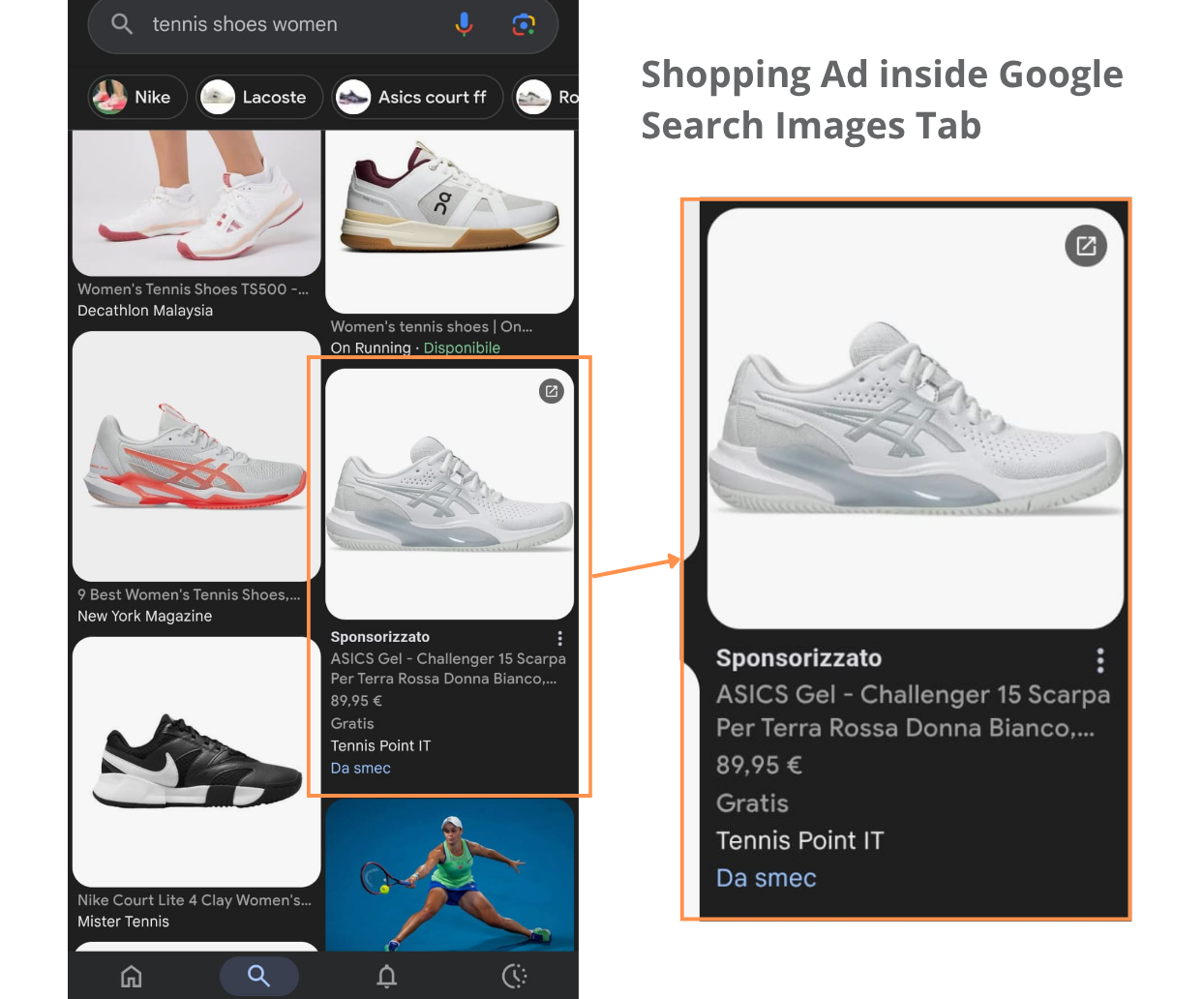
Google quietly rolled out a meaningful change to one of its most underutilized surfaces: Image Search. Sponsored units are now appearing directly in the Images tab, with full image creatives as the hero asset and “Sponsored” labels integrated into the grid.
For performance marketers, this isn’t just another placement toggle. It’s a signal about where Google is taking visual search, and how AI-powered campaign types like Performance Max are going to bleed into every discoverable surface.
Below is how this fits into the broader Google Ads ecosystem, what to expect in behavior and performance, and how to think about this inventory strategically rather than tactically.
What’s actually new in Google Image Search
The fundamental change is simple: when a user switches from the standard “All” results to the “Images” tab, Google can now inject sponsored image units directly into that visual feed.
The ad format itself is straightforward. The image is the primary asset, with a headline, short description, and brand name underneath, clearly labeled as sponsored. It feels closer to a native tile within the image grid than a classic text ad sitting on top of results.
What’s notable is how these units are likely being powered. Early patterns suggest this is not a separate “Image Ads” campaign type. Instead, it looks like an incremental surface for existing visual-first formats, particularly Performance Max and related AI-driven campaigns that already ingest product feeds and image assets. In other words, the same creative that powers Shopping-like units and PMax placements can now be re-used in the Images tab without advertisers explicitly targeting “Google Images” as a separate network.
From a setup perspective, the implication is that eligible campaigns can start serving here without any new keyword builds or structural changes. If you’re already feeding Google enough image assets, and your campaigns are opted into the broader Search / Shopping / PMax ecosystem, you may already be participating.
Where this sits in the Google Ads ecosystem
This move is consistent with Google’s ongoing strategy: collapse surfaces, abstract away placements, and let AI decide where to show which asset. We’ve already seen:
- Performance Max reaching into Search, Shopping, Display, YouTube, Discover, and Gmail.
- Image-heavy formats appearing on the main Search tab via visual product results and richer Shopping units.
- Search inventory increasingly blended with what used to be “Display” or “Discovery” style placements.
Sponsored results in Google Image Search are another step in that direction. Instead of creating a separate image-only campaign type (which would require manual strategy and more control), Google is extending existing AI-maximized inventory into a new visual surface.
For practitioners, this means two things. First, inventory is expanding even if your campaign structure doesn’t change. Second, attribution and reporting will lag behind that expansion. You’re unlikely to see “Images tab” as a clean dimension in the UI, at least initially. This will behave more like “another place your PMax creative can show” than a channel you can manage.
Discovery behavior, not classic Search behavior
The most important conceptual shift is behavioral, not technical. Users in the Images tab are in a discovery state more than a direct-response state. They’re browsing, comparing visuals, and collecting inspiration. Even for commercial queries, the mindset is often exploratory rather than transactional.
That has direct implications for performance expectations. You should anticipate:
- High impression volume relative to clicks, because the grid invites scanning more than clicking.
- Lower CTR than text ads on the main Search tab, even for similar queries.
- Potentially softer immediate conversion metrics, but meaningful assist value in multi-touch journeys.
This is closer to Discovery or upper-funnel Shopping behavior than to pure intent-driven Search. For retail and DTC brands, especially those with visually differentiated products, this can still be valuable. The image grid is where users make fast, pre-conscious judgments about style, fit, and appeal. Even if they don’t click immediately, they’re forming a mental shortlist.
If you’re running multi-channel attribution or at least looking at assisted conversions in Google Ads and Analytics, this new surface is likely to show up as a contributor rather than the hero.
When this inventory is strategically useful
The clearest beneficiaries are advertisers whose value proposition is inherently visual and whose catalogs are already well-structured:
- Retail and ecommerce with strong product imagery and feeds.
- Direct-to-consumer brands that compete on aesthetic, design, or lifestyle.
- Vertical-specific advertisers where visuals drive decision-making (home decor, fashion, beauty, auto, travel).
For these accounts, Image Search ads function as incremental visual shelf space. You’re not just winning auctions on the main Search tab; you’re occupying more of the visual real estate where comparisons actually happen.
Because this is likely fed by existing PMax or Shopping-style setups, it also increases the leverage of your current assets. High-quality product photos, lifestyle imagery, and brand-consistent visuals now have yet another surface to work on. The more Google can algorithmically pair your assets with queries across surfaces, the more you get from each image you upload.
For lead gen or B2B, the value is more nuanced. If your offer doesn’t translate well into a single compelling image, you may see impressions without meaningful downstream lift. In those cases, this is more of a side-effect of participating in AI-driven campaigns than a placement you’d proactively seek.
Trade-offs, limitations, and what to watch
There are some predictable trade-offs with this kind of expansion.
Control is limited. You don’t get a dedicated “Image Search only” toggle, and you can’t easily isolate budget to this surface. That means you’re accepting blended performance. If you’re already wrestling with PMax opacity, this is another layer of “trust the system.”
Measurement will be fuzzy. Until Google exposes this placement more clearly in reporting (if it ever does), you’ll be inferring its impact from changes in impression share, view-through, and assisted conversions. Don’t expect a clean “Image tab” breakdown in day one reports.
Creative quality becomes even more important. In a grid of images, mediocre visuals are invisible. If your product photos are purely functional, you’re unlikely to stand out. This isn’t a place where copy can rescue weak imagery; users make decisions with their eyes first.
Finally, campaign strategy needs to adjust expectations. If you measure success solely on last-click ROAS from Search, you’ll undervalue this placement. It behaves more like a discovery layer that feeds future branded and non-branded searches, retargeting pools, and direct visits.
Practical way to think about it going forward
From a strategic standpoint, it’s useful to treat sponsored units in Google Image Search as a visual discovery extension of your existing search program rather than a new channel.
Continue to structure campaigns around intent, product lines, and margins. Invest in stronger, more diverse image assets that can perform across Search, Shopping, PMax, and now the Images tab. Monitor top-of-funnel indicators—impressions, view-through, assisted conversions—and be prepared for this surface to show its value indirectly.
As Google continues to blur the lines between search, discovery, and shopping, surfaces like the Images tab will matter less as distinct channels and more as nodes in a unified visual search experience. The advertisers who benefit most will be the ones whose creative can travel well across all of them.

As a Google Ads expert, I bring proven expertise in optimizing advertising campaigns to maximize ROI.
I specialize in sharing advanced strategies and targeted tips to refine Google Ads campaign management.
Committed to staying ahead of the latest trends and algorithms, I ensure that my clients receive cutting-edge solutions.
My passion for digital marketing and my ability to interpret data for strategic insights enable me to offer high-level consulting that aims to exceed expectations.
Google Partner Agency
We're a certified Google Partner Agency, which means we don’t guess — we optimize withGoogle’s full toolkit and insider support.
Your campaigns get pro-level execution, backed by real expertise (not theory).

4.9 out of 5 from 670+ reviews on Fiverr.
That’s not luck, that’s performance.
Highly recommend Matteo to set up your server side tracking. He has a deep understanding of e-commerce tracking and will go above and beyond to make sure everything is set up correctly and working 100%. If you are scaling your store this set up is non-negotiable in my opinion and there isn't many people who have this much knowledge or put the effort in to get it right. Thanks again!
avorodesign.com
I can only recommend Matteo! He was very patient, professional and very knowledgeable about GA4, Consent Mode v2, and GDPR compliance. Communication was clear, and the setup was done professionally and efficiently. Highly recommend him for anyone needing reliable tracking implementation.

www.natureiki.life
Matteo shines in the realm of online professionals. His work is not only deep in data but also complemented by his proactive communication and cooperation, setting a new standard for freelancers. If you want someone who truly exceeds expectations, look no further. Highly recommended!

www.omanbeverlysmyth.com
Exceptional Service Beyond Expectations - Outstanding Service Impeccable depth, flawless delivery, and exceptional language fluency—this service exceeded all expectations. Highly recommended. Matteo truly ROCKS!!!
ium-paris.com
Top-notch, always highly value working with Matteo. An absolute Google Ads Genius. This is approximately the 8th time I have hired him and he's helped us get 6-7 ROAS. We are excited in continuing to improve our lead flow. Hire this guy if you need Google Ads help. Thanks Matteo!

www.dleeventgroup.com
I finally found the guy who can setup server side tracking and all the ecosystem properly. I definitely recommend Matteo. He is very responsive, kind and wants to dig into things. He configured GA4, Meta, Google Ads, Outbrain and google consent v2 with Cookiebot. Thanks Matteo.
inomega.fr
MB Adv delivered exceptional work with outstanding professionalism and lots of patience, taking time to see effects of changes made and not just do the work and submit it. The proactive communication and video summaries of the work completed made working with Matteo a pleasure, as he consistently went above and beyond. Highly recommended for web analytics projects! We are already working on another project.

www.withnellsensors.co.uk
Working with Matteo on my Google Ads was a game-changer. He's not just a strategist, he's a true partner. He understood my goals and tailored a campaign that perfectly reached my target audience. I'm grateful for his expertise and dedication.
dccargo.com
Click-driven mind
with plastic-brick obsession.
We build Google Ads campaigns with the same mindset we use to build tiny brick worlds: strategy, patience, and zero tolerance for wasted pieces.
Data is our blueprint. Growth is the only acceptable outcome.