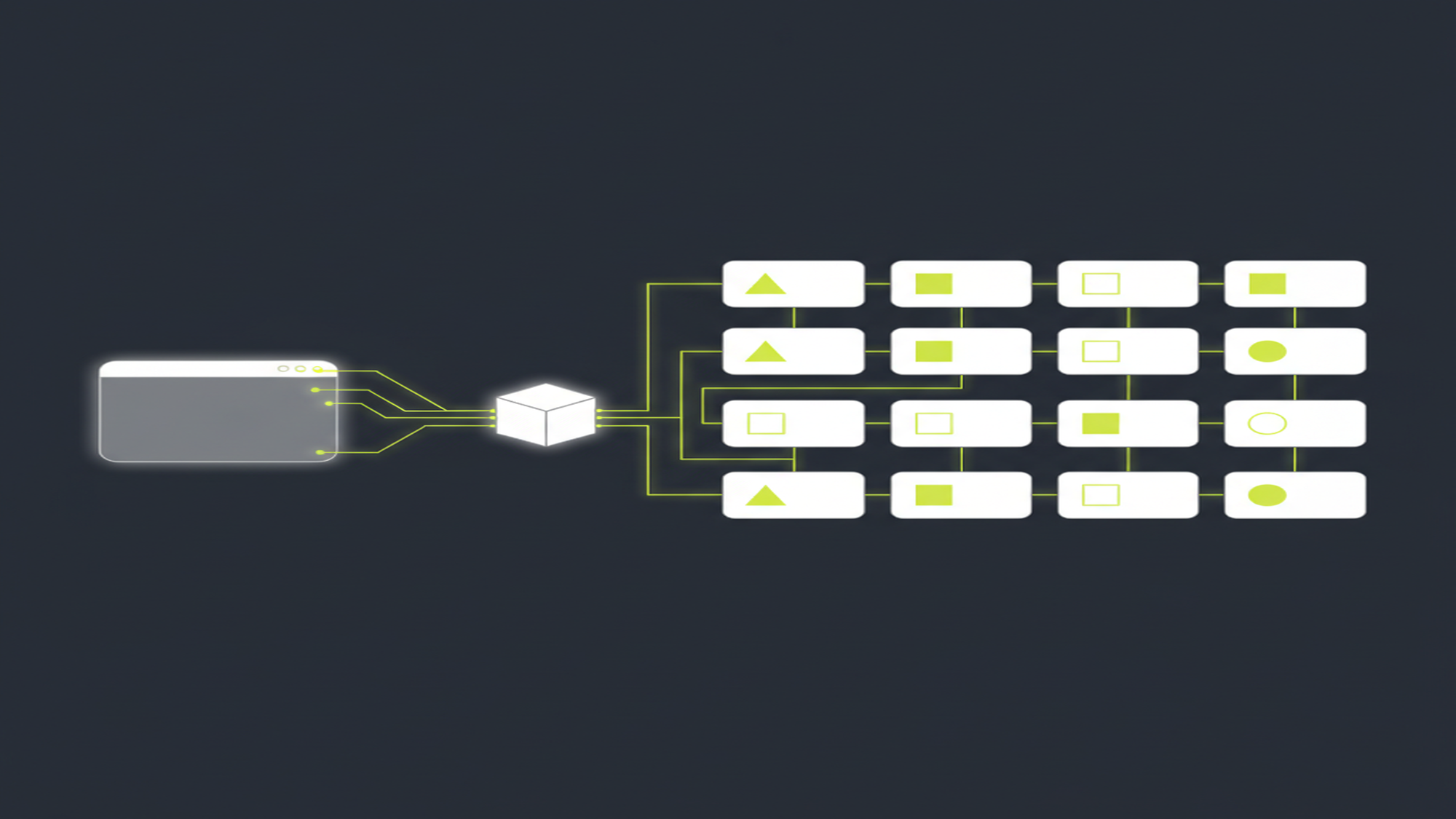
Google Ads Optimization & Testing Guide

36%
lower average CPC for advertisers with Above Average landing page experience and ad relevance — the highest-leverage optimization variable lives outside the Google Ads interface.
Search Engine Land · Landing page experience & ad relevance analysis
Most Google Ads accounts are optimized in the wrong order. Bid adjustments move first, creative tests move second, and the landing page — the component Adalysis's regression analysis weights at 39% of Quality Score — gets addressed last or not at all. The result is an account that becomes progressively more expensive rather than progressively more efficient.
This pillar covers the three systems that determine whether a Google Ads account improves over time: Google Ads Experiments (the platform's native testing layer), Landing Page Experience (the highest-leverage Quality Score component, one that lives entirely outside the Google Ads interface), and Optimization Score (a widely misread metric that measures recommendation adoption, not account performance). Before defining experiment goals, align on which metrics and KPIs the test will be measured against.
Google Ads Experiments: The Platform's Native Testing Layer
Google Ads Experiments (Campaigns → Experiments) runs a campaign variation alongside the original, splitting traffic between a control and a treatment group. As of 2026, the interface supports six distinct test types — from copy-only Ad Variations that require no campaign clone, to incrementality tests that measure causal lift above a geographic baseline.
Google's statistical methodology uses jackknife resampling on bucketed data, followed by two-tailed significance testing at a 95% confidence interval — the platform default for conclusive results on large decisions. Detecting a 20% performance lift at 95% confidence requires 400 conversions per experiment arm; detecting a 10% lift requires 1,600 per arm. The platform begins calculating differences once each arm reaches 100 conversions. Google recommends a minimum four-week duration for most experiment types to avoid false signals from weekly traffic variation.
Three additions since late 2025 materially changed what is testable:
- AI Max split test (September 2025): Google offers a built-in 50/50 traffic split when enabling AI Max, removing the need for a manual campaign clone. The control arm runs AI Max off; the treatment arm runs AI Max on. Before enabling AI Max, review how its search term matching interacts with keyword match type architecture — the feature expands serving beyond existing keyword lists.
- Campaign Mix Experiments (beta, 2026): Build experiment arms from different combinations of campaign types, evaluating how the mix affects overall business objectives — not just a single campaign's performance in isolation.
- Incrementality budget threshold: Google reduced the minimum incrementality experiment budget to $5,000 in November 2025, switching to Bayesian statistics to produce conclusive results with smaller sample sizes. The previous threshold approached $100,000, putting lift measurement out of reach for most mid-market accounts.
The statistical requirement governing every experiment type: one variable changed per arm. Testing a new bidding strategy and a new landing page simultaneously produces an uninterpretable result regardless of confidence level. Experiments are only as reliable as the data they measure — confirm conversion tracking and attribution accuracy before running any test.
The Correct Optimization Sequence
The most common account management mistake is running bid experiments before fixing landing page experience. The sequence below — derived from how Quality Score components interact — produces durable improvements rather than expensive workarounds.
Phase 1 — Diagnose before testing. Pull Quality Score component ratings (expected CTR, ad relevance, landing page experience) for all high-impression, high-spend keywords. A "Below Average" landing page experience rating is a ceiling on every downstream optimization. Fix those first. Quality Score and Ad Rank covers how component ratings translate into auction outcomes.
Phase 2 — Isolate the highest-leverage variable. For accounts with Below Average landing page experience: the landing page is the test. For accounts with strong landing pages: ad relevance is the next lever. For accounts with Above Average on all three Quality Score components: bidding strategy and audience targeting are the effective levers. For local service accounts — plumbing PPC, plumbing PPC in Missoula, and similar markets — conversion windows are short and every test variable has direct CPA impact.
Phase 3 — Choose the right experiment type. Ad Variations for copy-only tests (no campaign clone; 200 conversions per arm detects a 30% lift). Custom Experiments for structural changes — bidding strategy, match type, landing page URL (400 per arm for 20% lift at 95% confidence). AI Max Split Test for evaluating AI Max before account-wide rollout. Performance Max Experiment for evaluating PMax budget reallocation from DSA or Display. Once the experiment confirms the winning bidding strategy, the result feeds directly into the bidding system's learning period.
Statistical reality check: A result that looks conclusive at week 2 with 150 conversions per arm is not statistically conclusive at the 95% level for a 20% lift. The 400-conversion threshold exists precisely to prevent early reads. Do not apply a winner before the threshold is reached.
Phase 4 — Run for minimum four weeks. Do not read results early. Day-of-week traffic variation introduces noise that a four-week window averages out. Incrementality tests require coordination with a Google account representative for Search, Shopping, Display, and Performance Max campaign types; they are available directly in-interface for Video, Discovery, and Demand Gen. PPC consultants running incrementality tests for the first time benefit from the reduced $5,000 threshold — the minimum budget dropped from thresholds approaching $100,000 in November 2025.
Phase 5 — Apply winner, document the decision. When an experiment reaches statistical significance at the target confidence level, apply the winning variant and document what changed and why. Each completed experiment is a permanent record. The compounding value over a 12-month optimization cycle is in the documented decisions that prevent re-testing variables already resolved.
| Test Type | What You're Testing | Campaign Clone? | Min. Conversions (95% CI) | Best For |
|---|---|---|---|---|
| Custom Experiment | Bidding strategy, audience, match type, landing page | Yes | 400 per arm (20% lift); 1,600 per arm (10% lift) | Structural account changes |
| Ad Variations | Ad copy (headlines, descriptions, paths) | No | 200 per arm (30% lift) | Creative messaging tests |
| Performance Max Experiment | Budget reallocation from DSA or Display into PMax | Yes | ≥4 weeks minimum (Google recommendation) | PMax adoption / migration tests |
| Campaign Mix Experiment (beta) | Multi-campaign-type combinations | Yes | Volume-dependent; beta access required | Cross-type budget strategy testing |
| AI Max Split Test | AI Max on vs. off (50/50 split built in) | No | Auto-detected; 4–6 weeks recommended | AI Max evaluation before full account rollout |
| Incrementality Test | Causal lift above geo or holdout baseline | No | Min. $5,000 budget (reduced November 2025) | Brand awareness; hard-to-attribute goals |
Sources: Google Ads Help — Experiments statistical methodology; ALM Corp Campaign Mix Experiments guide (2026); PPC.land (November 2025). Conversion volume benchmarks from Google Ads statistical methodology documentation and Growth Spree Official power-calculation analysis; actual requirements vary by baseline conversion rate and minimum detectable effect.
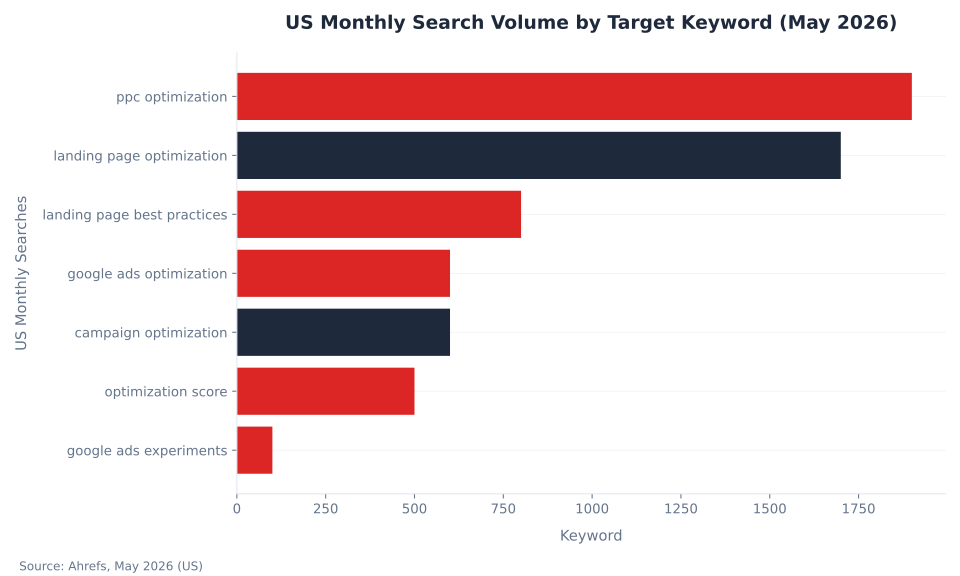
US Monthly Search Volume by Target Keyword (May 2026)
| Factor | Google's Evaluation Dimension | Impact if Below Average | Source |
|---|---|---|---|
| Message match | Page headline and body reflect the ad copy and query intent | Quality Score capped at 4–5; CPC structurally elevated | Google Ads Help; Adalysis (2025) |
| Navigational clarity | Single dominant CTA; minimal navigation clutter | Flagged by predictive LPQS model (Feb 2025) before traffic is served | Search Engine Land (2025) |
| Page load speed (LCP) | Largest Contentful Paint ≤ 2.5s | Contributes to Below Average rating; LCP and INP are Baseline Newly Available across all major browsers (Dec 2025) | Google Search Central |
| Interactivity (INP) | Interaction to Next Paint ≤ 200ms (replaced FID, March 12, 2024) | Contributes to Below Average rating; relevant for pages with interactive elements | web.dev (2024) |
| Transparency | Clear business identity, privacy policy, contact information | Flagged as "unexpected destination" by predictive LPQS model | Search Engine Land (2025) |
| Content relevance | Page content topically matches the keyword cluster | Core Quality Score dimension; contributes to Below Average rating | Google Ads Help |
| Ad-to-page consistency | Ad creative, landing page, and query form a coherent chain | LPE estimated at 39% of total QS weight (Adalysis regression analysis) | Adalysis (2025) |
Note: the 39% LPE weight is Adalysis third-party regression analysis, not a Google-published component breakdown. Google does not disclose exact Quality Score weights.

Stop guessing. Start testing with a structured Google Ads optimization cycle.
View PPC Consulting Services →Landing Page Experience: The Quality Score Component That Lives Outside Google Ads
Landing page experience is one of three Quality Score components, displayed per keyword as Above Average, Average, or Below Average in the Keywords tab. Adalysis's regression analysis of Quality Score component weights estimates landing page experience at 39% of total Quality Score weight — equal to expected CTR, and higher than ad relevance at 22%. Google does not publish exact component weights; the 39% figure is third-party regression analysis, not a Google-confirmed breakdown.
The directional reality is verifiable in every auction: a "Below Average" landing page experience rating caps Quality Score and Ad Rank at 4–5 out of 10 regardless of how strong expected CTR or ad relevance are. On a Quality Score 4 keyword, raising the bid moves the advertiser from a bad auction position to a slightly less bad position at a higher cost. Search Engine Land analysis found that advertisers with Above Average ratings for both landing page experience and ad relevance pay CPCs 36% below average. No bid adjustment produces that outcome when the underlying Quality Score components are Below Average.
The correct optimization sequence: fix the landing page → improve ad relevance → then optimize bids. Skipping steps 1 and 2 turns the bidding strategy into an expensive workaround for a fixable structural problem.
On February 5, 2025, Google launched a predictive landing page quality scoring (LPQS) model that evaluates pages before traffic is served. A freshly built page with zero impressions now receives a quality rating based on structure and content signals alone. The model evaluates three dimensions specifically:
- Navigational clarity: Single dominant CTA; no excessive navigation clutter routing users off the conversion path.
- Transparency: Visible business identity, privacy policy, and contact information. Pages without these are flagged as "unexpected destinations."
- Unexpected destination detection: The ad promise must match page content. Generic pages serving broad queries are flagged regardless of topical relevance.
Core Web Vitals complete the landing page picture. Google's "good" thresholds are LCP ≤ 2.5s (Largest Contentful Paint) and INP ≤ 200ms (Interaction to Next Paint). INP replaced FID as a Core Web Vital on March 12, 2024; both LCP and INP became Baseline Newly Available — supported across all major browsers — in December 2025. For legal PPC and legal PPC in markets like Missoula, where single-click costs routinely exceed $50, a Below Average landing page experience is not a minor inefficiency — it is a structural cost floor that bid adjustments cannot lower.
The February 2025 LPQS update means navigational clarity, transparency, and message match are now simultaneously a CRO concern and a Quality Score concern. A page that fails message match does not just convert poorly — it starts with a structural Quality Score penalty before a single impression is served.
Optimization Score: What It Measures — and Why That Matters
Optimization Score is a 0–100% estimate displayed in the Recommendations tab. Google's own definition: "an estimate of how well your account is set to perform." A score of 100% means every active recommendation has been reviewed — either applied or dismissed. It does not measure ROAS, CPA, conversion volume, or any output metric an advertiser cares about.
Dismissing a recommendation raises the score identically to applying it. An account with a 60% Optimization Score that has deliberately dismissed irrelevant recommendations — broad match expansion on a precision B2B account, budget increases the advertiser has already decided against — is often better configured than an account that auto-applied its way to 100%. The score is a Google-interest metric, not an advertiser-interest metric.
Google organizes auto-apply recommendations into two bundles. "Maintain Your Ads" covers structural cleanup: removing redundant keywords, removing non-serving keywords, using optimized ad rotation. Google confirms this bundle does not increase budget — it is safe to enable for most accounts. "Grow Your Business" covers expansion: add broad match, add new keywords, expand to Target ROAS/CPA, enable AI Max, enable Performance Max. Each item in this bundle can materially change account behavior and spend. Evaluate individually before enabling auto-apply for any item in this bundle.
MB Adv Agency treats Optimization Score as a prompt to open the Recommendations tab for a review cycle — not as a KPI. Each recommendation is evaluated on its merits against the account's actual strategy. The score that results from that review is irrelevant.
AI Max: The Expansion Layer to Run as an Experiment First
AI Max is an optional enhancement layer for Search campaigns, available globally since September 2025. When enabled, it activates two features: search term matching (ads served on queries beyond existing keywords, using broad match and keywordless signals) and final URL expansion (routing users to the most query-relevant page on the site rather than the designated final URL).
Google's own data shows a median 14% increase in conversions at similar CPA/ROAS for campaigns using AI Max; campaigns previously using primarily exact and phrase match see up to 27% uplift. Both figures come from Google's internal analysis. The risk: both AI Max features expand targeting beyond what the advertiser configured. For financial services PPC, dental PPC, and any vertical where irrelevant queries carry high CPC, enabling AI Max account-wide without testing first shifts query and URL control to Google's model with no data-driven basis.
MB Adv Agency runs AI Max as a 50/50 traffic split experiment before enabling it on any account. The built-in split — available since September 2025 — tracks conversion lift with statistical significance before committing. Applying AI Max directly from the recommendation card, without a controlled experiment, provides no data-driven basis for the decision. As of 2026, Google is serving AI Max adoption as a large recommendation card in accounts that have not enabled it; clicking "Apply" without reviewing triggers both features simultaneously.
CRO for Paid Search: A Tighter Problem Than Website CRO
Generic conversion rate optimization applies to all traffic indiscriminately. For Google Ads landing pages, the constraint is sharper: one query cluster, one intent, one CTA. The checklist is shorter — and the payoff is faster because every improvement compounds directly into Quality Score, ad rank, and CPC.
The minimum viable checklist for a paid-search landing page, drawing from Google Ads Help, the February 2025 LPQS model, and Apexure's practitioner analysis: message match (the page headline echoes the ad copy and the query — same language, same offer); single primary CTA above the fold; LCP ≤ 2.5s measured via PageSpeed Insights; INP ≤ 200ms (particularly relevant for pages with forms or interactive calculators); visible business name, privacy policy, and contact; no outbound links or navigation routing users off the conversion path.
The February 2025 LPQS update makes message match, navigational clarity, and transparency pre-traffic Quality Score concerns, not just post-traffic CRO concerns. For fashion PPC and furniture PPC advertisers running product-specific landing pages, a single CRO pass that fixes message match across high-spend ad groups translates directly into lower CPC and higher conversion rate simultaneously.
Two Misconceptions That Increase Costs
These two misreadings of how Google Ads optimization works are widespread enough to have measurable cost consequences. Both trace to the same underlying error: treating Google's reported metrics as performance metrics rather than diagnostic inputs.
Misconception 1: A 100% Optimization Score means a well-optimized account. It means Google has no pending recommendations — either because they were applied or dismissed. The score has no relationship to ROAS, CPA, or conversion volume. Accounts with 100% scores routinely carry structural problems that recommendations never flag: over-broad match types, redundant ad groups, thin conversion data. The score is a Google-interest metric: it moves when you take the action Google surfaces, regardless of whether that action benefits the advertiser.
Misconception 2: Optimization is about the bids — adjust the bids and the account improves. Bidding is the third lever, not the first. Landing page experience accounts for 39% of Quality Score (Adalysis, 2025). A Below Average landing page experience caps Quality Score at 4–5 out of 10 regardless of bid. On a Quality Score 4 keyword, raising the bid moves the advertiser from a bad position to a slightly less bad position at a higher cost. This matters most in structurally high-CPC verticals: real estate PPC, HVAC PPC — including competitive local markets like HVAC PPC in Flagstaff — and financial services PPC. In those accounts, a Below Average landing page experience is a structural cost floor that bid adjustments cannot lower.
Frequently Asked Questions
How do Google Ads Experiments work?
Google Ads Experiments run a campaign variation in parallel with the original, splitting traffic between a control and a treatment group. The Experiments interface (Campaigns → Experiments) tracks results and calculates statistical confidence automatically. For a Custom Experiment, Google clones the original campaign; for Ad Variations, only the copy changes and no clone is needed. Google uses jackknife resampling followed by two-tailed significance testing at a 95% confidence interval as the platform default for conclusive results. Detecting a 20% performance improvement requires 400 conversions per experiment arm; detecting a 30% lift requires 200 per arm. The platform begins calculating differences once each arm reaches 100 conversions. Google recommends a minimum four-week duration to avoid false signals from weekly traffic patterns. As of November 2025, the minimum budget for an incrementality experiment dropped to $5,000, opening lift measurement to mid-market accounts that previously could not meet the prior threshold.
What is Google Ads Optimization Score?
Optimization Score is a 0–100% estimate of whether your account has been configured according to Google's active recommendations. A 100% score means all pending recommendations have been applied or dismissed — it does not mean the account is profitable or well-structured. Google generates recommendations that reflect its product roadmap (broader match types, higher budgets, AI feature adoption) alongside genuinely useful structural fixes. Both categories look identical in the interface. Dismissing a recommendation raises the score identically to applying it, which means a strategically managed account that has dismissed irrelevant recommendations achieves 100% without implementing a single unwanted change. MB Adv Agency reviews each recommendation individually against account strategy — the resulting score is not a performance KPI.
Should I enable auto-apply recommendations in Google Ads?
Auto-apply is safe for a narrow set of structural recommendations: removing redundant keywords, removing non-serving keywords, and using optimized ad rotation — Google's "Maintain Your Ads" bundle, which Google confirms does not increase budget. Auto-apply is not safe as a blanket setting. When enabled for the "Grow Your Business" bundle, Google applies recommendations silently without per-change review. The most impactful items in that bundle — broad match expansion, budget increases, AI Max, Performance Max — can materially change account behavior and spend. The correct configuration: enable auto-apply for "Maintain Your Ads" only; leave "Grow Your Business" on manual review. Access the setting at Settings → Account Settings → Auto-apply recommendations.
How does landing page experience affect Google Ads costs?
Landing page experience is one of three Quality Score components. Adalysis's regression analysis estimates it at 39% of total Quality Score weight — equal to expected CTR and higher than ad relevance at 22%. A "Below Average" rating caps Quality Score at 4–5 out of 10 regardless of expected CTR or ad relevance strength. Advertisers with Above Average ratings for both landing page experience and ad relevance pay CPCs 36% below average (Search Engine Land). The primary factors Google evaluates: message match between ad and page headline, navigational clarity (single dominant CTA), page load speed (LCP ≤ 2.5s), interactivity (INP ≤ 200ms — the Core Web Vital that replaced FID on March 12, 2024), and transparent business identity. Google's February 2025 predictive LPQS model evaluates pages before traffic is served, meaning a poorly designed page receives a Below Average rating before a single impression.
What is AI Max for Search, and should I enable it?
AI Max is an optional enhancement layer for Search campaigns, available globally since September 2025. It activates two features: search term matching (ads served on queries beyond existing keywords using broad match and keywordless signals) and final URL expansion (routing users to the most query-relevant page on the site rather than the designated final URL). Google's own data shows a median 14% increase in conversions at similar CPA/ROAS; campaigns previously using primarily exact and phrase match see up to 27% uplift. Both figures come from Google's internal analysis, not third-party measurement. The risk: both features expand targeting beyond what the advertiser configured. MB Adv Agency runs AI Max as a built-in 50/50 traffic split experiment — available since September 2025 — before enabling it on any account. Applying AI Max directly from the recommendation card provides no data-driven basis for the decision.
Running Google Ads in-house and want a second opinion on your current setup?
Get a Free Account Review →Methodology
Data sources: Google Ads Help documentation (support.google.com), Google developer documentation (developers.google.com), web.dev and Google Search Central for Core Web Vitals, Search Engine Land practitioner coverage, Adalysis Quality Score regression analysis (2025), ALM Corp 2026 Experiment Center guide, PPC.land November 2025 incrementality reporting, Apexure and get-ryze.ai LPQS practitioner analyses (2026), Growth Spree Official statistical methodology guide. Search demand data from Ahrefs, May 2026 (US). No MB Adv client benchmark data appears in this article; all figures trace to primary sources. Last updated: June 2026. Reviewed by MB Adv Agency, June 2026.

As a Google Ads expert, I bring proven expertise in optimizing advertising campaigns to maximize ROI.
I specialize in sharing advanced strategies and targeted tips to refine Google Ads campaign management.
Committed to staying ahead of the latest trends and algorithms, I ensure that my clients receive cutting-edge solutions.
My passion for digital marketing and my ability to interpret data for strategic insights enable me to offer high-level consulting that aims to exceed expectations.
Google Partner Agency
We're a certified Google Partner Agency, which means we don’t guess — we optimize withGoogle’s full toolkit and insider support.
Your campaigns get pro-level execution, backed by real expertise (not theory).
4.9 out of 5 from 670+ reviews on Fiverr.
That’s not luck, that’s performance.
Highly recommend Matteo to set up your server side tracking. He has a deep understanding of e-commerce tracking and will go above and beyond to make sure everything is set up correctly and working 100%. If you are scaling your store this set up is non-negotiable in my opinion and there isn't many people who have this much knowledge or put the effort in to get it right. Thanks again!
avorodesign.com
I can only recommend Matteo! He was very patient, professional and very knowledgeable about GA4, Consent Mode v2, and GDPR compliance. Communication was clear, and the setup was done professionally and efficiently. Highly recommend him for anyone needing reliable tracking implementation.

www.natureiki.life
Matteo shines in the realm of online professionals. His work is not only deep in data but also complemented by his proactive communication and cooperation, setting a new standard for freelancers. If you want someone who truly exceeds expectations, look no further. Highly recommended!

www.omanbeverlysmyth.com
Exceptional Service Beyond Expectations - Outstanding Service Impeccable depth, flawless delivery, and exceptional language fluency—this service exceeded all expectations. Highly recommended. Matteo truly ROCKS!!!

ium-paris.com
Top-notch, always highly value working with Matteo. An absolute Google Ads Genius. This is approximately the 8th time I have hired him and he's helped us get 6-7 ROAS. We are excited in continuing to improve our lead flow. Hire this guy if you need Google Ads help. Thanks Matteo!

www.dleeventgroup.com
I finally found the guy who can setup server side tracking and all the ecosystem properly. I definitely recommend Matteo. He is very responsive, kind and wants to dig into things. He configured GA4, Meta, Google Ads, Outbrain and google consent v2 with Cookiebot. Thanks Matteo.
inomega.fr
MB Adv delivered exceptional work with outstanding professionalism and lots of patience, taking time to see effects of changes made and not just do the work and submit it. The proactive communication and video summaries of the work completed made working with Matteo a pleasure, as he consistently went above and beyond. Highly recommended for web analytics projects! We are already working on another project.
www.withnellsensors.co.uk
Working with Matteo on my Google Ads was a game-changer. He's not just a strategist, he's a true partner. He understood my goals and tailored a campaign that perfectly reached my target audience. I'm grateful for his expertise and dedication.
dccargo.com
Click-driven mind
with plastic-brick obsession.
We build Google Ads campaigns with the same mindset we use to build tiny brick worlds: strategy, patience, and zero tolerance for wasted pieces.
Data is our blueprint. Growth is the only acceptable outcome.