Google Ads Assets & Formats: RSA and Assets Guide 2026

20–50%
CTR lift from sitelink assets on branded searches — Google's own benchmark. Assets are not optional add-ons; they are the cheapest Ad Rank improvement in the platform at zero incremental CPC.
Source: Google Ads Help · answer/6167131
What Are Google Ads Assets (Formerly Ad Extensions)?
Google Ads assets are the extra elements — sitelinks, callouts, structured snippets, call assets, image assets, price assets, and more — that extend a text ad beyond its headline and description pairs. These elements appear below the main ad copy, increase the ad's SERP footprint, and contribute directly to Ad Rank through the "expected impact from assets" component of Google's auction formula. The name changed on September 15–16, 2022 — Search Engine Land reported the rebrand as both a terminology and structural shift — moving assets from a separate post-creation configuration step into the core campaign and ad-group creation flow. The current Google Ads Help documentation uses "assets" exclusively; no "extensions" language remains in the live interface.
This pillar covers two topics that are the same system. Responsive Search Ads (RSAs) are the ad format — the only standard Search text ad creatable since June 30, 2022, when Google closed Expanded Text Ad creation. Assets are the extensions layer that surrounds RSAs in every auction. Together they form the complete creative surface for Google Search advertising. An advertiser who understands RSAs but not assets, or assets but not RSAs, is operating with half the system. The account-level impact flows from both in combination: RSA copy determines relevance, assets determine SERP footprint and Ad Rank uplift.
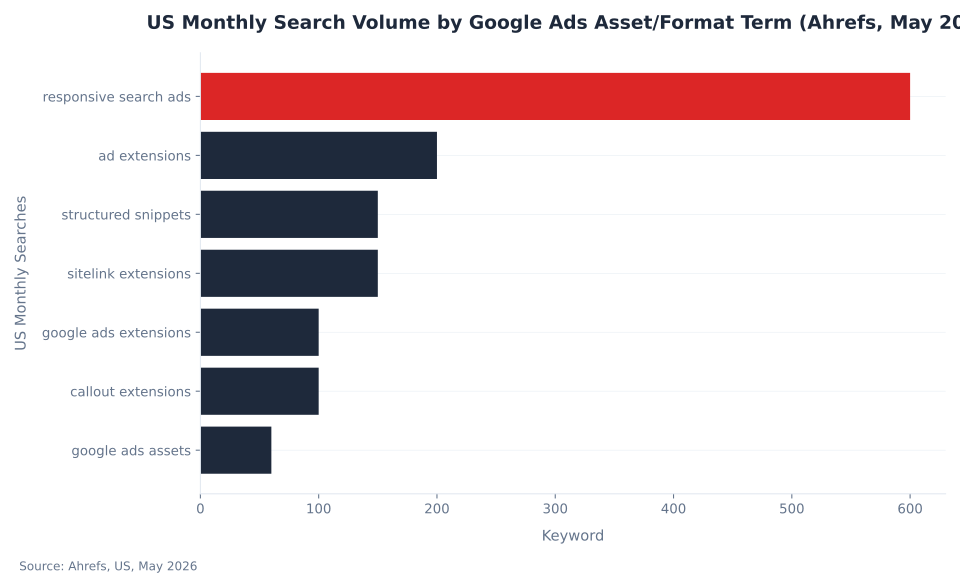
The legacy vocabulary still drives real searches. "Responsive search ads" pulls 600 US monthly searches at keyword difficulty 9 — the primary organic target for this page. "Ad extensions" and its variants (sitelink extensions 150/mo, callout extensions 100/mo, google ads extensions 100/mo) collectively add roughly 550 more monthly searches from the same cluster. A single canonical page covering both vocabularies captures the full demand without splitting authority. When this pillar uses "ad extensions," it is to acknowledge the search term, not the current platform terminology.
Understanding how assets interact with Ad Rank requires knowing the auction mechanics — see the quality score and Ad Rank formula pillar for the full formula breakdown. The creative decisions made in RSAs and asset groups also determine which bidding strategies produce efficient conversions: an account with no assets enters every auction with a structural Ad Rank deficit that bidding alone cannot compensate for. For legal PPC and other compliance-sensitive verticals, the pinning mechanics in RSAs — and which callout language clears compliance review — are the primary creative constraint that distinguishes a structurally sound account from one optimized in appearance only.
Key Takeaways
- "Ad extensions" is a dead interface term. Google rebranded them "assets" on September 16, 2022; the current UI contains no "extensions" language anywhere.
- Expanded Text Ads cannot be created or edited since June 30, 2022. RSAs are the only standard Search text ad available for new campaigns or ad-group builds.
- Assets directly improve Ad Rank. Google's auction formula includes "expected impact from assets" as an explicit component — at zero incremental CPC.
- Sitelinks produce 10–20% CTR lift on non-branded searches; 20–50% on branded. Layering multiple asset types pushes combined uplift past 20% per WordStream's asset benchmark data.
- Ad Strength (Incomplete to Excellent) is a content quality diagnostic, not a ranking signal. It has no direct effect on Ad Rank and is not a substitute for copy quality.
- Automated assets — dynamic sitelinks, seller ratings, business name, business logo — run by default. Many accounts serve Google-generated content they have never reviewed or approved.
17 Google Ads Asset Types: Manual vs. Automated (2026)
As of 2026, the Google Ads platform includes 17 asset types, split between manual (advertiser-created) and automated (Google-generated) — per Google Ads Help (answer/7331111). The manual/automated split is not just a UI distinction. Automated assets run by default on most accounts, which means advertisers who have not audited the Asset tab's "Source" column are likely serving Google-generated sitelinks, callouts, seller ratings, and more without having reviewed them. Accounts that have never opened the Assets tab are not running a lean setup — they are running an unreviewed one.
Several manual asset types also have automated counterparts: sitelinks have dynamic sitelinks, callouts have dynamic callouts. Automated variants are served when Google predicts they will improve performance, independent of the advertiser's manually created versions. For local advertisers — including those running HVAC PPC and plumbing PPC campaigns — location assets are a structural requirement, not an optional enhancement. They require a linked Google Business Profile and contribute to local pack eligibility alongside GBP signals; omitting them is a local-SEO-adjacent error, not just a paid-search omission. For local PPC management in Austin, TX and similar geo-targeted campaigns, location assets belong in the account build before any other asset type.
| Asset type | What it adds to the ad | Manual or Automated |
|---|---|---|
| Sitelink | Up to 4 additional links to specific pages on your site | Manual (automated dynamic variant also available) |
| Callout | Short (25-char max) value statements below the description | Manual (dynamic callouts automated) |
| Structured snippet | Predefined category lists (Services, Brands, Types, etc.) | Manual (dynamic variant automated) |
| Call | Phone number, clickable on mobile | Manual |
| Lead form | In-SERP lead capture form | Manual |
| Image | Square or landscape image alongside the ad copy | Manual |
| Price | List of products/services with prices | Manual |
| Promotion | Sale or offer detail with date range | Manual |
| App | Link to iOS or Android app download | Manual |
| Location | Address, map pin, distance from searcher | Manual (requires linked Google Business Profile or manual address) |
| Affiliate location | Retail partner locations for manufacturers | Manual |
| Text disclaimer | Required terms, conditions, disclosures displayed in the ad | Manual |
| Business name | Brand name displayed separately from ad headline | Automated |
| Business logo | Logo pulled from website or Google Business Profile | Automated |
| Seller ratings | Star ratings aggregated from review sources | Automated (cannot be manually created) |
| Dynamic sitelinks | Google-generated sitelinks from your site structure | Automated |
| Dynamic callouts | Google-generated callouts from landing page copy | Automated |
Sources: Google Ads Help answer/7331111; Google Ads Help answer/7175034 (automated assets); WordStream Google Ads Assets guide. Verified May 2026.
Seller ratings deserve a separate note: they are fully automated, aggregate from Google Customer Reviews, Trustpilot, and similar sources, and cannot be disabled at the campaign level — only suppressed account-wide. Advertisers who want them off must use the account-level setting, not campaign or ad-group controls. Performing an asset audit — opening the Assets tab, filtering by Source to distinguish "Automatically created" from "Advertiser" — is the standard first step in any account hygiene review. It is also the fastest way to find Google-generated copy that contradicts brand voice or makes claims the advertiser has not approved. How those assets interact with the auction is covered in the ad-rank formula breakdown.
Responsive Search Ads: The Only Standard Search Ad Since June 2022
Responsive Search Ads became the only standard Search text ad format for new campaigns on June 30, 2022 — the date Google stopped allowing Expanded Text Ads to be created or edited. The sunset was confirmed in Google Ads Help answer/12169708 and covered in detail by Search Engine Land's coverage. Existing ETAs continue to serve and can be paused or removed, but they cannot be edited and do not receive new quality signals. An account with lingering ETAs running alongside RSAs is not running a multi-format test — it is running stale creative, full stop.
The RSA specification is straightforward: Google permits up to 15 headlines and 4 descriptions per RSA. A displayed ad shows at most 3 headlines and 2 descriptions per auction — Google selects the combination in real time based on query, device, and context. The minimum to publish an RSA is 3 headlines and 2 descriptions; Google recommends using all 15 headlines to give the system the broadest optimization signal. Two path fields (each up to 15 characters) are optional display path additions to the final URL and do not affect the destination. For keywords and match types, the copy in each headline should account for the range of queries each match type can trigger — a broad match keyword draws a wider query set than an exact match, which changes what headline variants are relevant.
| Element | Limit | Notes |
|---|---|---|
| Headlines | Up to 15 | Min. 3 required; Google recommends all 15 for broadest signal |
| Characters per headline | 30 | Hard limit |
| Descriptions | Up to 4 | Min. 2 required |
| Characters per description | 90 | Hard limit |
| Path fields | 2 × 15 characters | Optional display path appended to URL |
| Headlines displayed per impression | Up to 3 | Google selects combination at auction time |
| Descriptions displayed per impression | Up to 2 | Google selects combination at auction time |
| Pinning | Positions 1, 2, 3 (headlines); 1, 2 (descriptions) | Guarantees position; reduces AI optimization signal |
| Ad Strength | Incomplete → Poor → Average → Good → Excellent | Content quality signal only; does NOT affect Ad Rank directly |
Sources: Google Ads Help answer/7684791; Google Ads Help answer/9921843 (Ad Strength). Verified May 2026.
Ad Strength — the Incomplete to Poor to Average to Good to Excellent diagnostic — evaluates headline and description diversity, keyword relevance, and uniqueness. Google Ads Help (answer/9921843) is explicit: Ad Strength is a content quality signal, not a ranking signal. It has no direct effect on Ad Rank. MB Adv Agency has found that accounts fixated on Ad Strength score routinely dilute RSA quality by adding loosely relevant headlines to reach "Excellent" — the score improves, CTR does not. An RSA rated "Poor" with tightly relevant, high-intent copy outperforms an "Excellent" RSA with diffuse headlines written to satisfy the diagnostic. Use Ad Strength to catch obvious gaps — duplicate headlines, keyword-stuffed descriptions — not as the primary optimization target.
Pinning guarantees a specific headline appears at a specific position (1, 2, or 3) in every auction, but it reduces the machine learning signal pool available to Google. Google Ads Help explicitly recommends against pinning unless brand or legal requirements demand a specific statement at a specific position. For financial services PPC and other compliance-constrained verticals, pinning is a necessary concession — not an optimization choice. Required disclosures, regulatory language, or brand mandates that must appear at Position 1 in every impression justify pinning. For all other advertisers, unpinned RSAs with well-differentiated headlines produce better performance than pinned RSAs with constrained combinations, because Google's combination selection is the mechanism through which the system learns which message drives action for which query.
US Monthly Search Volume by Google Ads Asset/Format Term (Ahrefs, May 2026)
Assets and Ad Rank: The Zero-Cost CTR Lever
Google's Ad Rank formula explicitly includes "expected impact of assets and other ad formats" as an auction component. Before the auction clears, Google forecasts the CTR uplift from serving an account's enabled assets and credits that forecast to its Ad Rank. An ad with a full asset build-out enters every auction with a structurally higher Ad Rank than an identical ad without assets — at the same bid and Quality Score. This is not a soft preference or a best-practice recommendation; it is how the auction is scored. The formula mechanics are documented in Google Ads Help answer/1722122 and the broader auction context is covered in Google Ads Help answer/6366577.
The CTR lift data that follows is sourced from Google's own guidance and third-party benchmark research. Both sources should be understood as benchmark estimates, not controlled study results — but they represent the best available figures for planning purposes. For sitelinks specifically, Google Ads Help answer/6167131 cites a 10–20% CTR lift on non-branded searches and a 20–50% CTR lift on branded searches from sitelink assets alone. This is Google's own estimate, drawn from its internal analysis of sitelink performance across the platform. For combined asset layering — sitelinks, callouts, and structured snippets deployed together — WordStream's aggregate benchmark data shows total CTR lift exceeding 20%. That figure reflects the compounding effect of multiple asset types expanding the ad's SERP footprint simultaneously. It is an aggregate benchmark, not a controlled study result, and individual account outcomes vary by vertical, query type, and competitive density.
For any account where Ad Rank is limiting impression share, the first audit is not raising bids — it is checking which asset types are missing. That audit costs nothing to run and nothing to deploy. An account that adds sitelinks, callouts, and structured snippets before increasing bids captures the Ad Rank lift at zero incremental CPC.
The bidding implication is direct: asset deployment should precede bid increases in any account where impression share loss is attributed to rank rather than budget. Raising bids to compensate for a missing asset layer is the most expensive way to solve a structural problem. The correct sequencing — documented in the bidding strategies pillar — is to close asset gaps first, then evaluate whether bid adjustments are still necessary after the Ad Rank lift is captured. This sequencing is especially consequential in high-CPC verticals where every auction is contested. Real estate PPC and dental PPC are two examples where CPCs run high enough that the cost of an unoptimized Ad Rank is measurable in every day's spend — and where the asset-first approach produces the fastest structural improvement before any bid increase is justified.

Missing asset types are costing your ads Ad Rank — for free.
MB Adv Agency audits Google Ads accounts for asset gaps, RSA copy quality, and automated asset settings that most accounts never review.
View legal PPC services →Performance Max Asset Groups: When Assets Become a Creative Matrix
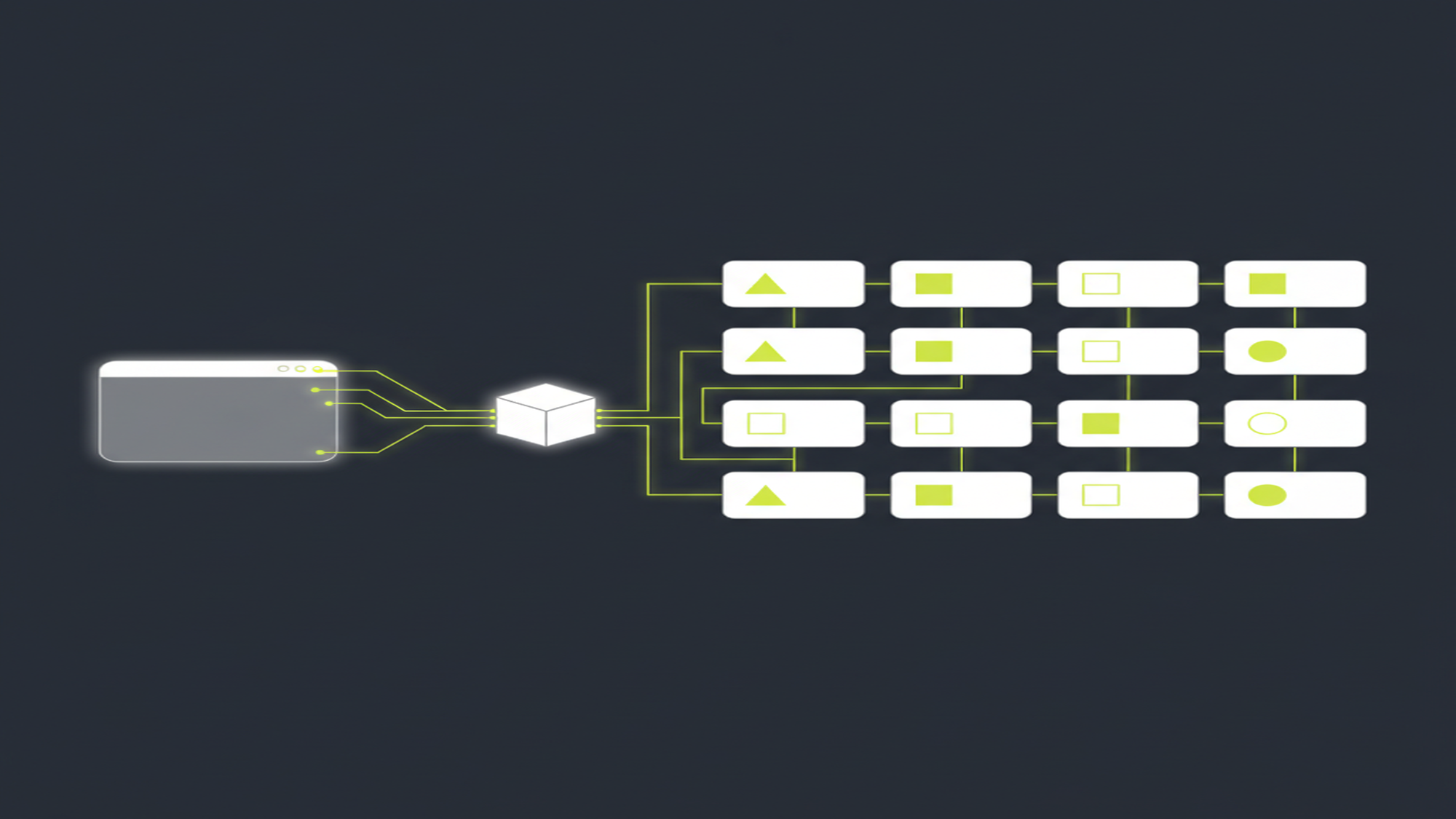
Performance Max turns the asset model into a creative matrix. A PMax asset group accepts up to 15 headlines, 5 descriptions, 20 images, and 15 videos — the video limit was raised from 5 in January 2026. Google's AI assembles unique combinations per impression across Search, Display, YouTube, Gmail, Discover, and Maps. The asset group is not an ad. It is a creative inventory. PMax specifications are documented in Google Ads Help answer/10724748. The practical implication of the 15-video ceiling is that accounts running PMax for video-heavy DTC brands now have meaningful headroom to build format-specific variants — product demo cuts, testimonial edits, and awareness-format video — without hitting the old 5-slot constraint that previously forced asset group proliferation as a workaround.
The contrast with RSA is significant. In a Responsive Search Ad, Ad Strength is an aggregate score for the whole ad — one label summarizing the entire 15-headline, 4-description unit. In Performance Max, Google rates each individual asset as Low, Good, or Best. A weak asset in one slot — a generic headline, a low-quality image, a video that opens slowly — depresses performance across every format on every surface, not just one placement. That single weak asset is being assembled into combinations served on YouTube pre-rolls, Gmail promotions, and Display banners simultaneously. MB Adv Agency treats PMax asset group quality control as the primary lever for PMax campaign performance: low-rated individual assets are identified in the asset performance report and replaced on a 4–6 week cycle, not left to run indefinitely on the assumption that Google's AI will route around them.
A PMax asset group also has automated asset generation turned on by default. Google writes and serves assets — headlines, descriptions, images pulled from landing pages — that the advertiser often never sees. This is an extension of the same automated-asset pattern in standard Search campaigns (dynamic sitelinks, dynamic callouts), scaled to every Google surface at once. Any account managing PMax campaigns should verify the auto-generated asset setting in campaign settings and review Google-written copy before it accumulates impression share at scale. The review protocol is the same as auditing the automated assets Source column in standard Search — check what Google is writing, compare it against brand voice and compliance requirements, and disable or replace anything that falls outside acceptable parameters. For campaign types context on how PMax fits into a full account structure, including how it competes with standard Search campaigns for query coverage, see the campaign types pillar. For DTC verticals where PMax asset quality is particularly high-leverage — where the creative matrix assembles product imagery, promotional copy, and audience signals simultaneously — fashion PPC and furniture PPC are two categories where asset group reviews routinely surface the largest performance gaps. For local service advertisers running PMax alongside standard Search, the HVAC PPC Flagstaff AZ city guide covers the local PMax asset configuration context, including how location signals interact with the asset group's audience targeting layer.
Two Misconceptions That Cost Accounts CTR and Ad Rank
Two misconceptions persist in Google Ads accounts and produce predictable structural underperformance. Both are testable against current platform documentation. Neither requires a sophisticated audit to identify — a ten-minute review of any account's ad formats and asset coverage surfaces both.
Misconception 1: "You can still create Expanded Text Ads." ETAs are not a format option. Google closed ETA creation and editing in standard Search campaigns on June 30, 2022. Any campaign built or restructured after that date that lacks RSAs at its core is structurally incomplete. Lingering ETAs running alongside RSAs in a legacy account are not a multi-format test — they are stale creative that Google no longer actively optimizes, running on a format that cannot be improved and does not receive new quality signals. The correct action is to pause underperforming ETAs and consolidate impression share into RSAs, not to preserve ETAs as a "safe fallback" while RSA testing continues. There is no fallback. RSA is the standard for every account built or restructured after June 2022, and there is no roadmap for ETA restoration.
Misconception 2: "Assets are optional extras." Assets are not optional in any meaningful sense. Google's Ad Rank formula explicitly includes expected asset impact as a component. An ad without sitelinks, callouts, and structured snippets enters every auction at a structural disadvantage relative to a competing ad that has them — at the same bid and Quality Score. Google's own guidance is explicit: "use as many relevant asset types as possible," per Google Ads Help answer/7641883. The typical resistance to building out assets is complexity — more fields to manage, more copy to write, more decisions about what to include. The actual complexity cost is lower than the Ad Rank penalty from omitting them. For local advertisers specifically, location assets also contribute to local pack eligibility alongside Google Business Profile signals. Omitting location assets for a local service business is not a paid-search omission — it is a local-SEO-adjacent structural error that affects organic local presence alongside paid ad rank.
Asset & RSA Strategy by Industry Vertical
High-Value Lead Gen
Callout and structured snippet assets are the highest-value additions for compliance-constrained advertisers. Required disclaimers belong in pinned RSA positions; value-based claims belong in callouts where compliance review is simpler. Relevant for legal PPC, financial services PPC, and dental PPC.
Local Services
Location assets are non-negotiable — they affect local pack eligibility alongside Google Business Profile signals. Call assets belong on every mobile-targeted ad group. Core for HVAC PPC and plumbing PPC. See city-level context at legal PPC Missoula MT and automotive PPC Austin TX.
E-Commerce & DTC
Image assets and PMax asset groups are the primary format layers. PMax creative matrix quality — individual asset ratings of Low, Good, or Best — drives performance across Search, Display, YouTube, Gmail, and Discover simultaneously. High leverage for fashion PPC and furniture PPC.
Local Campaign Management
Call assets and location assets are the structural foundation before any other asset type. Without them, local ads enter auctions without the footprint signals Google uses for proximity-based serving. Central to the account build at PPC consultant campaign management Austin TX.
Frequently Asked Questions: Google Ads Assets & Formats
Ready to audit your asset build-out?
MB Adv Agency works with mid-market advertisers managing $10K–$100K/month in Google Ads spend. Asset audits are the starting point of every new engagement.
Contact MB Adv Agency →Methodology
Extensions-to-assets rebrand date verified against Search Engine Land (September 15, 2022) and MediaPost (September 16, 2022); current Google Ads Help answer/7331111 confirms “assets” terminology with no “extensions” language. ETA sunset verified against Google Ads Help answer/12169708, Search Engine Land, and LocaliQ contemporaneous coverage; Google’s original announcement was August 2021. RSA specifications (15 headlines, 4 descriptions, 3/2 shown per auction, pinning guidance) verified against Google Ads Help answer/7684791; Ad Strength non-ranking-signal status confirmed via answer/9921843. Asset type inventory verified against Google Ads Help answer/7331111 and answer/7175034 (automated types). Sitelink CTR lift (10–20% non-branded, 20–50% branded) sourced from Google Ads Help answer/6167131; combined-asset benchmark (>20%) from WordStream. Ad Rank “expected impact from assets” sourced from Google Ads Help answer/1722122 and answer/6366577. PMax asset group specifications sourced from Google Ads Help answer/10724748. Reviewed by MB Adv Agency, June 2026.

As a Google Ads expert, I bring proven expertise in optimizing advertising campaigns to maximize ROI.
I specialize in sharing advanced strategies and targeted tips to refine Google Ads campaign management.
Committed to staying ahead of the latest trends and algorithms, I ensure that my clients receive cutting-edge solutions.
My passion for digital marketing and my ability to interpret data for strategic insights enable me to offer high-level consulting that aims to exceed expectations.
Google Partner Agency
We're a certified Google Partner Agency, which means we don’t guess — we optimize withGoogle’s full toolkit and insider support.
Your campaigns get pro-level execution, backed by real expertise (not theory).

4.9 out of 5 from 670+ reviews on Fiverr.
That’s not luck, that’s performance.
Highly recommend Matteo to set up your server side tracking. He has a deep understanding of e-commerce tracking and will go above and beyond to make sure everything is set up correctly and working 100%. If you are scaling your store this set up is non-negotiable in my opinion and there isn't many people who have this much knowledge or put the effort in to get it right. Thanks again!
avorodesign.com
I can only recommend Matteo! He was very patient, professional and very knowledgeable about GA4, Consent Mode v2, and GDPR compliance. Communication was clear, and the setup was done professionally and efficiently. Highly recommend him for anyone needing reliable tracking implementation.

www.natureiki.life
Matteo shines in the realm of online professionals. His work is not only deep in data but also complemented by his proactive communication and cooperation, setting a new standard for freelancers. If you want someone who truly exceeds expectations, look no further. Highly recommended!

www.omanbeverlysmyth.com
Exceptional Service Beyond Expectations - Outstanding Service Impeccable depth, flawless delivery, and exceptional language fluency—this service exceeded all expectations. Highly recommended. Matteo truly ROCKS!!!

ium-paris.com
Top-notch, always highly value working with Matteo. An absolute Google Ads Genius. This is approximately the 8th time I have hired him and he's helped us get 6-7 ROAS. We are excited in continuing to improve our lead flow. Hire this guy if you need Google Ads help. Thanks Matteo!

www.dleeventgroup.com
I finally found the guy who can setup server side tracking and all the ecosystem properly. I definitely recommend Matteo. He is very responsive, kind and wants to dig into things. He configured GA4, Meta, Google Ads, Outbrain and google consent v2 with Cookiebot. Thanks Matteo.

inomega.fr
MB Adv delivered exceptional work with outstanding professionalism and lots of patience, taking time to see effects of changes made and not just do the work and submit it. The proactive communication and video summaries of the work completed made working with Matteo a pleasure, as he consistently went above and beyond. Highly recommended for web analytics projects! We are already working on another project.

www.withnellsensors.co.uk
Working with Matteo on my Google Ads was a game-changer. He's not just a strategist, he's a true partner. He understood my goals and tailored a campaign that perfectly reached my target audience. I'm grateful for his expertise and dedication.

dccargo.com
Click-driven mind
with plastic-brick obsession.
We build Google Ads campaigns with the same mindset we use to build tiny brick worlds: strategy, patience, and zero tolerance for wasted pieces.
Data is our blueprint. Growth is the only acceptable outcome.